Let's be real ,figuring out your skin type can feel like a guessing game. One website says you're dry. Another quiz says combination. Meanwhile your skin is just sitting there, doing its own thing, waiting for you to actually pay attention.
So, what is my skin type, really? It's the question every skincare decision quietly depends on, and it's simpler to answer than the internet makes it look. This guide walks you through the five main skin types, two easy at-home tests, and the myths that have probably been messing with your routine for years.
Why Knowing Your Skin Type Matters
Here's the thing ,most people get this wrong before they've even bought a single product. They pick skincare based on what worked for a friend, or what an influencer swears by, without ever confirming their skin type first. Your skin type is the foundation everything else gets built on. Not the routine. Not the ingredients. Not the ten-step regimen you saw online. Just this one piece of information. Get it right, and the rest of your skincare decisions get a whole lot easier.
What Determines Your Skin Type?
Skin type isn't random. A handful of factors shape it, some you control and some you don't. Genetics play the biggest role. If your mother had oily skin, there's a decent chance you do too. Hormones matter as well, shifting your skin through puberty, your cycle, pregnancy, and eventually perimenopause and menopause. Age changes things too, since skin tends to produce less natural oil over time.
Then there's climate. If you live anywhere in Canada, you already know this one, even if you've never connected it to your skin. Harsh winters and dry indoor heating can make even naturally oily skin feel parched by February. Environment and lifestyle, think stress, sleep, and diet, round out the picture.
The Five Main Skin Types
Dry Skin
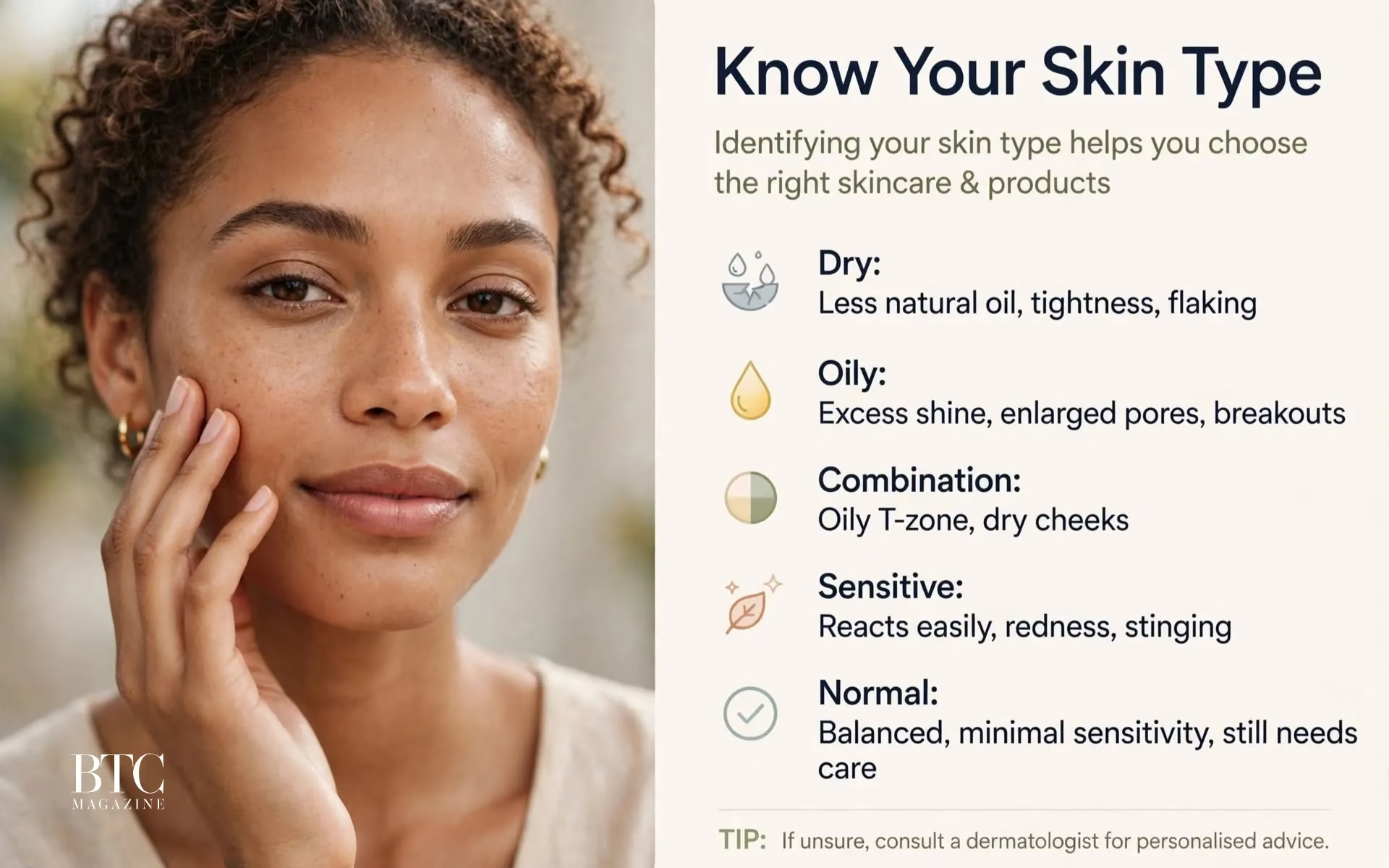
Dry skin produces less natural oil, which means it struggles to hold onto moisture on its own. You'll notice tightness after washing your face, occasional flaking, and sometimes fine lines that look more obvious when your skin feels dehydrated. A common misconception is that dry skin is just "sensitive" skin. It's not. Dry skin can be perfectly resilient; it's simply under-hydrated.
Oily Skin
Oily skin produces excess sebum, showing up as shine, especially across your forehead, nose, and chin, along with visibly enlarged pores and a higher tendency toward breakouts. The biggest myth here? That oily skin doesn't need moisturizer. It absolutely does. Skipping hydration often makes oily skin produce even more oil to compensate.
Combination Skin
Combination skin is the most common type and, frankly, the most confusing one to pin down. It usually means an oily T-zone paired with normal or dry cheeks. A lot of people assume "combination" just means "oily," but it's really about having two different needs on one face at the same time.
Sensitive Skin
Here's a nuance most articles skip entirely: sensitive skin isn't technically a skin type on its own. It's more like a layer that sits on top of your actual skin type, whether that's dry, oily, combination, or normal. Sensitive skin reacts more easily to fragrance, weather changes, and certain active ingredients, showing up as redness, stinging, or irritation.
Normal Skin
Normal skin gets left out of a surprising number of articles, maybe because it doesn't come with a dramatic list of concerns. Normal skin is balanced, not too oily and not too dry, with minimal sensitivity. It still needs care and attention. "Normal" doesn't mean "no maintenance required."
How to Identify Your Skin Type at Home
You don't need a dermatologist's office to get a solid read on your skin type. Two simple tests, done properly, will tell you almost everything you need to know.
The Bare Face Test
Wash your face with a gentle cleanser and pat it completely dry.
Don't apply any other products, no moisturizer, no serum, nothing.
Wait 30 minutes and simply observe.
Shine across your forehead and nose suggests oily skin. Tightness, roughness, or flaking points to dry skin. Shine in the T-zone with comfortable cheeks usually means combination skin. If everything feels balanced, you're likely dealing with normal skin.
The Blotting Paper Test
Press a piece of blotting paper against different areas of your face: forehead, nose, cheeks, and chin.
Hold each section up to the light.
Compare how much oil transferred from each area.
Oil across every section usually indicates oily skin. Oil only from your forehead and nose, with little from your cheeks, points to combination skin. Very little oil anywhere suggests dry or normal skin.
One caveat worth mentioning: both of these tests were largely developed with lighter skin tones in mind. On melanin-rich skin, oiliness doesn't always show up as visible shine the way it does on fairer skin. If you have deeper skin, pay closer attention to how your skin feels, tight, comfortable, or greasy, rather than relying purely on what you see in a mirror or under a light.
Signs People Often Overlook
Pore size is a bigger clue than most people realize. Larger, more visible pores often point to oilier skin, while barely noticeable pores tend to show up on drier skin. How your skin feels immediately after washing matters too. A slight, temporary tightness that fades within a few minutes is normal. Tightness that lingers usually signals dryness.
Mistakes People Make When Identifying Skin Type
The most common one? Testing your skin right after a shower or workout, when it isn't behaving normally. Another is confusing a temporary skin condition, like dehydration from a dry flight, with your actual skin type. And plenty of people test once and assume the result is permanent, without accounting for the season or their current life stage.
Can Your Skin Type Change?
Your underlying skin type is fairly stable, but it's not frozen in time. Several things can genuinely shift it.
Seasons are the most obvious factor. Skin that feels balanced in July can turn noticeably drier by January, especially with Canadian winters and dry indoor heat. Hormones shift things too, through your menstrual cycle, pregnancy, and especially perimenopause and menopause, when skin often becomes drier or more reactive. Aging naturally reduces oil production over time. And broader climate changes, like a move to a different province or a particularly dry winter, can shift your skin even without any of the above.
Common Skin Type Myths
Myth: Oily skin doesn't need moisturizer. It does. Skipping moisturizer often triggers oily skin to overproduce even more oil in response.
Myth: Sensitive skin is its own skin type. Not quite. Sensitive skin is more of an overlay that can show up alongside any of the other four types.
Myth: Combination skin just means oily skin. Combination skin has two distinct zones with different needs, not one uniformly oily face.
Myth: Your skin type is fixed forever. Your genetic baseline stays fairly consistent, but seasons, hormones, and age all influence how your skin behaves day to day.
What Comes Next After Identifying Your Skin Type
Once you know your skin type, the next step is putting that knowledge to work. Head over to our guide on How to Build a Skincare Routine for Your Skin Type to start building something that fits.
From there, explore Morning vs Night Skincare Routine, How to Layer Skincare Products, How to Choose a Moisturizer for Dry, Oily or Sensitive Skin, How Often Should You Exfoliate?, and How to Patch Test a New Skincare Product.
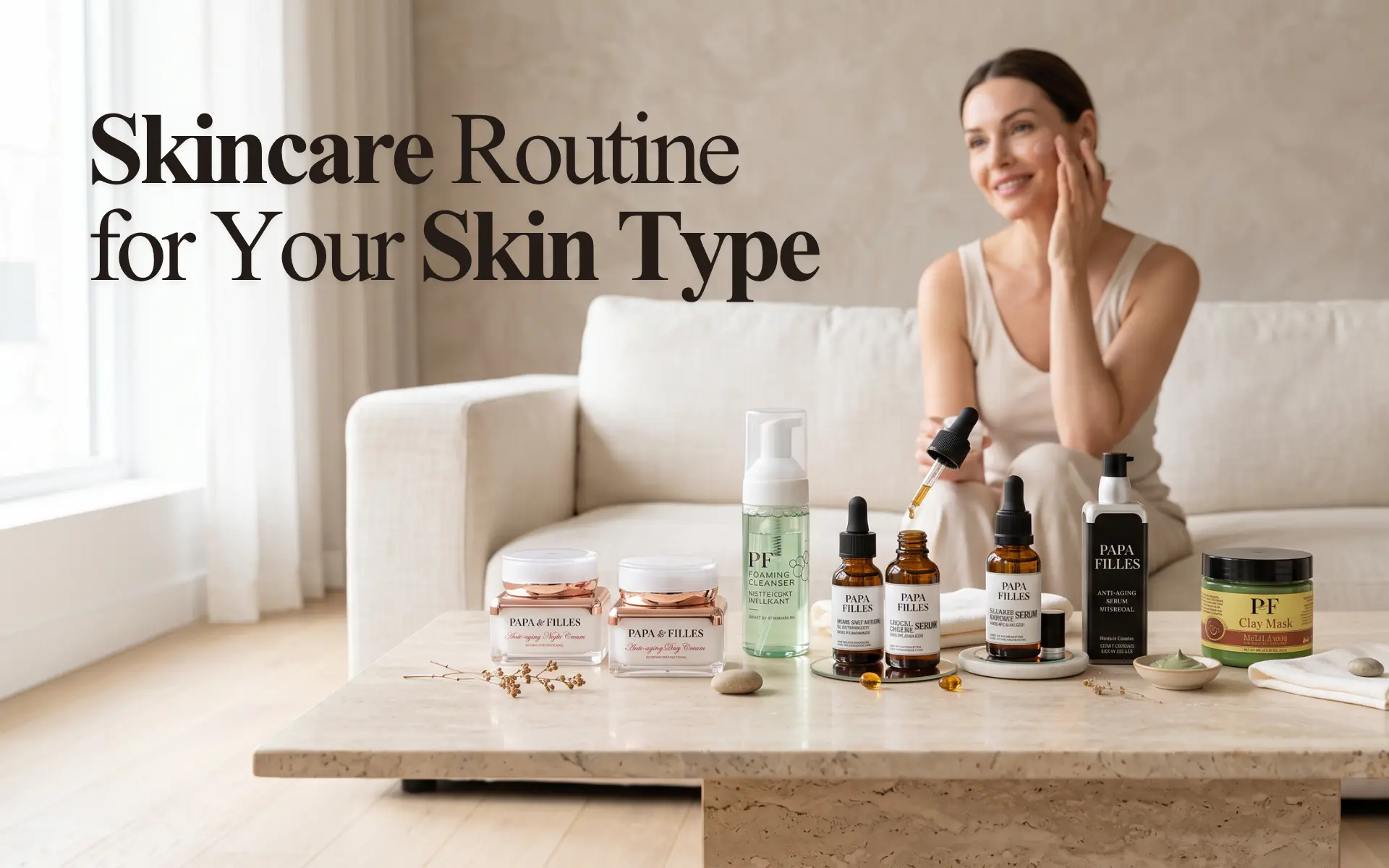
Once you've confirmed your skin type, browse the Papa & Filles skincare collection to find products suited to your skin's needs.








Comments
No comments yet
No comments to show yet. Subscribe to join the conversation.
Log in or subscribe to comment on this article.