Discover Stories that Matter
Between the Covers is more than a magazine, it’s a global network. We connect you to the people, places, and experiences that define real luxury, wherever you land. Marbella. Dubai. Toronto. Riyadh. London. Real stories. Trusted recommendations. Exclusive perks.Because true luxury isn’t about what you own, it’s about where you belong.
Featured By
Featured Stories
Discover our most engaging and thoughtful articles
The Woman Who Wouldn't Giggle: Elvira Caria's Four Decades of Refusing to Play Nice
After 40 years of fighting for her voice in broadcasting, Elvira Caria lost the only title that ever mattered to her: Matthew's momThere's a street named after Elvira Caria in Vaughan. She didn't pay for it, she'll tell you right away. Awards line her walls—forty years' worth of recognition for lifting up her community, for being the voice that shows up at every damn event with her phone and her genuine give-a-shit attitude.But when I meet her at The Roost Café on a grey autumn morning, she says the work that matters most is the stuff nobody sees."My real satisfactory work?" She pauses, weighing whether to trust me with this. "I help young girls escape human trafficking. You can't put that on social media."This is Elvira Caria: the woman who refused to be radio's giggling fool, who chose late-night shifts over morning show glory so she could be home when her son's school bus arrived, who now sits across from me one year after burying that same son at 25."I wouldn't be here if it wasn't for the community," she says. And she means it literally.The Day She Found Her Voice by Refusing to Use ItPicture this: a young Elvira in a radio control room, told by a well-known male broadcaster that her job was to giggle. To be the pretty voice that makes him sound better."I don't do giggling fool," she says now, decades later, the Southern Italian fire still in her voice.She stopped showing up to giggle on cue. Got fired on a Friday. Instead of folding, she handed her termination papers back: "If you can find a better reason to fire me on Monday, I'll accept it. If not, I'm coming back."Monday passed. So did Tuesday. By Friday she expected another dismissal—everyone fires on Fridays. But a month later the man who told her to giggle was gone. Elvira stayed for six more years."I found my value voice," she says. "I wasn't going to bend for someone else's value."The Choice That Looked Like SacrificeAt the height of her career, being groomed for a morning show at one of Canada's top stations, Elvira walked away."Nobody quits Rock Radio," her boss said."Well, I just did."She took the shifts nobody wanted—weekends, evenings, 3 a.m. hits at Yonge and Dundas. People called it sacrifice. She calls it choice."While others were sleeping, I was talking to the people we now call homeless. Nobody wakes up saying, I want to be on the streets when I grow up. Nobody."The choice meant she was home when Matthew got off the school bus. It meant knowing his friends, his teachers, his world. For 25 years, it meant being Matthew's mom first, Elvira Caria second.The Irony That Breaks YouHere's the part that will gut you: she spent decades insisting she was more than just Matthew's mom. She was a broadcaster, a journalist, a voice for the voiceless. She built a career on authenticity when authenticity could get you fired.And then, in 2024, Matthew was gone— twenty-five years old and on the edge of everything. Suddenly all Elvira wanted was the one title that had been stripped away."Matthew never saw me as a radio announcer," she says, voice steady, eyes somewhere else. "He saw me as his mom. And that's all he cared about."The Part Where She Stops Pretending Everything's FineLet's talk about not getting out of bed. About hygiene being optional when grief is bone-deep.Her sister-in-law was the one who finally broke through: "They need you. My boys need you! You're more than their Zia." So Elvira took small steps. A shower became a victory. Coloring her hair, an achievement. Looking in the mirror and trying to recognize whoever stared back."I'm mad at God," she admits. "People say everything happens for a reason. What's the fucking reason? Why take away a kid who never did anything wrong, who was just starting his life?"The Community That Saved Her When Awards Couldn'tTen people can tell Elvira she's wonderful. One critic cuts deeper at 3 a.m. That's human.She'll admit some awards now feel hollow—accolades in a season of loss. The recognition doesn't heal the absence.But the community? They showed up in ways that mattered. The woman from her coffee shop who just sat with her, no words needed. The neighbor who mowed her lawn without asking, week after week, because grief means grass keeps growing when you can't. The radio colleague who took her shifts without question when she couldn't form words, let alone broadcast them. The mothers from Matthew's old baseball team who still text her his jersey number on game days. Or the Baseball league who named an umpire award after him."Someone left groceries at my door every Tuesday for three months," she tells me. "Never found out who. Just bags of real food—not casseroles, not sympathy lasagna—but the exact brands I buy. Someone paid attention to what was in my cart before. That's community."The vigils, the legacy fund in Matthew's name, the quiet notes slipped under her door—that's what kept her standing."The real work happens in shadows," she says. "Helping a girl escape trafficking. Watching her graduate two years later. That's when I think—okay, maybe I've done enough to meet my maker."The Wisdom of Not Giving a FuckAfter decades of answering every critic, she's learned the most radical act: indifference."You don't have to react to everything," she says. "Not everything requires an explanation."She still hates small talk, still loves a stage. The influencer economy baffles her. "People think having a phone makes them reporters. Broadcasting is an accreditation—you're trained how to interview, how to fact-check, how to smell bullshit."Who She Is NowA year later, she's still figuring it out. Still showing up at community events with her phone and her give-a-shit intact. Still ironing her underwear (yes, really) because some control is better than none.The street sign with her name stands in Vaughan, but she lives in the in-between—between public recognition and private purpose, between the veteran broadcaster and the grieving mother."The evil grows faster than good," she says. "We're always catching up."So she keeps going. Not because grief eases—it doesn't. Not because she's found a new purpose—she hasn't. But because stopping isn't her style.She refused to giggle back then. She refuses to perform now. And maybe that's the lesson: sometimes the most powerful thing you can do is keep showing up, even when you don't know why you're still here. Especially then.Elvira Caria continues to support multiple charities across the GTA while maintaining her broadcasting career. She's still mad at God, still helping girls escape trafficking, still learning who she is now. She does not need your sympathy. She might need you to know that grief has no timeline, authenticity isn't content, and sometimes the bravest thing you can do is refuse to play along.
The Dentist Is Between My Legs: Bif Naked on Heart Surgery, Picking Felons, and Why She's Just Getting Started at 54
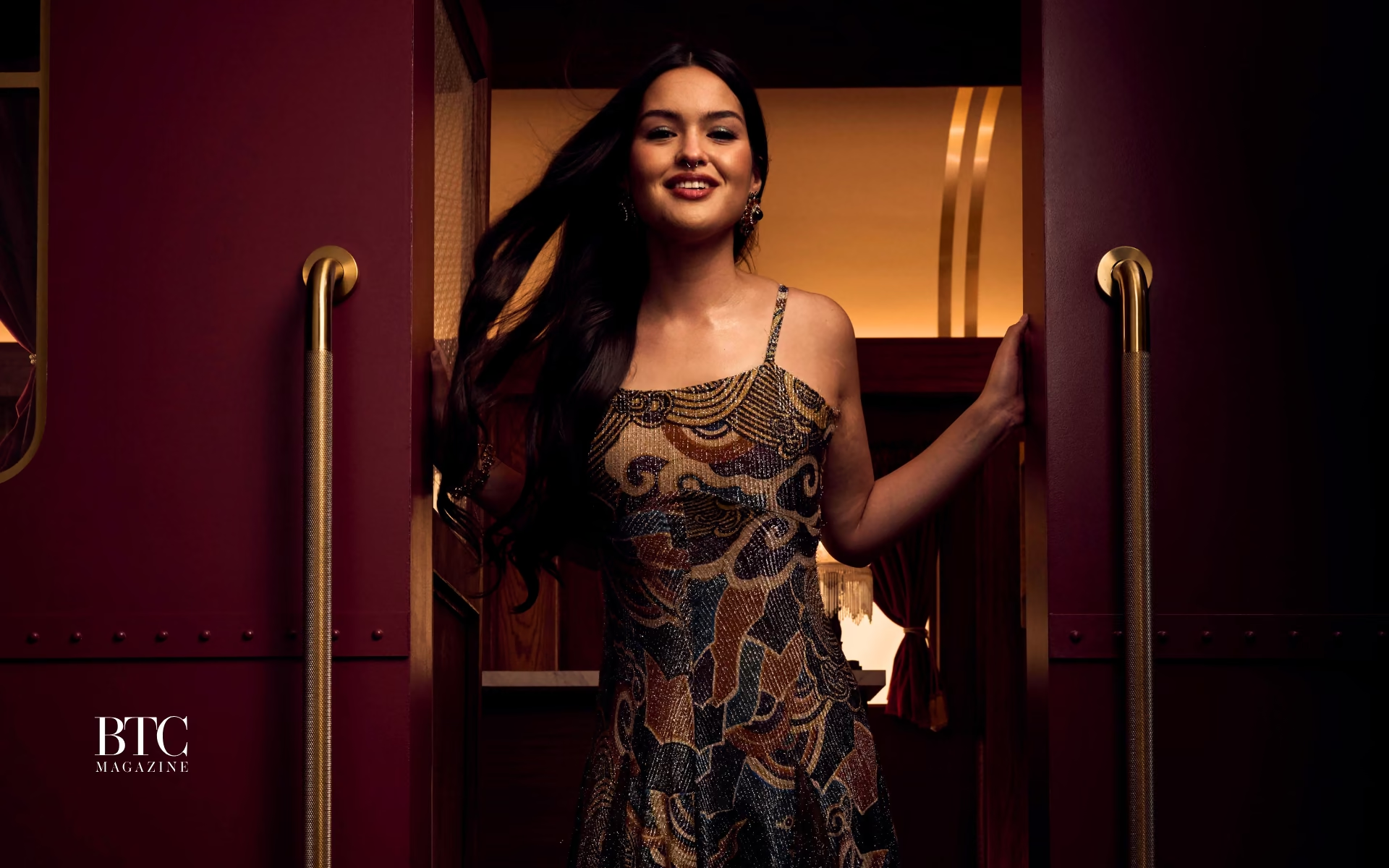
The punk icon who found euphoria on an operating table talks death doulas, divorce gratitude, and why her failing marriage hurt more than cancerBy Joseph Tito | Between the Covers | November 2025Bif Naked is cutting up her dog's food with her hands when I ask how it feels to be a legend.She looks at me like I've asked her to explain quantum physics in Swahili. "I'm a dog mom," she says, and goes back to mincing. Her fingers work methodically, tearing dog food into smaller and smaller pieces. The woman who once spit on audiences from punk stages now performs this daily ritual of care with the focus of a surgeon.This is going to be that kind of conversation—where every expectation gets shredded like dog food.The Operating Table High"So I was wide awake," Bif says, settling into her Toronto condo couch, miniskirt riding up as she crosses her legs. She's talking about her heart surgery like most people describe a spa day. "They thread a little camera through your leg all the way to your heart, and they can see what they're doing on the screen."She leans forward, eyes bright with the memory. "The surgeon is wearing a pineapple hat—like, the surgical hat had cartoon pineapples on it. And they're listening to William Shatner singing. Have you ever heard him sing? Who knew this album existed?"This is a woman describing having a hole in her heart closed with what she calls "a little umbrella device," conscious the entire time, finding it all hilarious and profound in equal measure. Her voice gets almost reverent: "I thought, this is the coolest shit ever. How is it possible that in this lifetime, I can listen to these people talking about their day jobs, which is fixing my stupid heart?"Then comes the moment that gives this article its title. They need to inject Novocaine into her leg to make the incision. You know that heavy, aching feeling from the dentist?"I said, 'Oh! It feels like the dentist is between my legs.'"She covers her face, laughing and mortified simultaneously. "The nurses started howling. This patient is on the table, making what they think is dirty talk. But I just meant—" she gestures helplessly "—the Novocaine!"Her whole body shakes with laughter now. "Of course that's what I said. How fucking funny is that?"God's Rejection and Other Love Stories"God is not going to choose me for whatever reason," she says, the laughter suddenly gone. "I'm going to stay here on earth and have to deal with it. Because I'm not learning my lessons yet."The shift in energy is palpable. She's talking about her pattern now—the violent men, the criminal boyfriends, the marriages to liars. "If there's a wrong guy, send him my way. If he is a criminal, if he's a violent felon, send him my way. I'm going to fall in love with that idiot every time."She delivers this like a weather report, no self-pity, just fact. When I ask why she got divorced, she doesn't hesitate: "Because I married liars." Then, catching herself: "But I have to look at what my fault was."She discovered what healthy relationships actually look like at 54. Fifty-four. After two failed marriages, cancer, and enough medical trauma to kill most people twice. "I had no idea relationships were supposed to be healthy," she says, and the wonderment in her voice is genuine. "I think that I've always been chasing true love. I'll never give up on love, ever."The contradiction sits there between us: the woman who picks monsters still believes in fairy tales."My emotional crisis of my failing marriage trumped my cancer experience."She says this so matter-of-factly that I almost miss it. The dissolution of her marriage during treatment hurt more than the actual cancer. Her hands, which had been still, start moving again—straightening pillows, adjusting her jewelry."Which was good," she adds quickly, "because it forced me to throw myself into volunteering."The man who married a rock star got a cancer patient instead, couldn't handle the plot twist. Now she trains as a death doula, works in palliative care. "If I was told tomorrow that I could not be a performer anymore," she says, her voice steady, "I think I would go into hospital administration."The Stage She Was Always SeekingBefore Bif Naked existed, there was a theatre kid at the University of Winnipeg who'd taken ballet for 13 years. She demonstrates a position, her leg extending with muscle memory from decades ago. "I wanted to be an actress and a ballet star."Then a drummer named Brett needed a singer. Suddenly she had a vehicle for all her poetry, all her rage about El Salvador and Indigenous treatment and misogyny. Whether it was ballet slippers or combat boots, she was always searching for a stage—just took her a while to find the right one."I got to stand up there. I got to spit on the audience. I got to say, fuck you, you can't objectify me." Her voice rises with the memory, that old fire flickering. "I didn't even have to sing very well. And believe me, I could not. I sounded like a dying cat."She pauses, grins. "And I don't mean the band Garbage."They opened for DOA. NoMeansNo. Bad Religion. She dropped out of university, and here's the kicker—"I'm still waiting to go back to school," she laughs, thirty-something years later, like she might actually do it.The same rage that fueled her screaming about El Salvador now targets Doug Ford's Ontario. "I couldn't figure out why I moved here," she says. "Then Ford got elected and I thought, 'Oh. I'm here to use my big mouth.'"The Children She'll Never Have (Or Will She?)When she cuts up that dog food with such maternal precision, I have to ask about kids. Her whole body language shifts—shoulders dropping, a softness creeping in."My ovaries were taken out at 36. So breast cancer didn't just cut up my tit." She says this with the same directness she uses for everything else, but her hand unconsciously moves to her stomach. "I've been in menopause since I was 36 years of age."People ask about adoption—she is, after all, adopted herself. The sarcasm returns, protective: "Oh yeah, let me get right on that. Let me turn around as a divorcee who's working nonstop as a self-employed artist in Canada and get right on the adoption train."But then, unexpectedly: "Now in my mid-50s? Yeah, I suppose I am ready."The possibility hangs there. Not this year. But the door isn't closed.Tina Turner's Miniskirt Ministry"I look to women like Tina Turner," she says, smoothing her miniskirt with deliberate intention. "Tina Turner didn't start playing stadiums till she was in her 50s."At 54, she genuinely believes she's just getting started. The documentary premiering across Canada this month (November 12 in Toronto, November 4 in Vancouver). The album finally released after she shelved it during the George Floyd protests because "the world didn't need a fucking Bif Naked record" during that summer of unrest."The sky is the limit," she says, and means it.When I ask who she's fighting for now, what her voice stands for at 54, she barely breathes before answering."When I was singing 'Tell On You' on my first record, I wasn't the only girl who was sexually assaulted," she says, her voice dropping to something harder, older. "I was the only girl with a microphone."The room goes quiet. Even the dog stops moving.She calls herself "a square" now—no cocaine, no partying. "I can be thoughtful and intelligent. I can try very hard to be a voice for the voiceless."But square doesn't mean silent. She's angrier about politics than ever, advocating for animals, healthcare inequality, LGBTQ+ rights rollbacks."Unfortunately," she says with a grin that's pure punk rock, "I'm still the one holding the mic."What's Next Is What She WantsThey're making a feature film about her life. The documentary's touring. When I ask what's next, she almost defaults to "that's a Peter question"—her manager's domain—then catches herself, takes ownership."We're working on the feature film based on the book."But really, what's next is whatever the fuck she wants. She's earned that.I ask what she'd tell a young girl starting out in music today. She thinks, really thinks, her face cycling through decades of memory."Never take it personally. Never take anything personally, no matter what."Then she says something that makes me stop writing: "There's room for everybody."This from a woman who had to claw for every inch of space. Who quit drinking partly to avoid being "misinterpreted" by men who'd use any excuse to discredit her. Who's been assaulted, dismissed, divorced, nearly killed."Anybody can make music on their computer, anybody can learn piano on YouTube, anybody can upload a song and send it to their nona," she continues, and she means it. "That's actually a gift."As I'm leaving, she's back to cutting up dog food, this ritualistic care that anchors her. I think about what she said about God not choosing her yet, about having to stay here and deal with it.But watching her hands work—the same hands that punched stage divers, that held microphones during cancer treatment, that reached for violent men who couldn't love her back—I realize something.She keeps saying she hasn't learned her lessons. But maybe she has. Maybe the lesson is you can marry liars and still believe in love. You can lose your ovaries at 36 and mother the whole world anyway. You can tell your surgical team the dentist is between your legs and still become a legend.She looks up from the dog bowl, catches me staring."I wasn't the only girl who was sexually assaulted," she says again, quieter this time but somehow louder. "I was the only girl with a microphone."Bif Naked's documentary tours Canada this month. Her album "Champion" is available now. She still wears miniskirts and heels. She's just getting started.
New York Fashion Week: The Good, The Meh, and The What-The-Actual-Fuck
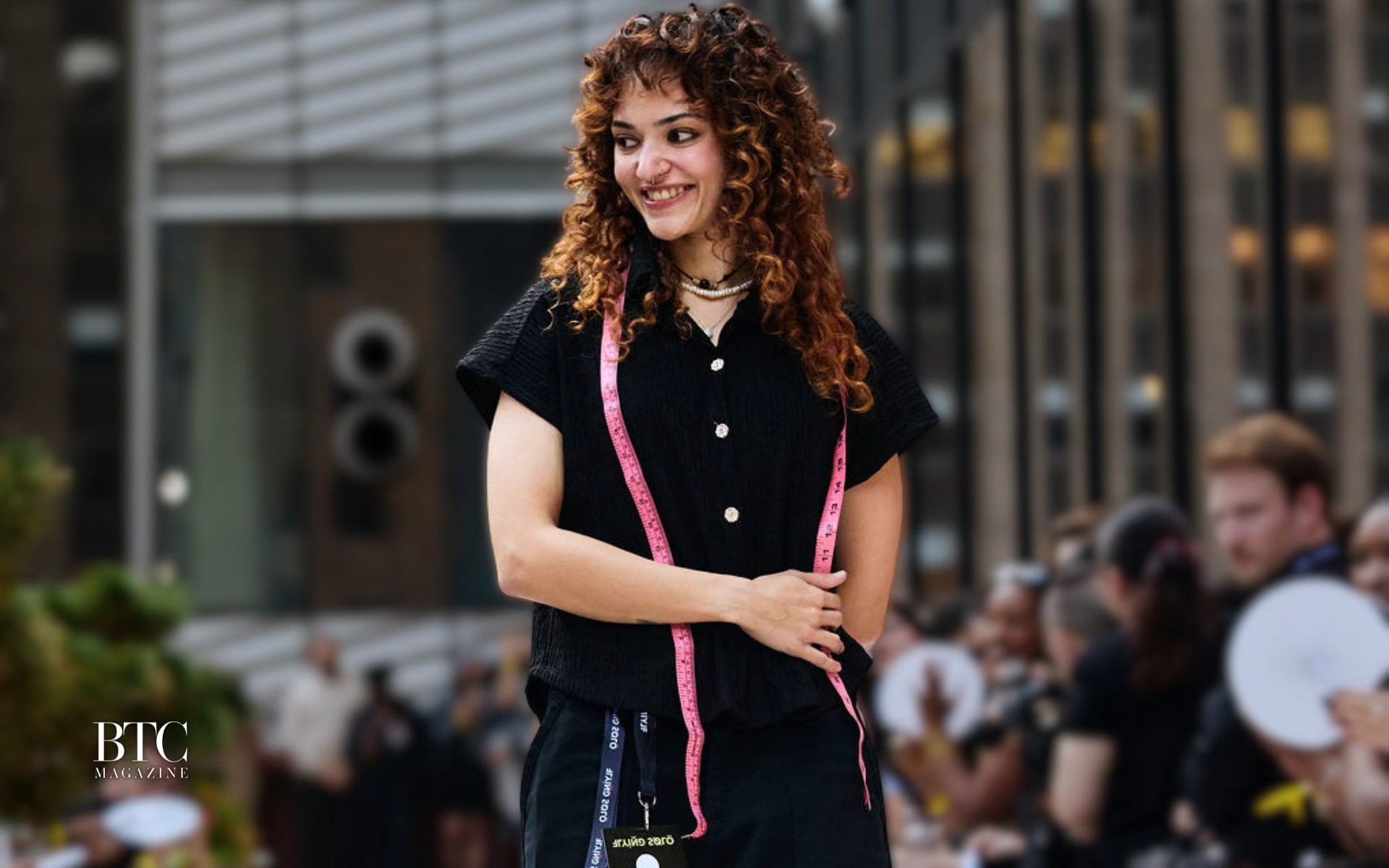
When the Fashion Capital Serves You Dreams, Disappointments, and One Designer Who Needs a Reality CheckBy: Joseph TitoThere's something about New York that makes you feel alive even when it smells like hot garbage and betrayal. Maybe it's the way the concrete seems to pulse with ambition, or how even the pigeons strut like they're on a runway. I went to Fashion Week expecting to see the future of fashion. What I got was a masterclass in both how to do it right—and a stomach-turning lesson in how catastrophically wrong it can go.Let me start with the good, because Runway 7 deserves their flowers before I burn down someone else's garden.The Organization That Actually Gives a DamnIn a world where fashion events often feel like you're crashing a party where nobody wants you there, Runway 7 was different. Three women in particular made magic happen: Diane Vara—the PR & Marketing Director who, despite handling all PR and managing a team of marketers, still took a second to make you feel welcomed with a simple, genuine smile; Christina Kovacs, Director of Brand & Sponsorships who refreshingly didn't know how she could help but still tried; and one more angel whose name I'm tracking down because my notes app crashed—fashion week, am I right?This matters more than you think. When you're surrounded by people who look like they subsist on green juice and contempt, having someone treat you like an actual human being feels revolutionary.The Designers Who Understood the AssignmentLet's talk about Melissa Crisostomo from Unique Custom Threads. This woman gets it. Every piece that walked down that runway was a one-of-a-kind statement that made you stop mid-scroll and actually look. She's been at this for three and a half years, self-taught, originally a fine artist—and it shows. There's something about designers who come to fashion from other art forms. They're not trying to recreate what's already been done. They're creating what doesn't exist yet."Every time I approach a fashion collection, I try and create something new," Melissa told me backstage, and honey, she wasn't lying. That back-open number? Even the straight guys were taking notes.The models themselves were a revelation. Karan Fernandes, 29 but looking like she could play a high schooler on Netflix, flew in from Boston just for visibility—no hotel, no payment, just pure hustle and hope. Levana, a women's-only personal trainer who teaches self-defense on the side, strutted that runway like she was teaching it a lesson about power. These weren't just pretty faces; they were stories on legs.When New York Felt Like New YorkThere were moments when Fashion Week lived up to its promise. The energy backstage—"boobs, makeup, lashes, everything flying everywhere," as Levana perfectly put it. The grandmother from Alabama watching her 10-year-old granddaughter work the runway with equal parts pride and protective terror. The writer and her plus-one BFF who dressed like she was the main character (because honestly, she was).Even the city itself played its part. That particular New York magic where just walking the streets makes you feel like you're part of something bigger, even when you're dodging mysterious puddles and men who think "hey beautiful" is a conversation starter.But Then Came Rhinestone Sugar CoutureAnd this is where I need you to put down your coffee and pay attention.I had to walk out of a fashion show. Me. The person who sat through an entire experimental theater piece about sentient tampons. But this? This broke me.Picture this: Seven, eight, nine-year-old girls. High heels. Makeup that would make a Vegas showgirl blush. Outfits that—and I'm going to be very careful with my words here—made them look like miniature versions of something no child should ever be asked to embody.I'm a dad of six-year-old twin girls. Progressive as hell. No filter. Judge-free zone, usually. But when I looked over at two bodyguards watching that runway and saw something in their eyes that made my skin crawl? When a 62-year-old photographer from Brooklyn—a woman who's probably seen everything—put down her camera and whispered, "This feels like child trafficking"?That's not fashion. That's not art. That's exploitation wrapped in sequins and sold as empowerment.The Uncomfortable Truth About Dreams and DangerHere's what kills me: I don't blame the kids. They're kids. I don't even fully blame the moms, sitting there with stars in their eyes, dreaming of their daughters' names in lights. We all want our children to shine. But there's a difference between letting your child shine and putting them on display like that.The designer—whose name I won't give the dignity of printing—chose to put those children on that runway in that way. In an industry already riddled with predators and problems, she chose to serve up vulnerability on a silver platter and call it fashion.One grandmother I interviewed put it perfectly: "I'm happy and I'm a little scared... I think about the times we're in and what could happen." She was talking about her granddaughter doing regular pageants, fully clothed, age-appropriate. Imagine how the parents of those Rhinestone Sugar girls should feel.What Fashion Week Should BeFashion Week should be about innovation, not exploitation. It should be about Brianna from Bri Romi, marketing her brand through social media and refusing to believe she needs traditional runways to be successful. It should be about models like Anya Patel, whose mom is in the front row being her "biggest fan," fixing her hair and taking pictures. It should be about designers who understand that making people feel something doesn't mean making them feel sick.The truth is, for all its pretension and $25 cocktails, Fashion Week at its best is about dreams taking shape. It's about self-taught designers getting their shot. It's about models from Brazil and Boston and Alabama converging on Sony Hall to walk for visibility, not pay, because they believe in something bigger.The VerdictRunway 7 did something beautiful. They created a space where emerging designers could show their work, where models could build their portfolios, where fashion felt accessible and exciting. They treated people like humans. They made magic happen on a budget and determination.But they also hosted Rhinestone Sugar Couture. And that's a stain that no amount of sequins can cover.Fashion Week is supposed to be the dream factory, the place where art meets commerce meets culture. When it works, it's transcendent. When it fails, it fails spectacularly. And when it crosses the line from fashion into exploitation?That's when we need to stop clapping and start calling it out.Because those little girls deserved better. We all did.
Explore Our Curated Collection
Discover exclusive literary merchandise, from beautifully designed book accessories to curated gifts for book lovers
Literary Essentials
Curated book accessories for the discerning reader
Exclusive Merchandise
Thoughtfully designed products for book lovers
Perfect Gifts
Unique items for the bibliophile in your life
Thoughtfully curated for readers who value quality and design
Beyond the Page: Your Gateway to Meaningful Reading
Between the Covers is more than a magazine; it's your all-access pass to the world of profound literature. We offer avid readers curated literary content, in-depth author interviews, and authoritative criticism, creating Canada’s premier hub for literary discourse and discovery. Join our community.
Between the Covers: A Premier Online Literary Magazine
Explore one of the best literary magazines online. Our subscription-based site delivers curated literary content, deep meaningful book reviews, and candid author conversations. As a top Canadian digital magazine, we are the definitive source for avid readers seeking intelligent, meaningful reading.
Join a Community of Avid Readers and Critical Thinkers
Between the Covers is a reader-supported literary magazine and a vibrant hub for literary discourse. Access our wealth of resources—from parenting and wellness sections to profound book analysis—and connect with a community dedicated to deep, meaningful reading and contemporary literature.
Gain Unrivaled Access to the Literary World
Secure your premium reader membership to Canada’s critically acclaimed literary journal. Enjoy an ad-free experience with unrestricted access to our extensive repository of book criticisms, author wisdom, and long-form reviews. Invest in your literary culture with our indispensable resource.
Find Your Next Meaningful Read: Curated for the Discerning Reader
Tired of endless browsing? Between the Covers is your trusted book recommendation source. We provide insightful literary analysis and curated lists of the best meaningful books to read, making us the go-to literary criticism source for Canadians who value profound narrative expertise.
Explore By Interest
What Others Are Saying
"BTC is the preeminent online book magazine for deep textual analysis. As a scholarly resource, it offers unparalleled literary insights and expert commentary. It's my go-to source for intelligent discourse, moving beyond simple reviews to provide truly meaningful explication de texte for the critical reader."— Eleanor Vance, Professor of Literature
"This is the definitive digital publication for readers seeking more than a summary. The long-form book reviews and candid author interviews provide a wealth of literary perspective. The subscription is an indispensable resource for anyone invested in contemporary literature and narrative expertise."— Marcus Thorne, Content Strategist & Avid Reader
"BTC fosters a vibrant book discourse community. It's a hub for critical readers offering insightful author discussions and professional book assessments. The member-only content provides privileged access to a deep literary database, making it a treasure trove for any literature lover."— Chloe Bennet, Librarian & Bookstagrammer
"The magazine offers an enlightening literary dialogue that I haven't found elsewhere. The unfiltered author discussions and perceptive literary analysis have profoundly improved my own writing craft. It's a patron-supported writing community that champions deep, thoughtful literary criticism."— David Chen, UX Designer & Fiction Writer