The Ranch in Curaçao
We are sitting at one of the long tables under the shed they built, the one where the children wait for their lessons. It is hot in the way Curaçao is hot, which means the shade does most of the work and the wind does the rest. The place smells of manure. Goats wander loose. There are dogs everywhere, most of them rescued, no two of them the same breed.
Monique Plaizier-Wiertz has her arms on the table. She has told me twice already that I am not going to get what I came for.
Monique: I'm not going to give you what you want, because I didn't want this.
I should say here that my daughters take lessons at this ranch. That is how I know these three women, which is why I wanted to write about them, and you are entitled to weigh both facts.
And I should say that I came with a story already half-written in my head — the one where a woman hits an age, decides she is finished, sells everything and starts again somewhere warm. It is a story people like. It is not what happened here. She was done, and she did not want a new life, and she got one anyway.
"I Think We Can Do It So Much Better by Ourselves"
In 2021, three women were drinking coffee at a kitchen table in Curaçao when the youngest of them, Chantal Wiertz, said she wanted a ranch of her own.
Chantal: We started at another place, and there were a lot of things I really didn't like. And one day I just said, I think we can do it so much better by ourselves.
Nathasja: And then Mom was like, "Oh, not again." And I was like, yes. Let's do it.
Monique: My gosh. Did I say no? I don't want it!
Monique and the Horses
Monique has been around horses since she was ten years old. In Holland she had her own stable — not a hobby, a business, the whole of her working life. Then in 2008 her husband went missing. His body has never been found. Dutch law allows a person to be declared dead after a set number of years, and that process runs through television and newspapers, so for six years the family's private catastrophe was public property. She is, in her own phrase, on paper a widow.
She had four children. The boys were four and five. She gave up the stable.
Monique: And if you decide once to quit it, then you never want to go back.
They left for Curaçao in 2013, and not for the weather. What she wanted to get away from was being recognised — or more precisely, her children being recognised.
Monique: Adults will never ask me anything. They always ask the children.
"If It Is Their Dream, Who Am I to Say No?"
Years later there was a birthday. The girls went riding and came home talking about a man with a horse who needed help with it.
Monique: I said no. I don't want it. I don't want to do it anymore. I have a nice life now. Peaceful. Quiet.
She went anyway. She helped train the horse. Her daughters wanted to start again.
Monique: If it is their dream — who am I to say no? Even if it costs me my peace and my house.
"I Don't Have a Dream"
I asked her what her own dream was. It went badly.
Monique: Because I don't have a dream.
JT: No, you have to. You've got to have a dream.
Monique: No.
JT: When you were a little girl, and you thought about —
She stopped and looked down at her hands on the table. They are covered in tattoos, and they are beautiful, and I had not noticed them until she looked at them. Then she looked up at me and shook her head.
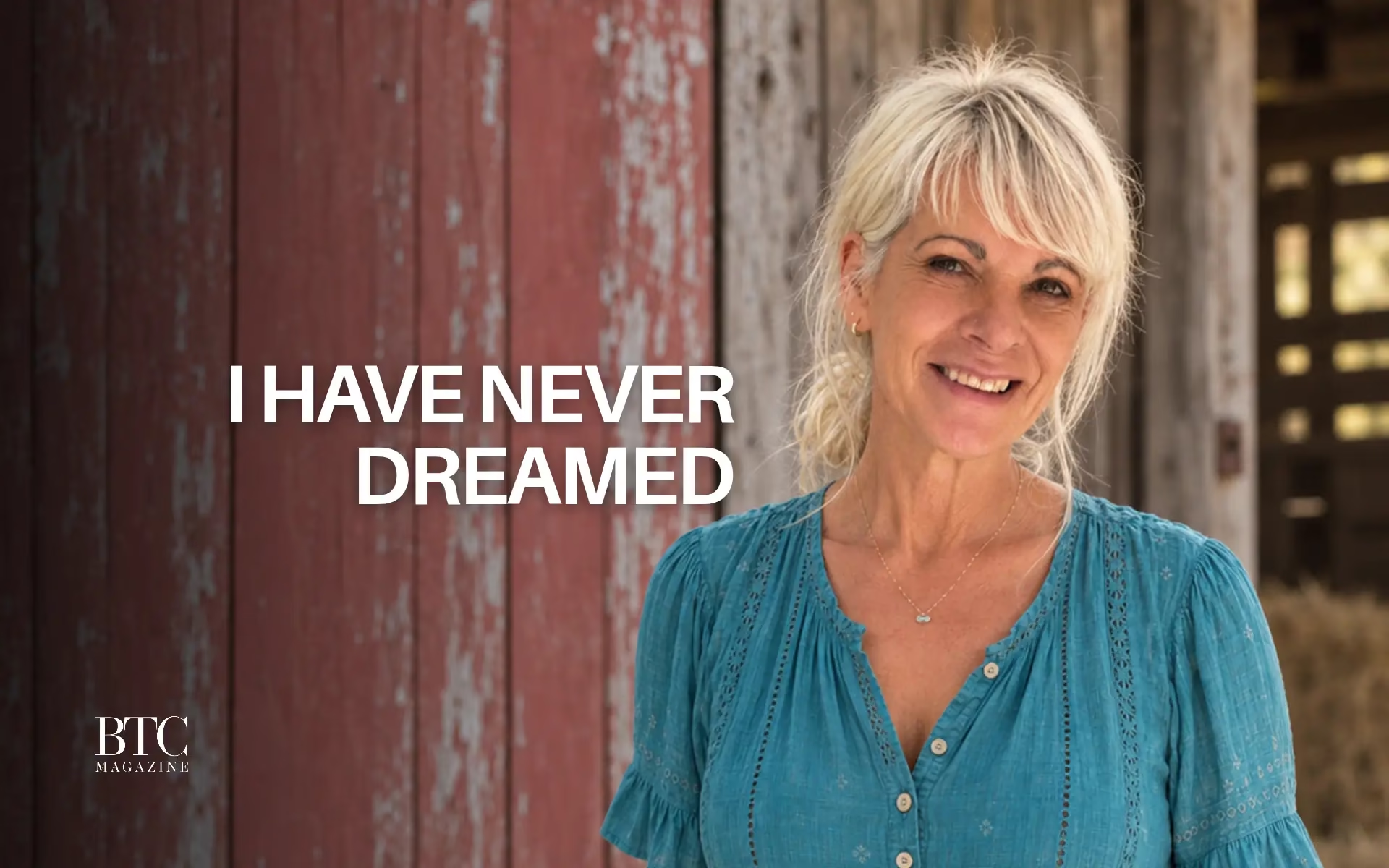
Monique: No. I have never dreamed. I was always thankful if we managed today, and that my parents were happy. I never knew what I want with life. I have my horses. And even with my horses, I didn't have the dream to become the biggest or the greatest one. No.
Later she produced one, reluctantly, and it turned out not to be for her either — that people would accept each other as they are, and not know how to be jealous.
Monique: That is my dream. But I know I can't build it.
Chantal: Two Worlds
Chantal is the only one of the three who has done this before. She spent that period being Miss Universe Curaçao — she went to Florida, finished in the Top 21 — and it shows in the way she answers, which is to say quickly, in whole sentences, without the pauses her mother leaves everywhere. She came home from all that to a plot of scrub with nothing on it.
Chantal: I was so caught up in the fashion industry that getting my hands dirty seemed unreasonable. It seemed so strange to go from full glam to basically walking around like Adam Sandler.
She declined, in the end, to pick.
Chantal: I decided I can live in two worlds. I don't have to decide who I want to be.
Built by Hand
They built the place themselves, which is a thing people say loosely and these three mean literally. They bought decommissioned street lights, nine and eighteen metres long, and Monique cut them down by hand into fence posts — one a day, until they were done. Then she mixed the cement. They drove around collecting stones from building sites where the stones were free.
Monique: You can do everything. Because you are a woman, don't say "I can't do that." That's not what I teach my children.
Four and a Half Months in a Tent
They took the land on 7 August 2021. Nathasja Plaizier lived on the site in a tent for four and a half months while it went up, because there was no fence yet and the animals were unprotected.
Nathasja: I got up every morning at 4:15. Gave the horses their water, gave food, closed off the terrain. Then go home, shower, make lunch. Grab all of the bread I used to take to school — because I taught first graders, and I knew most of them did not have any food. So I took bread with me so we could have circle time with a white piece of bread and some chocolate paste. Go to work, come back, change, go to the ranch, teach classes, work, build.
JT: That was four months of your life.
Nathasja: Yeah. It was awesome.
For part of that time there was no money for food. The rule at the ranch is that the animals eat first. For a while that was not a philosophy.
She still teaches. Not first grade anymore — children on horses, in the afternoons, on the terrain she cleared herself. Mine are among them.
What It Cost
So I asked all three of them what it had cost.
Both daughters answered with their own body weight before anything else. Nathasja lost forty-five or fifty pounds. Chantal went from around sixty-four kilos down to fifty-five.
Chantal: Sometimes the work takes a lot.
Pressed, they found other answers.
Chantal: I started losing a lot of friends, because I wasn't able to give anymore — and they would just take, take and take, and I couldn't keep up. And even in romantic relationships. I already have to give a lot of responsibility and love to what I have now.
JT: They'd have to be someone that understands.
Chantal: Someone that understands. And I haven't met that person just yet.
Nathasja thought about it for a long moment.
Nathasja: Acrylic nails. That's the only thing.
I had been looking at their hands all afternoon without meaning to. All three of them have the same hands — you can see the land in them, and the horses, and the cement. Their nails tell you the rest. Whatever she gave up, it wasn't only the acrylics.
"Because We're Just Women"
I asked what they'd been up against, and only then did the island come into it.
Chantal: The external voices were always saying we weren't able to do it because we're just women. We need a man in our life — a real man — to make things work.
There is no man. There is a gate, with a sign on it that Nathasja made, saying that the problems stay outside.
Monique: And still we have our own sorrow.
Crying in the Mud
They are unsentimental about the animals, which is not the same as not loving them. Asked for the worst day a guest never sees, both daughters went to the same place.
Chantal: They don't see the tears we cried. They don't see the amount of pain we felt when you put an animal like that to rest.
Nathasja: I was crying in the mud. I refused to get up. I think I was crying in the mud for two hours in the middle of the night.
The mare was called Escorpiona. It was her first foal, and it took long enough that she was able to see the body.
Nathasja: So she knew that her baby wasn't alive, so she didn't get depressed or anything. I did. But at least she was good.
Dream It, Believe It, Do It
Nathasja has advice for anyone reading this, and it is the advice of a woman who got the thing she asked for.
Nathasja: Dream it, believe it, and do it. Don't wait, don't make plans, don't write plans. Just go for it.
"I'm Done"
Her mother turns sixty in a few months. I asked her what happens if this stops working when she is sixty-eight.
Monique: Then I probably still clean the house, make the food for the children, try to ride a horse, walk with a horse to teach him, help children. So far I can.
JT: So you're going to keep doing this the whole time?
Monique: Yeah. I think, yeah.
JT: Okay. That's it. You're done.
Monique: I'm done.
JT: You're done.
Monique: I'm done.
Monique had her own stable in Holland from the age of ten. She gave it up once, and she meant it. Then her daughters — one of them a Miss Universe finalist — decided they wanted a ranch in Curaçao, and she said no — and then, at fifty-four, she cut streetlight poles down by hand, one a day, until they had fences. Three women on who actually gets to be done.
By Joseph Tito







Comments
No comments yet
No comments to show yet. Subscribe to join the conversation.
Log in or subscribe to comment on this article.