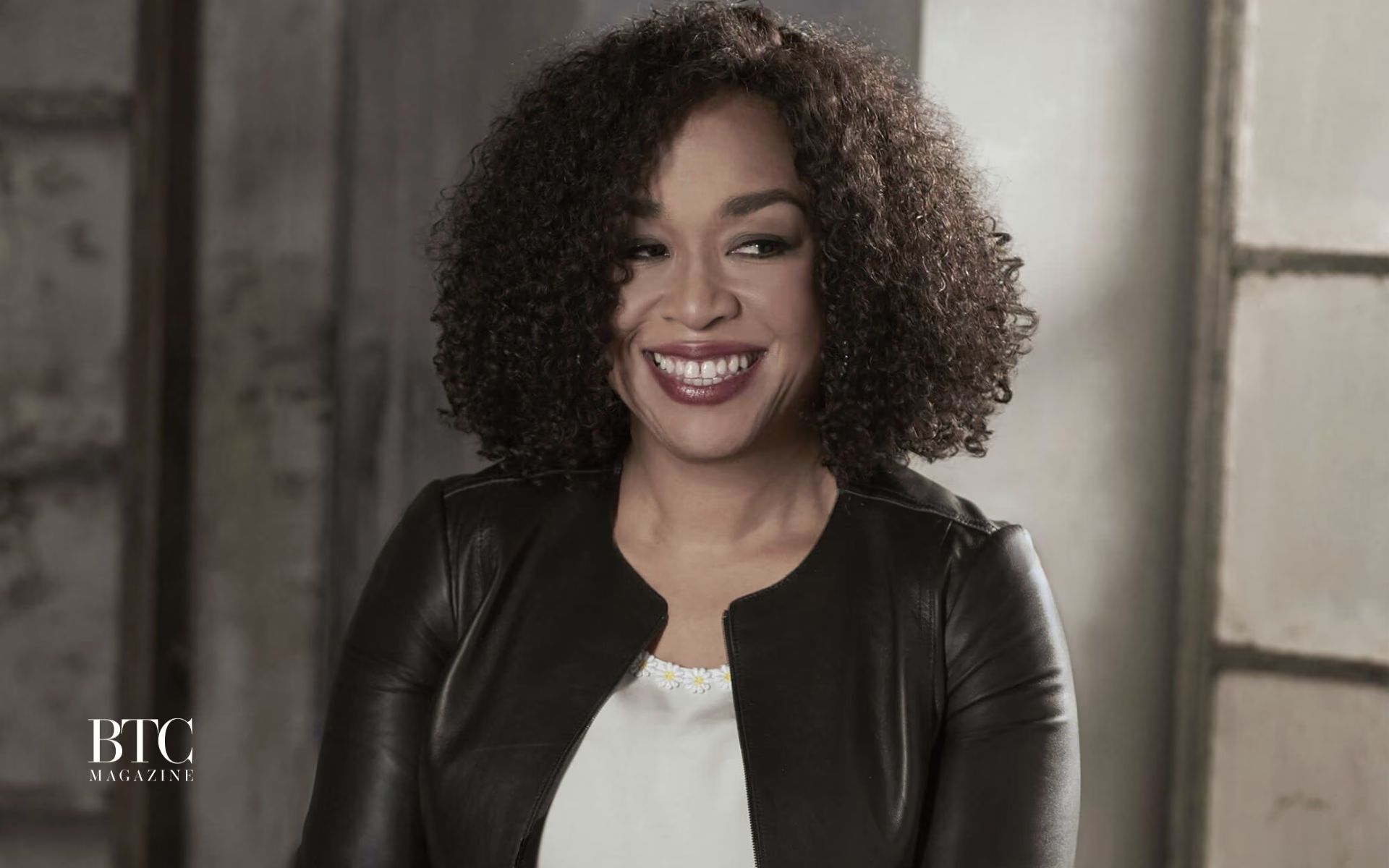
There are very few names floating around the television and film industries who are considered to be trailblazers for women of colour, yet Shonda Rhimes is one that continuously stands out, and has been setting that standard in various ways since 2005. Through her inclusive casting and redefinition of traditional roles of power, Rhimes has broken records while continuing to support other women of colour in her field.
Grey's Anatomy
Premiering in 2005 and still on the air today, the success of Grey’s Anatomy propelled Shonda Rhimes’ career forward. Not only is the show still in production twenty one years later, but Grey's Anatomy remains increasingly popular. One way Rhimes has accomplished this specific longevity is through her frequent character/actor turnover. Leveraging the television show's hospital setting, Rhimes introduces new surgical interns through waves every few seasons, providing frequent and endless opportunities for new young actors.
Though the show is still led by a white actress, Rhimes has been casting women of colour in supporting roles as early as season one. Black, Asian, Latina, as well as other women of colour have been populating this cast through the majority of the show's duration, and are often found to be dominating positions of power, flipping traditional societal roles.
Scandal
Airing from 2012-2018, Scandal dismantled barriers in the television and film industry for women of colour. The show was led by Kerry Washington, playing the character of Olivia Pope. Rhimes has stated when she developed the character of Olivia Pope, she did not want her to be black, the character simply was black. During her ideation and revision stages of the show's development, Rhimes knew that the cultural aspect to the character was important to the show’s integrity, and would not have the character cast in any other way. This decision, partnered with Rhimes’ determination, resulted in the deviation from network standards while Kerry Washington became the first black woman to lead a network drama in forty years.
Bridgerton
Similarly to Grey’s Anatomy, Rhimes has again utilized her network standing to depict traditional roles of power in unconventional ways, through her Netflix show Bridgerton. While the show still features a predominantly white cast, Shonda Rhimes reimagines the period drama by casting numerous BIPOC in traditionally white roles. The character of Kate Sharma leads the plot in the second season of the show as a romance between Kate and Antony, a Viscount of his house, bubbles hesitantly. The character of Kate Sharma is played by Simone Ashley, a British-South Asian actress.
Throughout the entire duration of the show and leading her own character driven spin-off, Queen Charlotte is another role that is filled in a non traditional manner. In Bridgerton, Queen Charlotte is played by British-Guyanese actress Golda Rosheuval. In Queen Charlotte: A Bridgerton Story, the character is played by India Aamarteifo, a British actress of Ghanaian and German descent. In traditional period dramas, roles such as these would have been undoubtedly filled by white actresses’. Yet Shonda Rhimes challenges these traditional industry standards by filling these roles with diverse individuals, in order to further connect with her audiences on a cultural level.
Shonda Rhimes: Cultural Differences
There is a standard in our society, one so small and distinct, that has created identity complexes in women all over the globe. It eventually becomes the belief for many women of colour, that they must abandon parts of their cultural identity, their roots, in order to achieve success. Shonda Rhimes’ career in the television and film industry challenges this notion, as she has utilized her cultural identity for twenty one years in order to create roles for women of colour, strategically casting new and diverse actress’ in a mutually beneficial way, as well as flipping traditional roles to depict power in refreshing ways. Throughout the duration of her career Rhimes has broken roadblocks and records, forever changing the foundation of the industry since her first step within it.


Comments
No comments yet
No comments to show yet. Subscribe to join the conversation.
Log in or subscribe to comment on this article.