Picture this: you've finally made it to the Eiffel Tower. You snap the photo, tick it off your bucket list, and move on. But do you actually remember how you felt? I remember eating pasta in a tiny kitchen in Puglia. An Italian nonna rolled dough with hands that had done this for sixty years. Flour dusted the table. Garlic sizzled in olive oil. She didn't speak English. I didn't speak Italian. But we understood each other perfectly.
That moment changed how I travel forever. (Yes, I'm speaking from experience.) Food travel experiences aren't about ticking boxes. They're about connection. They're about sitting at a stranger's table and realising you're not strangers anymore. They're about tasting something no restaurant menu can replicate. You deserve travel that feeds your soul. Not just your Instagram feed.
In our Food & Culture corner, we believe the best trips start with your appetite. This guide breaks down why food travel experiences create memories that last. You'll learn where to go. You'll learn what to look for. You'll learn how to plan your first one. No passport required. Just an open mind and a hungry heart. Let's dig in.
What Makes a Culinary Retreat Different from a Cooking Class?
Beyond the Recipe
A cooking class teaches you a dish. A culinary retreat changes how you see food. That's the difference. In a class, you follow steps. You chop. You stir. You plate. You take your photo. You leave. In a retreat, you live the food. You wake up to bread baking. You walk to the market with your host. You haggle over tomatoes in a language you barely know. You learn why that tomato tastes different from the ones back home. You don't just learn a recipe. You learn a story. These food travel experiences sink into your bones.
A Day in the Life
Picture this. You wake up in a farmhouse in Tuscany. Coffee steams in a tiny cup. Your host hands you a basket. You walk through olive trees. You pick herbs you can't name yet. By midday, you're elbow-deep in pasta dough. Flour covers your arms. You laugh at your lopsided ravioli. Your host laughs too. She shows you the trick. You try again. It's still lopsided. She hugs you anyway. Evening brings wine from the vineyard next door. You eat what you made. It doesn't look like the cookbook photo. It tastes better. Way better. That's a day in a culinary retreat. Not a schedule. A rhythm.
Who Are Culinary Retreats For?
You. They're for you. Maybe you're forty-two and you've never travelled solo. Maybe you're fifty-five and you want something deeper than a cruise. Maybe you're thirty and you need a break from your screen. Culinary retreats welcome beginners. They welcome experts. They welcome women who burn toast and women who ferment their own kimchi. You don't need fancy knife skills. You need curiosity. That's it.
Why Food Creates Deeper Travel Memories
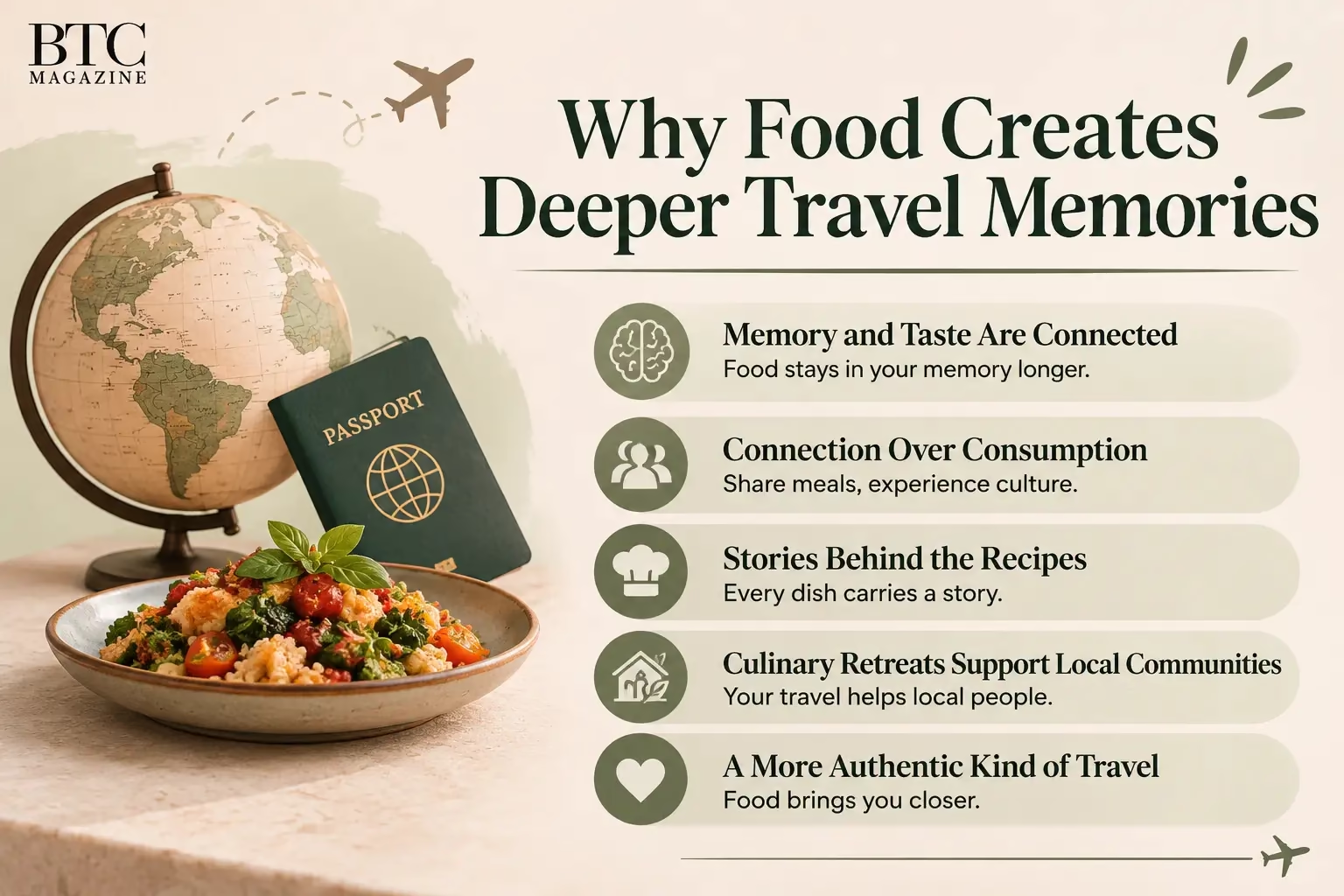
Memory and Taste Are Connected
Here's the thing most people don't realise. Your brain links taste to memory more tightly than sight. You can forget a monument. You never forget a flavour. Think about it. You probably can't describe your last hotel lobby. But you remember your grandmother's soup. You remember your first proper curry. You remember the peach you ate on a hot afternoon. Food travel experiences hack your memory. They create anchors you can't shake. Years later, one bite transports you back. That's magic.
Connection Over Consumption
Tourism often treats places like backdrops. You consume the view. You move on. Food demands participation. You can't eat passively. You have to chew. You have to taste. You have to decide if you like it. When you cook with locals, that participation deepens. You're not watching someone else's culture. You're inside it. Your hands touch the same ingredients. Your nose smells the same spices. Your mouth tastes the same history. That kind of cultural immersion changes you. It softens the edges of "us" and "them."
Stories Behind the Recipes
Every traditional recipe carries a story. That mole sauce? It took someone's abuela three days to make. That injera bread? It ferments for days using a starter passed down generations. That tagine? It reflects centuries of trade routes and migration. When you learn these stories, you don't just eat food. You honour the hands that made it. You carry those stories home. That's authentic travel. Not the postcard version. The real version.
How Culinary Retreats Support Local Communities
Economic Impact
Here's something that matters. Your tourism dollars actually stay local. Big hotel chains funnel money to corporate headquarters. Culinary retreats often support family farms. They support small producers. They support women who've cooked for their villages for decades. When you pay for a retreat, you're not buying a service. You're investing in a community. You're keeping traditions alive with your wallet. That feels different. It should.
Preserving Traditions
Young people leave villages for cities. Old recipes get lost. Languages fade. It's happening everywhere. Culinary retreats give elders a reason to keep teaching. They give traditional recipes a new audience. They remind younger generations that their heritage has value. You're not just a tourist. You're part of the preservation.
A More Authentic Kind of Travel
Let's be honest. Some travel feels hollow. You see the sights. You eat at tourist traps. You come home with photos and jet lag. Food travel experiences offer something else. They offer belonging. You sit at a table. You share a meal. You become part of a family for a week. That kind of travel feeds you in ways sightseeing never will.
The Best Destinations for Food Travel Experiences
Mediterranean Markets and Coastal Kitchens
Italy gets the glory. But don't sleep on Greece, Portugal, or Croatia. In Greece, you might learn to make phyllo dough from a yiayia who's never used a measuring cup. In Portugal, you'll taste bacalhau prepared twelve different ways. In Croatia, you'll eat seafood caught that morning while overlooking the Adriatic. The local cuisine here revolves around simplicity. Fresh olive oil. Ripe tomatoes. Herbs from the garden. You don't need fancy techniques. You need good ingredients and patience. These culinary experiences teach you to slow down. That's the real gift.
Southeast Asian Street Food and Home Kitchens
Thailand. Vietnam. Malaysia. Indonesia. The home cooking here will ruin you for takeout forever. You'll pound curry paste in a mortar until your arms ache. You'll wrap rice paper around herbs with fingers that still don't know the trick. You'll slurp noodles from a bowl on a plastic stool while motorbikes buzz past. The flavours hit every note. Sweet. Sour. Salty. Spicy. Bitter. Sometimes all at once. This is where food travel experiences get intense. In the best possible way.
Canadian Culinary Experiences You Shouldn't Miss
You don't need to leave the country. Canada has incredible food travel experiences waiting. In Quebec, you can learn to make tourtière from a chef who's perfected it over decades. On the West Coast, Indigenous-led retreats teach you about traditional foods and land stewardship. In the Maritimes, you'll shuck oysters while the Atlantic crashes nearby. Our At the Table section celebrates these local treasures. Canadian food culture runs deeper than poutine and maple syrup. Way deeper. You should explore it. Your own backyard holds stories you haven't tasted yet.
What to Look for in a Culinary Retreat
Small Groups and Personal Connections
Big groups kill intimacy. You want a retreat that caps attendance. Six to ten people feels right. Twelve max. Small groups mean you actually talk to your instructor. You ask questions. You mess up and get corrected. You bond with strangers who become friends. That's where the magic lives. Not in the crowd. In the conversation.
Local Instructors, Not Celebrities
Famous chefs make great TV. They don't always make great teachers. Look for retreats led by locals. Grandmothers. Farmers. Market vendors. People who learned home cooking from their families. People who cook because they love it. Not because they have a brand. These instructors teach with patience. They teach with stories. They teach with love.
Flexibility and Dietary Needs
You shouldn't have to apologise for how you eat. Good retreats accommodate vegetarians. They accommodate allergies. They accommodate halal and kosher needs. Ask before you book. A quality retreat will work with you. They'll adapt recipes. They'll find substitutes. They'll make sure you feel included. Your dietary needs aren't an inconvenience. They're part of who you are.
Is It Safe for Solo Female Travellers?
Yes. But you need to do your homework. Look for retreats with solo women in their reviews. Look for hosts who communicate clearly. Look for accommodations that feel secure. Trust your gut. If something feels off during booking, walk away. There are plenty of amazing options. You don't need to settle. Many women find culinary retreats safer than standard solo travel. You're in a group. You're in someone's home. You're connected from day one. That said, tell someone your itinerary. Check in regularly. Carry a portable charger and local emergency numbers. Common sense travels with you everywhere.
How to Plan Your First Culinary Retreat
Researching the Right Destination
Start with what you crave. Do you want rolling hills and wine? Do you want bustling markets and spice? Do you want ocean air and fresh catch? Your destination should match your appetite. Literally. Read reviews from women who've actually attended. Not just the glossy ones. Look for reviews that mention the hard stuff. The early mornings. The language barriers. The moments that didn't go as planned. Those reviews tell you more than perfect photos ever will.
Budgeting for a Culinary Retreat
These trips aren't cheap. But they're not always expensive either. Some retreats include everything. Accommodation. Meals. Excursions. Transfers. Others charge a base fee and add extras. Read the fine print. Ask what's included. Ask what's not. Budget for tips. Budget for splurge meals out. Budget for the cooking tools you'll want to bring home. Think of it as an investment. You're buying memories. You're buying skills. You're buying stories you'll tell for years.
Booking Tips for Women Travellers
Book directly with the retreat when you can. It saves fees. It builds a relationship with your host before you arrive. Join Facebook groups for women travellers. Ask for recommendations. Someone's already been where you want to go. They'll tell you the truth. Check if the retreat offers payment plans. Many do. You shouldn't have to drain your savings for a meaningful trip.
Packing and Preparing
You don't need much. Comfortable shoes for market walks. An apron you don't mind staining. A notebook for recipes. A good appetite. Leave room in your suitcase. You'll bring home spices. You'll bring home olive oil. You'll bring home a ceramic bowl that reminds you of laughter around a farmhouse table. Don't overpack. You're not attending a gala. You're going to get flour on your shirt. Embrace it.
Conclusion
You don't need another selfie in front of a landmark. You need a memory that lives in your bones. Food travel experiences give you that. They give you flour-dusted hands and wine-stained lips. They give you recipes written on napkins. They give you friends you never expected to make. Whether you're forty or sixty. Whether you travel solo or with a sister. Whether you book a retreat in Tuscany or Toronto. The principle stays the same. Show up hungry. Leave changed. Start small. Pick one destination that makes your mouth water. Research one retreat. Send one email. Your next great memory is waiting in a kitchen you've never seen. You've got this. Now go eat something amazing.







Comments
No comments yet
No comments to show yet. Subscribe to join the conversation.
Log in or subscribe to comment on this article.