WANTING OUT — AS-TOLD-TO SHELL
Framed and conducted by Joseph Tito | Subject anonymous, called "Daniella" | The Appetite Issue
BYLINE: As told to Joseph Tito DEK: Nobody warns you about leaving the good one. The bad marriages are easy to walk away from. She left a kind man.
--- YOUR FRAMING INTRO (you write this, ~150 words) ---
I've spent fifteen years in kitchens and living rooms listening to women tell me the truth after everyone else has left the room. Usually the truth has a villain in it — a hand raised, a secret phone, a woman who wasn't supposed to be there. Those stories are easy. You already know who to be angry at before the first sentence is finished.
Daniella's story doesn't have one of those. Her husband made her coffee the way she liked it without being asked. He never once raised his voice at her in eleven years. He drove four hours through the night when her father died and didn't say a word the whole way, just held her hand at every red light. She left him anyway.
She asked to stay anonymous — she has kids, and a mother who still isn't speaking to her. Here, in her own words, is what wanting looks like when it has no name and nobody to blame.
--- IN HER WORDS (MODEL — replace with real quotes) ---
He made my coffee every morning before I was even out of bed, and he got it right — the milk, the half spoon of sugar — without ever once asking me to remind him. He never raised his voice at me, not once, not in eleven years, not even the year we lost the house money to his brother's business. When my father died he drove me the whole four hours home in the dark and didn't fill the silence with anything, he just kept his hand on my knee at every stoplight like he was checking I was still there. I want to say that clearly first, because everything after this sounds like ingratitude if you don't hear that part first. There was nothing to point at. I looked. I promise you I looked.
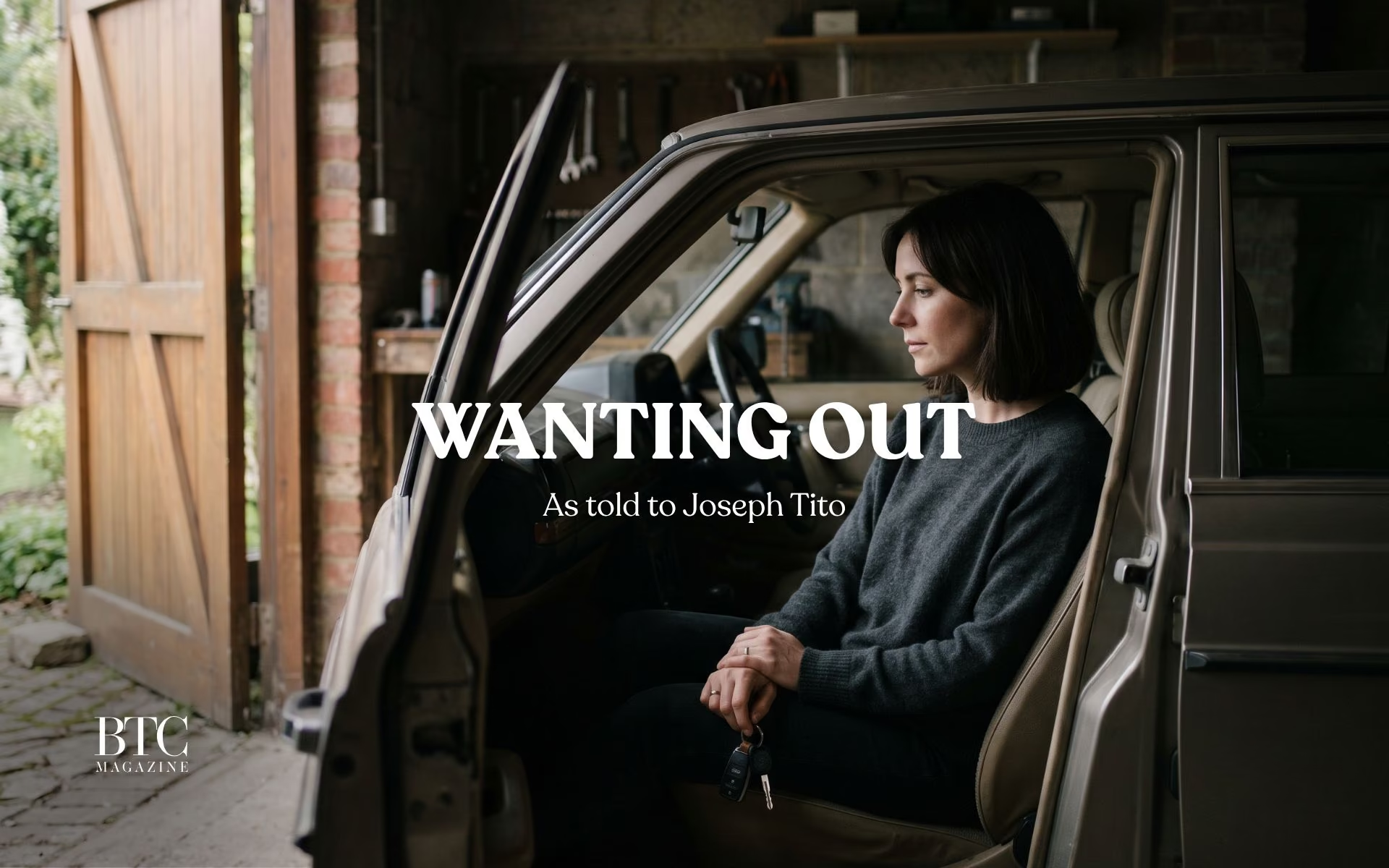
The wanting didn't have a name. It showed up in the driveway, of all places. I'd pull the car into the garage after the school run and just sit there with the engine off, not ready to open the door and go back inside to a house where nothing was wrong. Fifteen, twenty minutes some days, radio off, just sitting in a garage that smelled like fabric softener and cut grass, feeling something I couldn't have written on a form. There's no box for "he's kind and I still can't breathe in there." Marriage counselors ask you what's broken. Nothing was broken. That was the whole problem — there was nothing to fix, so there was nothing to hold onto to justify leaving.
A bad marriage gives you permission. Somebody hits you, cheats on you, forgets your birthday three years running — you get to point at the wound and say, see, this is why. A good marriage doesn't give you that. It gives you guilt instead, just dressed up nicer. Guilt with good manners, I used to call it. You lie next to a man who has done nothing to you and you feel like the criminal in the room, because you are the only thing wrong with the picture.
When I finally told people, they didn't get sad, they got angry — angry at me, like I'd insulted something they believed in. My sister actually said "he's perfect" to my face, like that was an argument, like perfect was a reason to stay instead of the reason I couldn't. There's a rule nobody says out loud but everybody enforces: you don't leave the good one. You're allowed to leave a bad man. You are not allowed to leave a kind one, not without becoming, in everyone's eyes, the bad thing in the story yourself.
It cost me almost everything I thought I'd get to keep. My daughter didn't speak to me for four months. My mother still barely does. I gave up the house, I gave up half of everything, and there's a specific night I won't ever fully explain to anyone — sitting on the floor of an empty apartment with no furniture yet, eating cereal out of the box because I hadn't bought bowls, and crying in a way that had nothing to do with missing him and everything to do with not recognizing what I'd done.
Am I happier? No. I want to be honest, because everyone wants the happy ending and I don't have one to give them. I'm not happier. I'm just mine. That's the only word that fits. I didn't trade up to something better, I didn't trade down to something worse — I traded sideways, into a life that's smaller and colder in a lot of ways and belongs entirely to me.
What I want people to stop assuming is that a woman who leaves a good man is ungrateful, or broken, or chasing something shinier. Sometimes she's just done disappearing inside someone else's kindness. To the woman sitting in her own version of that garage right now, engine off, not ready to go in — I'd tell her the wanting doesn't need a reason good enough for other people. It only needs to be true.
--- INTERVIEW QUESTIONS TO CAPTURE IT ---
Tell me about him. The good parts — be specific, the small unshowy things.
When did you first notice you wanted out? Where were you, what were you doing?
What did the wanting feel like when it had no name and no reason you could say out loud?
Did you go looking for something wrong with him? What did you find?
Who did you tell first, and how did they react? Who got angry?
What's the rule you broke? Say it the way it lives in your head.
What did it actually cost — money, the kids, the people who left you over it?
Tell me about the loneliest moment after. Don't clean it up.
Are you happier? Be honest, even if the honest answer is no.
If happier isn't the word — what is?
What do you want people to stop assuming about a woman who leaves a good man?
What would you say to the woman sitting in her own parked car right now?




Comments
No comments yet
No comments to show yet. Subscribe to join the conversation.
Log in or subscribe to comment on this article.