Wanting Out
The marriages that end loud are the easy ones to explain. He hit her. He cheated. He drank the mortgage. You can say those at a dinner party and watch the whole table nod, because the story comes with a villain and the villain is not you.
I didn't have one of those.
The Good Man
I had a good man. He remembered how I took my coffee for nineteen years. He never once raised his voice, not even the night I finally told him, when raising it would have been fair. When my father died, he drove through the dark to get me there in time and did not make a single part of it about himself, which, if you have buried a parent next to a husband, you know is rarer than men get credit for. He was kind in the unshowy way that doesn't photograph. There is no post for a man who quietly handles the thing before you have to ask. He was that man.
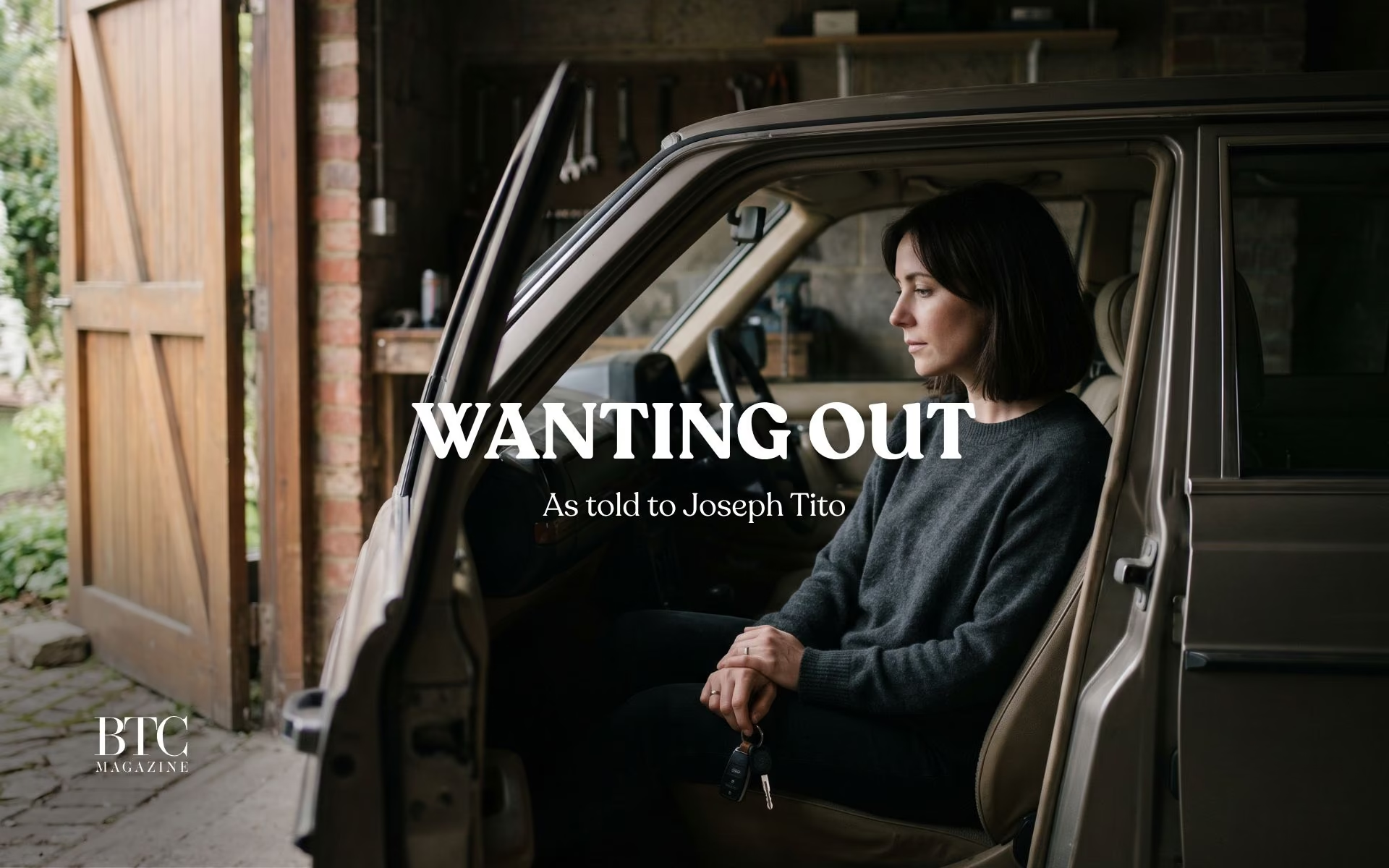
And I wanted out so badly that I used to sit in the parked car in the garage, engine off, keys in my lap, just to be somewhere he wasn't. Breathing. Ten minutes. Then I'd go back inside and reheat the dinner and be grateful, because everyone told me I had so much to be grateful for, and they were right, and that was the worst part.
Here is what nobody tells you. A bad marriage gives you permission. A good one just gives you guilt with better table manners.
The Wanting With No Name
I went looking for the thing that was wrong with him so I'd have something to point at. I want to be honest: there wasn't one. He was not cold, not cruel, not absent. He was present in the way you are present for a houseplant. Watered, turned toward the light, kept alive. I had become a thing that was kept alive. And somewhere underneath the gratitude was a woman I hadn't heard from in a decade, and she was not grateful. She was starving, and she had stopped sending up flares because no one was reading them anyway. If any part of this resonates, our piece on life after divorce explores that same reckoning further.
The wanting didn't have a name. That's what made it impossible to defend. If I could have said "I want him to stop doing X," we could have fixed X. But what I wanted was a life that felt like mine instead of one I was a good sport about. I wanted to find out what I'd order if no one was watching. I wanted, God help me, to be wanted in a way that cost someone something. None of that fits on a grievance form. You cannot file for divorce on the grounds of a quiet that has no bottom.
Breaking the Rule
When I told people, they got angry at me. Not sad. Angry. Because I had broken the rule, and the rule is: you do not leave the good one. The good one is the prize. Women have settled for so much worse and stayed and called it strength, and here I was walking out on a man who did the dishes, and it offended something deep in everyone. "He's perfect," my friend said, and what she meant was how dare you make the rest of us look at our own kitchens.
My mother asked what I expected to find out there that was better. I said I didn't think it would be better. She looked at me like I'd lost my mind, and maybe I had. We do not have language for a woman who walks toward worse on purpose because worse is at least hers.
The Leaving
I want to tell you the leaving was clean. It was not. It was a thousand small administrative cruelties, dividing a life into his and hers, the kids' faces doing math they were too young to do. There was a night I sat on the floor of an apartment with no curtains and understood exactly what I had given up and exactly how voluntary it had been, and there was no one to blame, which is the loneliest math there is.
And I would do it again.
The Cold Field
Not because I am happier. I want to be careful here, because this is where the essay is supposed to turn and tell you it all worked out, that I bloomed, that I found myself on a beach somewhere with better skin. I didn't. The grief is real and some mornings it sits on my chest. I traded a warm cage for a cold field, and the field is cold. I am not selling you the field.
But in the field, I am the one who decides. I wake up and the silence is mine, not a silence I am managing around someone else's mood. I eat dinner standing up over the sink because I want to, not as a small rebellion I'll feel guilty about. I bought the ugly green chair. I let the wanting come all the way up now, instead of meeting it in the garage for ten minutes and sending it back down.
I didn't trade up. I traded sideways, into a life that is smaller and colder and entirely mine. And it turns out that for some of us, ownership beats comfort. That we would rather be cold in our own house than warm in someone else's, even when the someone else is good, even when he is kind, even when every person we love is standing in the driveway asking what in God's name we think we're doing.
I think I'm wanting out loud. For the first time in my adult life. And I think that frightens people more than any bad marriage ever could, because a woman who leaves a cruel man confirms the rules. A woman who leaves a kind one breaks them.
He's doing well, by the way. I'm glad. He was always going to be fine. That was never the problem.
The problem was that I wanted to be more than fine, and I was the only one who thought that was a good enough reason. It turns out it was the only reason I had. It turns out it was enough.




Comments
No comments yet
No comments to show yet. Subscribe to join the conversation.
Log in or subscribe to comment on this article.