She is on a show that logged 59 million viewing hours, and she has never once had a plan. The cover star of The Done Issue on refusing the reasonable life — and the one thing she will not negotiate.
By Joseph Tito
Photography by Areta Peristeri
I asked twenty-year-old questions and got an answer none of them were built for.
The issue is called Done. So the last thing I asked Lindura was the obvious thing: what are you finished with?
She didn't pause.
"I am done with people using AI to edit my face into photos."
Then she kept going, and for the first time in an hour she got fast and specific and a little bit annoyed, which is where people always tell the truth. "Whatever happened to the good old crop technique of Photoshop? We cropped the face, it's me. Put it in the photo you need to. I'm so over looking at these photos of me that are not me. Why did you do that, though? It doesn't look like me."
I told her my company runs on AI. That without it I would not have opened in Marbella, or Pakistan, or Curaçao, that I would be sitting in Canada instead of on a patio in the Caribbean trying to keep two seven-year-olds out of the frame.
She didn't argue with any of it.
"I just want AI away from my face," she said. "Stop changing my face. Just leave it."
A question she wouldn't answer
That is the whole issue in six words.
I opened where nobody opens: the name.
There is one name in the entertainment coverage and a fuller one in the climate coverage, and I wanted to know whether that was strategy or accident.
"That's one of the questions where I'm like, eh," she said. "I don't feel like talking about it."
Fine. Noted, dropped, and printed — because a woman who says no in the first four minutes of a cover interview and doesn't dress it up is telling you something more useful than the answer would have been. In entertainment, she said, she goes by her stage name. That's it. Subject closed.
I want you to know we asked. I want you to know she declined. That is how this is supposed to work.
Sixty million hours, and a normal grocery run
Here is the part that broke my brain a little.
Her show, Sullivan's Crossing, has been watched for something in the order of fifty-nine million hours. Number one on Netflix in two countries. Four seasons in, renewed for a fifth. More people have watched Lindura work than ever watched Marilyn Monroe in a cinema, and she can still get through a shop without a scene.
I said as much. She laughed at me.
"Depends on the day. But no, there's not hordes of people coming up to me. I'm not Beyoncé."
Then she told me about the beach the day before. A few people came over. Me and my daughter watch it. My neighbour watches it. And here is where you find out what she actually is.
"Every time they do come up, they're always highlighting something very personal about their lives, and how it's touched them or helped them through something," she said. "Or how it's connected them with other people. They're like, I now get together weekly with so-and-so. That's the coolest feeling, because I love connection. To be part of creating connection with people just makes my heart warm."
Do you like the fame, I asked.
"I do. I like the fame. I don't feel famous. It's weird. I still don't feel famous." A beat. "It's just a byproduct of the fact that someone watches the show and they recognise me and they think that's great. I don't really think much of it past that."
Entirely unbothered by the thing most people spend a career chasing. I don't fully believe that's possible. I also couldn't catch her out on it, and I tried for an hour.
She has never had a plan. Not once.
She has an honours degree in cognitive science from Carleton. She has never used it.
"I had no clue," she said. "I was good at school, for one. I was like, well, I know I'm good at this thing, so let me do more. Also because it's just the normal that people were doing." She picked cognitive science because it is five fields stitched together — linguistics, philosophy, psychology, neuroscience, artificial intelligence, programming — "so you get to do a lot of things," and she bores easily. Her words: "It's ADHD brain. I recognise it."
Then a master's came up, because that is what comes next, and she looked at it honestly.
"I can't study the same topic for two years. It's not happening. I just can't do it."
That is the entire origin story. Not a dream, not a calling, not a plucky little girl who always knew. A woman who declined the next reasonable step because it would have bored her.
"I never had a plan for, like, I wanna do this specific thing in the future, so this is how I'm gonna get there," she said. "And even to this day, I don't have that. I've always kind of just lived my life as, what might I actually love?"
So does she have a career now?
"I recognise that I do have a career and that I work a job. I like my job, and I would like to continue working in it, and I work very hard. I take it very seriously." Then the turn. "But I don't define myself based on my job. If at any point in time I were to do something else that is not acting, I wouldn't see this as my career has failed, or I no longer have a career, I'm switching careers. It's just — these are all aspects of my life. But they're not me."
There is a version of that sentence that is a cop-out. This isn't it. She said it about a job she is very good at and currently winning.
January 2020
In January 2020 she quit three jobs — airport valet, restaurant server, brand ambassador — to live on savings and act full time. Six weeks later the industry closed.
I asked her to walk me through that spring, braced for the scary version.
"I was not at all," she said. "When you say those words to me, I'm like, oh, that sounds scary. But at the time, I didn't perceive it as that at all."
She was, she said, simply exhausted from juggling — rescheduling shifts around auditions, working all hours. "And I was like, you know what? I think I've saved up enough that I can just try this one. And if it doesn't work, I have other skills. I can go do other things too. That'll be fine. Either way, I'm okay."
And then, unprompted, she did the thing almost nobody does in an interview. She named the floor under her.
"I was in a position of privilege where I was like, well, I have some savings, so I'm not gonna die if I don't work." Her sister was her roommate. Her family knew. "They all were like, yeah, she'll be fine." And: "I have the privilege of having a family that, if things were to hit the fan, they would never let me be homeless. I'm lucky. Not everyone has that support."
I have interviewed a great many people who describe a leap of faith. Very few of them mention the net.
"I was a largely unsuccessful model in the beginning"
She says it with a smile. I asked what was going wrong.
"I think when I started, I had a definition of success that was focused on external outcomes," she said. "And I think a lot of people share in that. When things don't look how you've envisioned them looking, it's easy to start to think, oh, well, maybe I'm not successful, or maybe I'm not good at this thing."
What changed is small and load-bearing: she stopped counting only the jobs.
"The job is not always going to be being on set. Part of the job is also just auditioning. Part of the job is working on your skills, so that when you go to these auditions, you feel prepared and you have that confidence. I even view auditioning as a success. Anything that I'm doing related to the things I want to be doing, that's success to me."
And underneath it, the sentence I would put on a wall:
"I realise that life doesn't have to look a certain way in order for you to find value and success in it."
Girl, you found that already. Most of us are still working on it.
She booked Sullivan's Crossing off one of four self-tapes she filmed in a single day and then forgot about entirely. It became real in Halifax, in a rented apartment, in front of a welcome basket. "There was a little postcard, and a binder with the scripts, and — it has my name on it. My name is on the binder. I think that's when it became real."
The woman who wouldn't get married
Her character, Sydney Shandon, spent four seasons with a man called Rafe. At the end of last season the thing underneath finally surfaced: he wanted marriage and children, and she did not. She tried to meet him in the middle. He wouldn't take the middle. He took a transfer and left.
Did she think Sydney made a mistake?
"No." Flat. Then: "Wait, but why mistake? Which part would you think was the mistake?"
She was surprised by the storyline, she admitted, and surprised at herself for being surprised. "When I actually thought about it, I'm like, oh yeah, obviously. She's very non-conventional, non-traditional. So it made sense." And then, about a fictional woman, the most protective sentence of the interview: "I expected nothing different from her."
She read the compromise attempt as character, not weakness. "Her consistent want to not disappoint people. To be there for the people in her life that she cares about." And him refusing it? "On behalf of Sydney, was a blessing. Because it just allowed the universe to remove from her life what really actually was not for her."
It is rare on network television for a woman to be allowed to not want it and not be punished for it with a lesson. That, she says, came from showrunner Roma Roth, who "felt strongly about" it. "I was happy that we got to stay in that ground, and present it as it is, because many people share that sentiment."
The audience did not stay quiet. "People started DMing me their opinions on the topic. It was very funny. It's cool that she starts a lot of conversation, whether people hate her or love her or agree with her or disagree with her. People are talking."
Ask her what she wants for Sydney in the new season and she sounds like she's talking about a friend. "I want her to continue standing her ground, and figuring out more of who she is and what she wants. Not just accepting all the things that fall into her lap. I'd love for her to start learning to trust herself and ask for what she wants and what she needs, instead of letting everything be dictated by other people taking the lead."
The part where I pushed, and she didn't move
Lindura has spent years on plastics and fast fashion — Plasticfree Toronto, the beach cleanups, the community dinners, the school seminars, a screening night in Halifax that put its takings toward waste work in Ghana. Almost none of it appears in her entertainment coverage.
Why not?
"I don't have the answer to that. That's all it is. I don't know." The work, she said, "is very personal work to me. It's things that I would be doing regardless of the job that I have. It's just personal passions of what can I do in the time that I'm given? How can I help in some small way? So I'm just focusing on the what-I-can-do bit. And what people choose to take from that is what they choose to take from that."
So I put our reader on the table. She's older than you, I said. She's been sold this before. She's going to say a model lecturing people about fast fashion is a bit rich. What do you say to her?
"Carry on with your opinion. I'll keep doing what I do."
I made her wait while I wrote it down.
Her representative, Christopher, wanted the record to show she has never modelled for Shein or anything like it, and has turned down jobs from brands she wouldn't stand beside. Which is a fair thing for a manager to say and a fair thing for you to weigh.
But the answer she gave before that one is the better one, and it is the reason this piece exists.
"I know that I'm doing what I can. And that's all that matters to me. That's all that we can all do. We live in this world, and we have to accept that. Whatever efforts we're making are enough, and it might not change overnight. It might not change in our lifetime, but that shouldn't stop us from trying."
She is also, notably, not interested in making you feel bad. "There are so many people doing work that doesn't get acknowledged," she said. "We don't give ourselves enough credit for the ways in which we are showing up as great humans on a day-to-day. It's so easy to look at all the grand problems in the world and feel discouraged by that, to feel like you're not doing enough."
And she has revised herself, out loud, which almost nobody does. "It took me a while to come to that. When I first was in the eco space, I was like, oh my God, there's so many things wrong, we should do this and this and this. And then I realised, I know nothing. People's lived experience are very different from mine. The choices that we can make at any given point in time are very much informed by the privilege and access that we hold individually."
The second thing she is done with, for the record: single-use packaging. The third: "focusing on the problem instead of the solution."
Ten things can be true at the same time
She believes in something. She won't name it in a way that would satisfy anyone's membership committee.
"It's believing in God, Spirit, Universe," she said, "and having the mindset that there's something more to life than this physical plane."
Then she gave me the tree.
"It's almost like if you were to look at a tree. You were sitting on one side of it. So on another side of it, you could move around the tree infinitely, and you'd still be looking at the same tree, but you'd probably describe it slightly differently, paint it slightly differently."
She prays on auditions with Christian friends and does not call herself Christian. "There doesn't have to be just one way, and I don't need to be right. It doesn't really matter, because at the end of the day I just wanna talk to you, and see what your point of view is." And: "Three things can be true. Ten things can be true at the same time."
It is the same architecture as everything else she says. Refuse the single frame. Stay in the room with the person who disagrees.
The one time I got her — genuinely got her, mid-sentence, nothing to say — was when she quoted her own line back at herself. She'd once asked how to do this thing called love better.
Better than what, I said.
Long pause. "Better than the day before?" Longer pause. "Whew." And then, laughing at herself: "For once, I'm like, ooh."
When she found it again, it was worth the wait.
"Being in love is more of a feeling. And loving is more of a doing. Showing up, being a certain way, holding space a certain way. It's harder." Not only romantically. "In anything. To show up with an open heart. To show up wanting to love, for me, is to release some of your own need to be right, some of your own need to have other people understand exactly what you're saying."
Have you ever been in love?
"Over and over again."
You don't fall in love over and over and over, I told her.
"I do! I do! It's a problem!"
The money question
Her mother once asked her the question that redirected her whole life: if money wasn't a thing, if you had all the money in the bank, what would you do?
So I asked it again, now, from the other side. Same question, today, after the Netflix number and the four seasons and the cover shoot. Is the answer still this?
"Absolutely. I'd be doing what I'm doing right now."
And not just the job, she said. "Waking up and being able to walk to the woods and frolic. Being able to have family close by to connect with, even when they're semi far away. I am so happy doing what I'm doing right now. And I know that if the wind blows me in different directions, I very much am just — stay open to what the universe wants to give you, and follow what feels good."
She has no plan, no five-year strategy, no interest in being Beyoncé, and one hard, unnegotiable line, which is that you may not use a machine to make her face into a face she doesn't recognise.
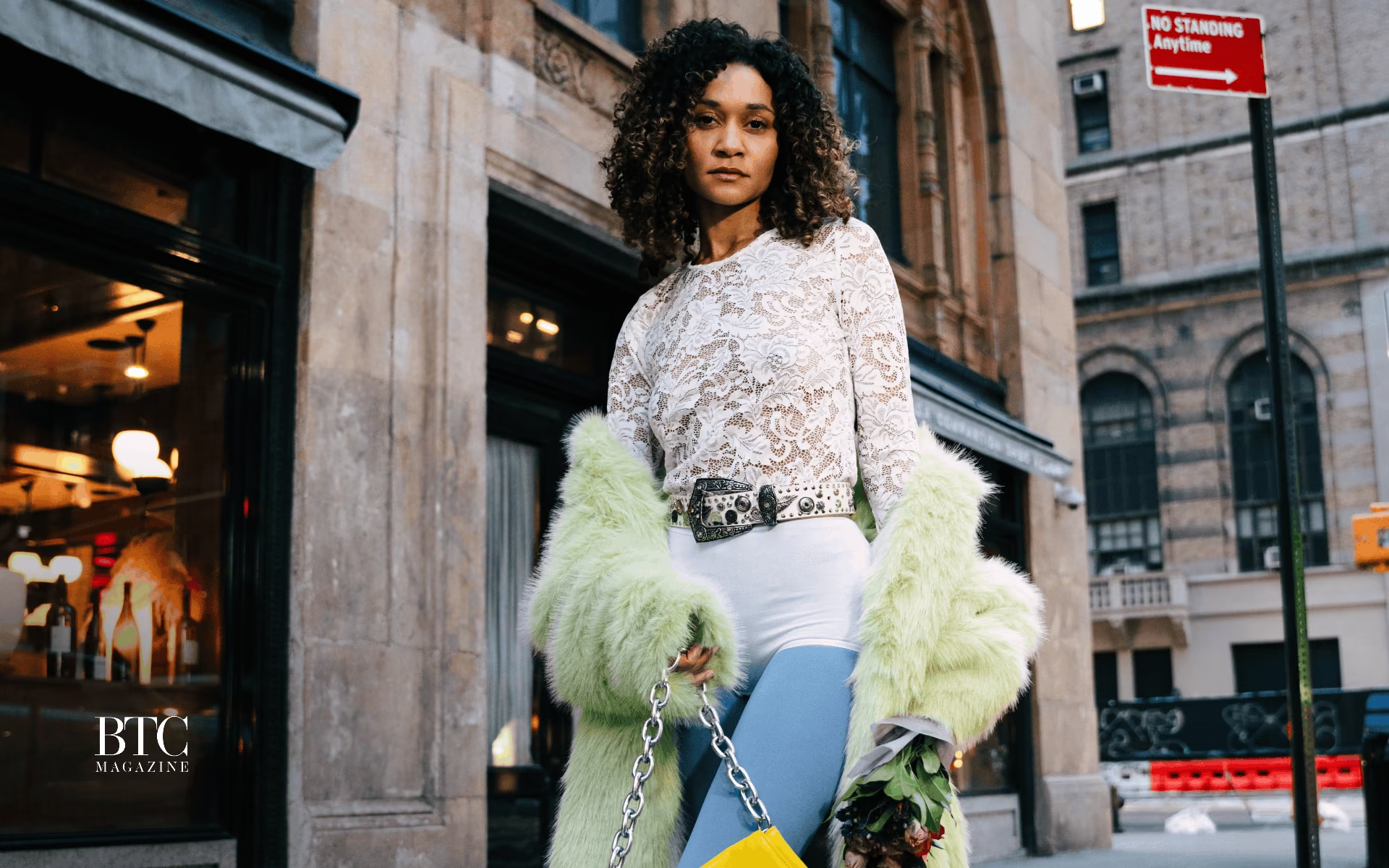
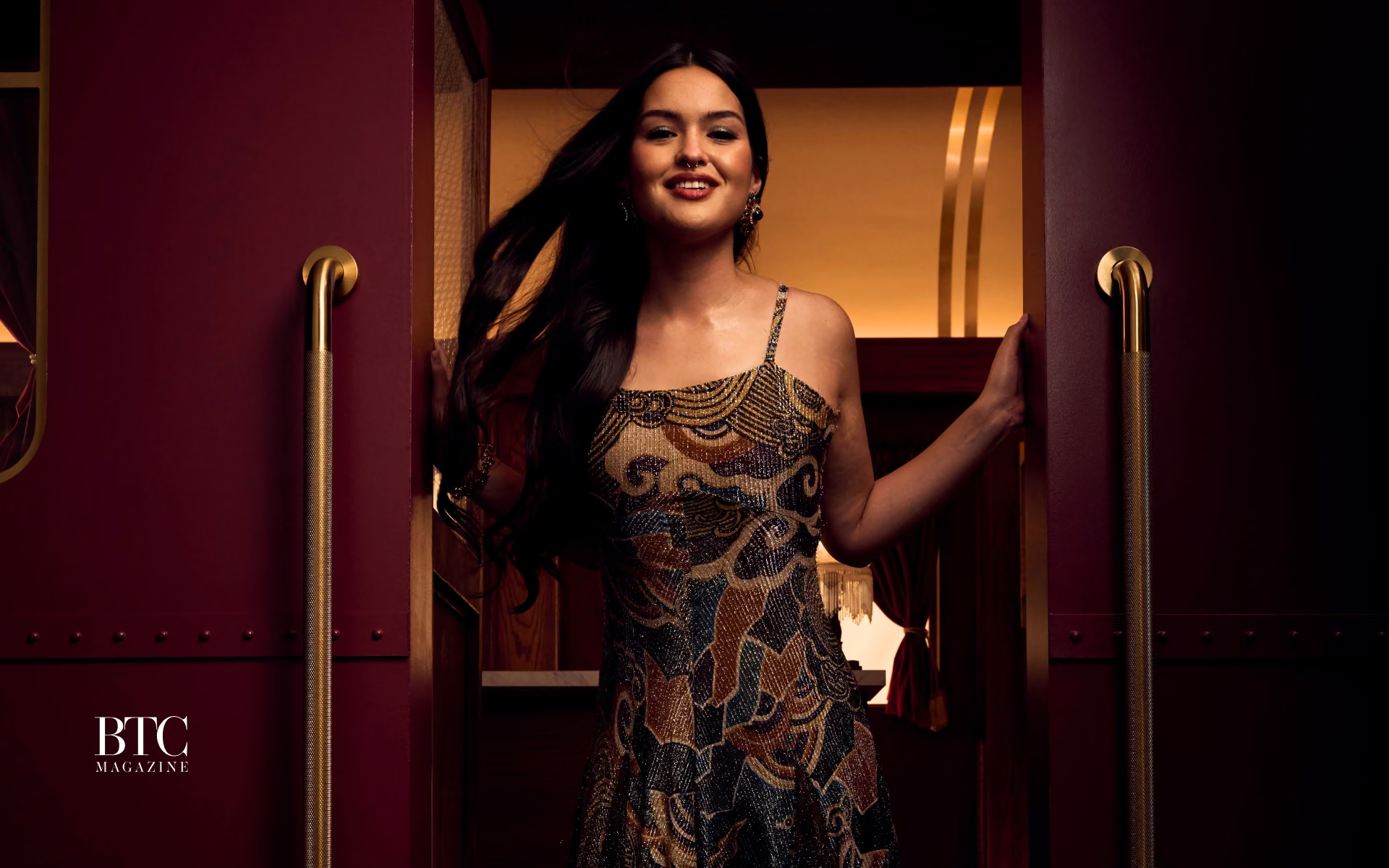
The photograph on this cover was taken by Areta Peristeri, on a camera, of a person. Nothing on it has been generated, extended, or reshaped. It is her face.









Comments
No comments yet
No comments to show yet. Subscribe to join the conversation.
Log in or subscribe to comment on this article.