The Woman Who Hasn't Made It to the Till Yet
I brought her a haunted house and she declined to move in.
That is the honest version of what happened. This is the POSSESSED issue, and I built the whole interview to catch our cover star in the act of being possessed — by the fame, by the platform, by the weight of being a symbol at an age when most people are still losing their keys. I had the frame loaded before she said a word. You got the thing everyone chases. Now it owns you. Tell me where it hurts.
Anna Lambe listened to all of it, warmly, generously, the way she seems to do everything. And then, without once raising her voice, she handed the whole premise back to me.
"I don't perceive it so much as a cost," she said. And later, when I would not let it go, when I told her flatly that she is a symbol now and symbols pay for it: "If it cost me anything at all, it is refunded in the benefit of the community impact that the show has had."
Reader, I pushed. It's my magazine and my issue and I wanted my thesis. Every other voice in these pages is writing back from the far side of the thing they wanted — the mother who went missing while the baby turned out fine, the man who caught the car and learned some physics, the therapist whose purpose grew teeth and started sending emails at 3am. They are all holding the receipt. I wanted Lambe holding one too.
She isn't. And the reason she isn't is the most interesting thing she said all day, because it is not naivety. It is arithmetic.
"We Haven't Made It to the Till Yet"
"We haven't made it to the till yet," she told me. "Things haven't started costing too much."
Sit with that, because it is the sharpest thing a 26-year-old has ever said to me about success. She is not claiming she got out free. She is telling you she is still in the store, arms full, walking the aisles, and the cashier has not yet looked up. She knows there is a till. She knows there is a bill. She has simply not been handed it, and she is refusing — politely, deliberately — to pre-pay in dread.
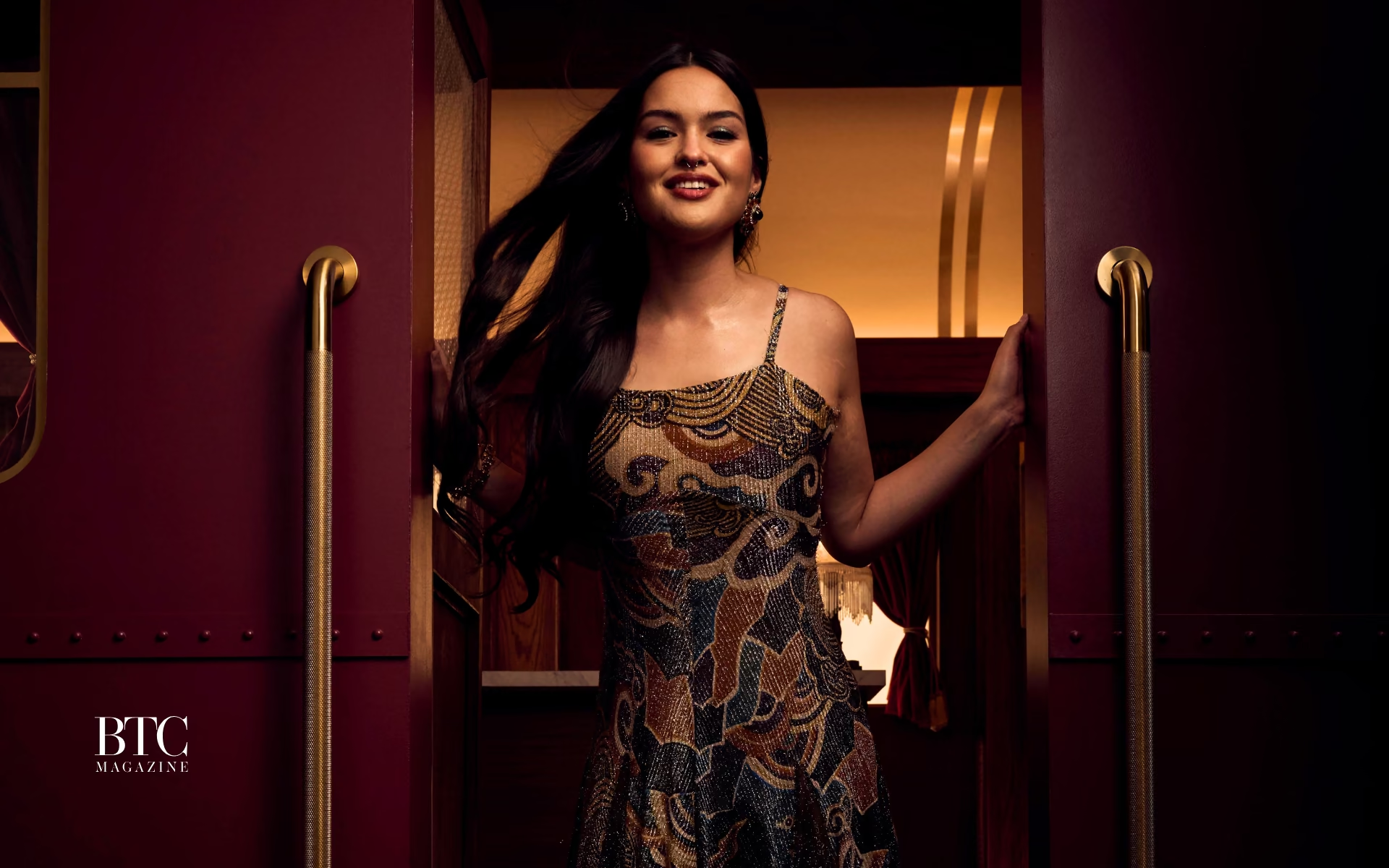
Here is who she is, for the two of you who somehow haven't met her yet. Anna Lambe is Inuk, from Iqaluit, and at 26 she is the lead of North of North, Canadian original series, a show produced by APTN, CBC and Netflix that put an Arctic town and an Inuk woman named Siaja in front of a global audience and landed in the platform's top ten. Before that she was the teenager who broke out in The Grizzlies. Before you could catch your breath she was sharing a call sheet with Jodie Foster on True Detective: Night Country. Season two of North of North wrapped this spring. She is, by any reasonable measure, in the exact spot the rest of this issue is warning you about.
She found out about the renewal in a café in Washington, D.C., where she'd flown in that morning for a Season 1 screening. Her showrunners called and put on a performance — "acting skills, they were putting them to use," she said — arranging their faces into something grave before delivering the line: we're sorry to let you know that you're going to be dating around a lot real soon. She cried. Then she had to swallow it whole, because that evening she was at dinner with Mikah Harper, who plays her on-screen mother and is, in Anna's words, one of the nearest and dearest people to her heart, and the announcement hadn't dropped yet. She sat there watching Mikah dream out loud about a season two that Anna already knew they had, notifications lighting up her phone under the table, until she finally cracked: Mikah, you should check your phone.
I tell you this because it is the kind of story a possessed person doesn't tell. There's no flinch in it. She was not performing gratitude or bracing for the catch. She was just delighted, and then she was keeping a happy secret at dinner, which is a very specific and very un-haunted thing to be doing.
The Cold, Not the Meaningful
She is not soft about the work, though, and I want to correct any impression that her peace is the peace of someone who hasn't suffered for it. Ask her about the hard days and she doesn't reach for the meaningful ones. She reaches for the cold.
They shot on the sea ice. The whole bay frozen, the location twenty minutes out by snowmobile, hauled there on a wooden box sled with every piece of camera gear lashed down — out onto the ice where the crew set up tents and generators and tried, and mostly failed, to stay warm through minus 50 for ten and twelve hours at a stretch. If you needed the washroom it was twenty minutes back to town and twenty minutes back out. "Nobody is unscathed by it," she said, "whether you're from the North or you're not." And then, because this is where her mind actually goes: "There were people who went through literal blood, sweat, tears, frostbite to get some of these shots." She is not precious about her own comfort. She is genuinely, specifically impressed by the local hunters and outfitters who drove the gear up the hills so the shots could exist.
There was one scene this season she still can't put all the way down — a heavy one, opposite Mikah, the kind she'd read and be destroyed by every time, not knowing how she'd feel going in or coming out. They'd shoot it crying and then yell cut and be laughing, and that whipsaw, that camaraderie inside something that heavy, is what she calls a privilege. "You guys ate that one up," she remembers thinking about her writers. It lingers, she says. But not in a bad way anymore.
So why isn't she afraid? I asked her the cover question straight, the one I'd built the whole day around. You're 26, you got the thing most people chase for twenty years, you got it early enough that you haven't built any defenses against what it demands back. Are you fighting it, or have you already let it in?
Her answer was not the answer I wanted, which is exactly why it's the answer on the cover.
"The more that you try to hold on to something, the more you try to squeeze it, the more you try to make sure it never goes away — then you live your life in fear," she said. "And you never get to be present with where you're at."
Her defense mechanism, she told me, is to be open. To be honest about being anxious that the next thing might not come, and to refuse to organize her life around that anxiety. "I don't feel responsible for how people perceive North of North, or how people perceive Siaja, or how people perceive me as a person." She won't carry it, because it isn't hers to carry — a thing she says she watched Siaja learn to put down in season two, and clearly took with her off set.
And then she said the thing that I have not stopped thinking about, the thing that makes her belong in an issue full of women decades older and more scarred than she is:
"Every night you go to bed with one person specifically, and that's yourself. So who are you meeting when you go at the end of the day?"
That is not a 26-year-old's line. That is the whole philosophy of thecissue, said by the one person in it who hasn't yet been billed for thecwisdom.
We got, briefly, to the politics, because she'll go there and she means it. She is unafraid to speak about Indigenous dignity, about colonialism, about her community, and she has clearly done the math on what that costs a career. "If a brand or a production company or a streamer don't align with how I feel about something as important as somebody's humanity," she said, "then that's not somebody I want to work with anyways." The only thing she loses sleep over in press, she told me, laughing, is whether she accidentally broke an NDA.
While we were there, she corrected the record on something the internet decided about her: despite what's circulated online, she has never identified as two-spirit. She's bisexual, and characteristically "neither here nor there about it." It just is. There is something perfectly on-brand about a woman this settled in herself calmly returning an identity the internet gift-wrapped for her — declining, again, to carry a thing that isn't hers.
I asked what the fame has actually cost her, the boring Tuesday- afternoon cost, and she reached first for the mundane — that she doesn't have a life while filming, seventeen-hour days, that's it.
When I pushed toward the bigger thing, the privacy, the symbol of it, she conceded the small stuff readily: the strangeness of the grocery store back home, old classmates keeping a respectful distance, the appeal of a city like New York or London precisely because you can disappear into it. But she would not inflate it into a wound. Because it isn't one yet. Because — say it with her — they haven't made it to the till.
I have been doing this long enough to know the difference between a person who hasn't been hurt and a person who has decided how she'll
carry the hurt when it comes. Lambe is the second kind, which is rarer, and much rarer at 26.
The rest of this issue is a chorus of women who caught the thing and got possessed by it, who are writing to you from the parking lot with the receipt crumpled in one fist, warning you about a bill they've already paid. Anna Lambe is the one still inside the store. The invoice is coming for her the way it comes for everyone. She knows it's coming. And she has decided, on purpose, out loud, to enjoy the aisles while she can."I'm not going to steal the joy of all of the hard work that I've done to get to this point from myself right now," she said. "I'm going to enjoy it. I'm going to live with it."
Ask her what she does the day after a shoot wraps — the version of her that isn't possessed by anything — and there's no symbol in the answer at all. She bed rots a little. Gets up slow. Scrolls Instagram. And then, because this is the actual center of the woman, she makes herself a very good breakfast and a very good coffee and sits with it, completely alone, recentering. "I love coffee so much," she said, with more open joy than she'd brought to any question about fame.
That's her. Twenty-six, arms full, cashier still looking down, and she's decided the smartest thing she can do with the time before the bill arrives is drink the coffee while it's hot. The rest of us should be so possessed.



Comments
No comments yet
No comments to show yet. Subscribe to join the conversation.
Log in or subscribe to comment on this article.