Fashion Week comes with a lot of declarations. Everyone is redefining something. Every collection is a conversation. Occasionally, you would like the conversation to include a beautifully made garment.
Parishae Adnan delivered.
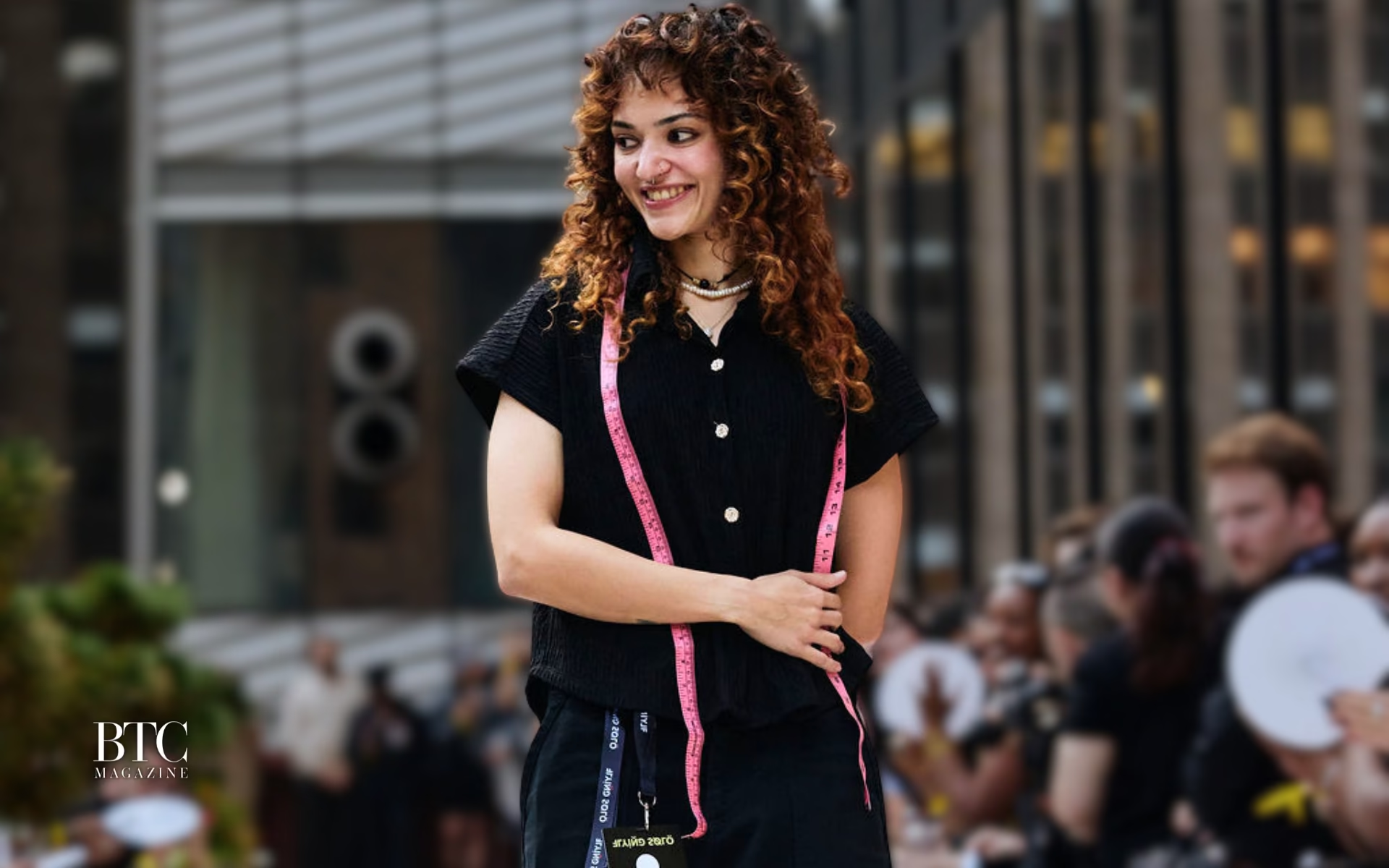
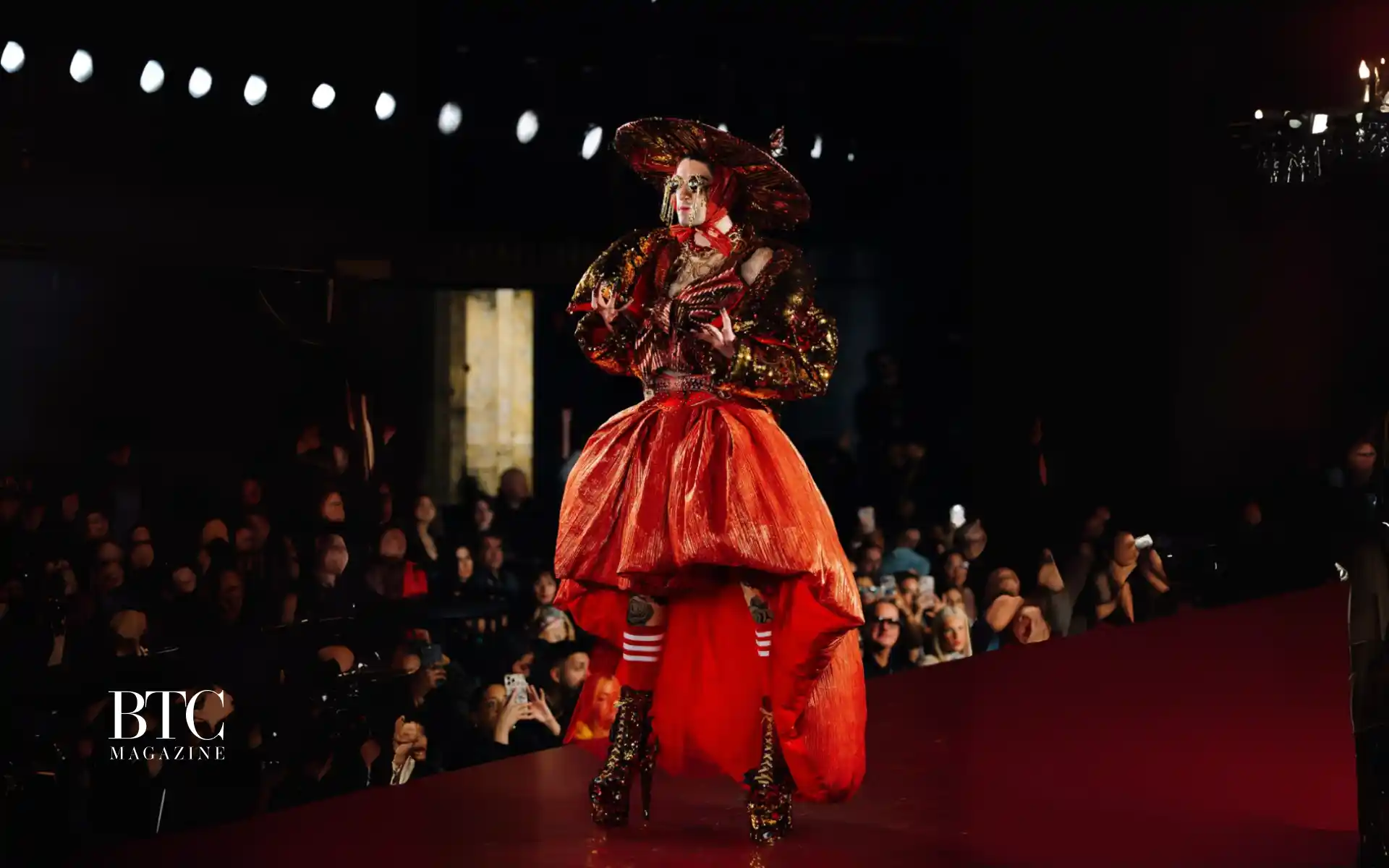
The Pakistani designer presented Second Skin during New York Fashion Week in September 2026, appearing in Flying Solo’s September 13 showcase. I was there, and my verdict is straightforward: of the designers in the showcase I attended, she was by far the best.
The craftsmanship. The tailoring. The lines, the textures, the beading. There was so much to admire, but what impressed me most was how those elements worked together. The collection had the kind of considered beauty that makes you want to keep looking.
BTC has already followed Parishae’s career and explored the thinking behind her work. Seeing this collection in person gave me another reason to pay attention. She brought the skill to match the ambition.
Second Skin at New York Fashion Week
Second Skin is an eight-look collection built from archival menswear, bridalwear and deadstock textiles, using reconstruction, corsetry and embroidery to give existing materials new forms. Its New York presentation places Parishae’s interest in inherited clothing at the centre of her work. Collection coverage.
That premise gives the title substance. A second skin can be something we choose, something we grow into, or something we spend years trying to remove. Clothing has a particularly intimate relationship with all three.
For a designer working within a family fashion business, the material carries another layer of meaning. An archive contains earlier decisions about who a garment was for, what looked desirable and how a body should be dressed. Reworking it means making those decisions again.
There is something compelling about a daughter looking at what came before her and finding another possibility in it. The fabric survives. The expectation attached to it can change.
And in this collection, the result was gorgeous.
The tailoring was what held my attention
My strongest impression of Parishae’s New York presentation was the relationship between construction and decoration. I kept coming back to the tailoring and the clarity of the lines, even with all that texture and beading to take in.
That matters to how I judge a collection. Embellishment can draw your eye immediately. The shape of the garment determines whether your interest lasts.
Here, both rewarded attention. I admired the detail, then found myself considering the whole silhouette again. The work felt resolved. There was a clear sense that someone had thought carefully about how each element belonged within the finished look.
This is the part of fashion I wish we talked about more. We are very good at identifying a label and announcing that something is expensive. We are less consistent about explaining what makes a garment worth examining.
For me, Parishae’s collection offered that invitation through its construction. You could appreciate the immediate beauty and still have more to consider.
I went in knowing her work. I came out wanting to see more of it up close.
Texture and beading with a point of view
The textures were a major part of the appeal. So was the beading, which was among the details I kept returning to when describing the show afterwards.
“Beautiful” is accurate, but it is an insufficient review on its own. What struck me was the attention those surfaces had received and their relationship to the garment around them. The collection gave me plenty to look at without losing the lines that made the clothes so strong in the first place.
I have very little patience for the assumption that adding more automatically makes something luxurious. More can simply mean somebody needed to stop twenty minutes earlier.
Parishae’s work held my interest because I could appreciate the richness and the discipline together. The details felt considered. The tailoring remained central to my experience of the clothes.
That combination was what separated her presentation for me. It was a collection I wanted to discuss in terms of how it was made, rather than merely how it photographed.
A father’s tie, a daughter’s interpretation
One of the collection’s most revealing details is its opening look, My Father’s Tie. It incorporates an embroidered tie created for Amir Adnan’s 2001 collection, bringing an actual piece of family design history into Parishae’s present work. The story behind the tie.
Elsewhere, reported transformations include an earlier bridal lehenga recut into a bustier and mini skirt, and a menswear waistcoat reshaped around a woman’s torso with aspects of its construction made visible. These are substantial changes in form and purpose. Details of the reconstructed looks.
The interesting question is what a designer sees when she looks at an existing garment. Where someone else might see a finished piece, Parishae sees material she can work with again.
I find that especially persuasive when the finished clothes are desirable in their own right. The origin story gives you another reason to look; the design has to earn the first one.
At this show, it did.
Who is Parishae Adnan?
Parishae Adnan leads the House of Amir Adnan as CEO. Her parents, Amir Adnan and Huma Adnan, have each established their own place in Pakistani fashion, and her leadership represents a new chapter within that family business. Background on her appointment.
In our earlier BTC profile of Parishae Adnan, we explored her move from consulting into fashion and the personal decisions involved in taking responsibility for an existing house.
Those questions remain interesting. So does the relationship between her own creative identity and the business she leads. But this New York presentation deserves to be appreciated as a collection, with the clothes given the attention they earned.
A family name supplies context. My opinion of this show came from the work in front of me.
For readers encountering her for the first time, this is a particularly good moment to start following.
Why BTC is watching what comes next
There is a specific pleasure in following a designer over time and then seeing a collection that strengthens your interest. You have some understanding of the person’s ambitions. Then you get to see what those ambitions look like when they become clothes.
That was my experience with Parishae at Flying Solo.
The collection gave me the things I want from a runway presentation: a reason to look closely, a clear creative perspective and craftsmanship worth talking about after the show. Her tailoring, textures and beading were the details I carried away with me.
At BTC, we are extremely happy to be following her career. This presentation made us more excited about what comes next, and I want to see how she develops the ideas in Second Skin, what she chooses to revisit and where she takes her work from here.
For now, I keep returning to the same assessment I made after seeing the show.
Parishae Adnan was my standout. By a considerable distance.

Comments
No comments yet
No comments to show yet. Subscribe to join the conversation.
Log in or subscribe to comment on this article.