The Night We Decided Every Child Belonged
How one family turned a front lawn into Canada's most compassionate movement.
By Iqra Iftikhar
There are moments that change your life forever.
And then there are moments so small you almost miss them.
A little boy. A wheelchair. A set of front steps.
No speeches. No government funding. No committee meetings. Just one family decorating for Halloween in 2017 when they looked up and saw something they had never truly seen before.
A child who wanted to trick-or-treat. A house he couldn't reach.
The stairs hadn't changed. The family had.
That night, Rich Padulo and his daughter weren't looking at architecture anymore. They were looking at exclusion.
Not the dramatic kind that makes headlines. The quiet kind. The ordinary kind. The kind that hides in everyday life because most of us have never needed to notice it.
Sometimes that's how empathy begins.
Not with a grand revelation.
With an uncomfortable realization that something you've done a thousand times has unintentionally left someone behind.
So they made a sign.
It simply told families their home would offer accessible trick-or-treating from the end of the driveway.
One lawn sign.
One family.
One decision to say something every child deserves to hear.
You're welcome here.
Neither of them could have imagined what happened next.
Today, more than 250,000 Canadian homes display Treat Accessibly lawn signs every Halloween. Communities across the country host accessible Halloween villages. National companies have stepped in to ensure the signs remain free. Cities proclaim Treat Accessibly Day. What began as one family's response to one child has become one of Canada's fastest-growing inclusion movements.
And yet, the remarkable part isn't the number.
It's the simplicity.
Because Treat Accessibly isn't asking people to rebuild their homes.
It isn't asking for expensive renovations or complex accessibility projects.
It's asking something far more challenging.
To think about someone else.
That sounds obvious until you realize how often we don't.
Why Inclusion Starts on Front Lawns, Not in Conference Rooms
We spend a great deal of time talking about inclusion.
Corporate mission statements celebrate it.
Politicians promise it.
Schools teach it.
But inclusion isn't built in conference rooms.
It's built on front lawns.
It happens when ordinary people interrupt autopilot long enough to ask a simple question:
Who can't participate because of the way I've always done things?
That's the question that changes everything.
For children who use wheelchairs, front steps can end Halloween before it begins.
For autistic children, loud noises or unexpected interactions can turn an exciting evening into an overwhelming one.
For children managing medical conditions, allergies, or sensory challenges, what looks effortless for everyone else often requires extraordinary planning.
Most families adapt.
They always have.
Parents carry children.
Push wheelchairs through uneven driveways.
Navigate crowded sidewalks.
Explain disappointment with smiles that hide heartbreak.
They make impossible situations look ordinary because that's what parents do.
But they shouldn't have to.
What Halloween Quietly Tells Every Child About Belonging
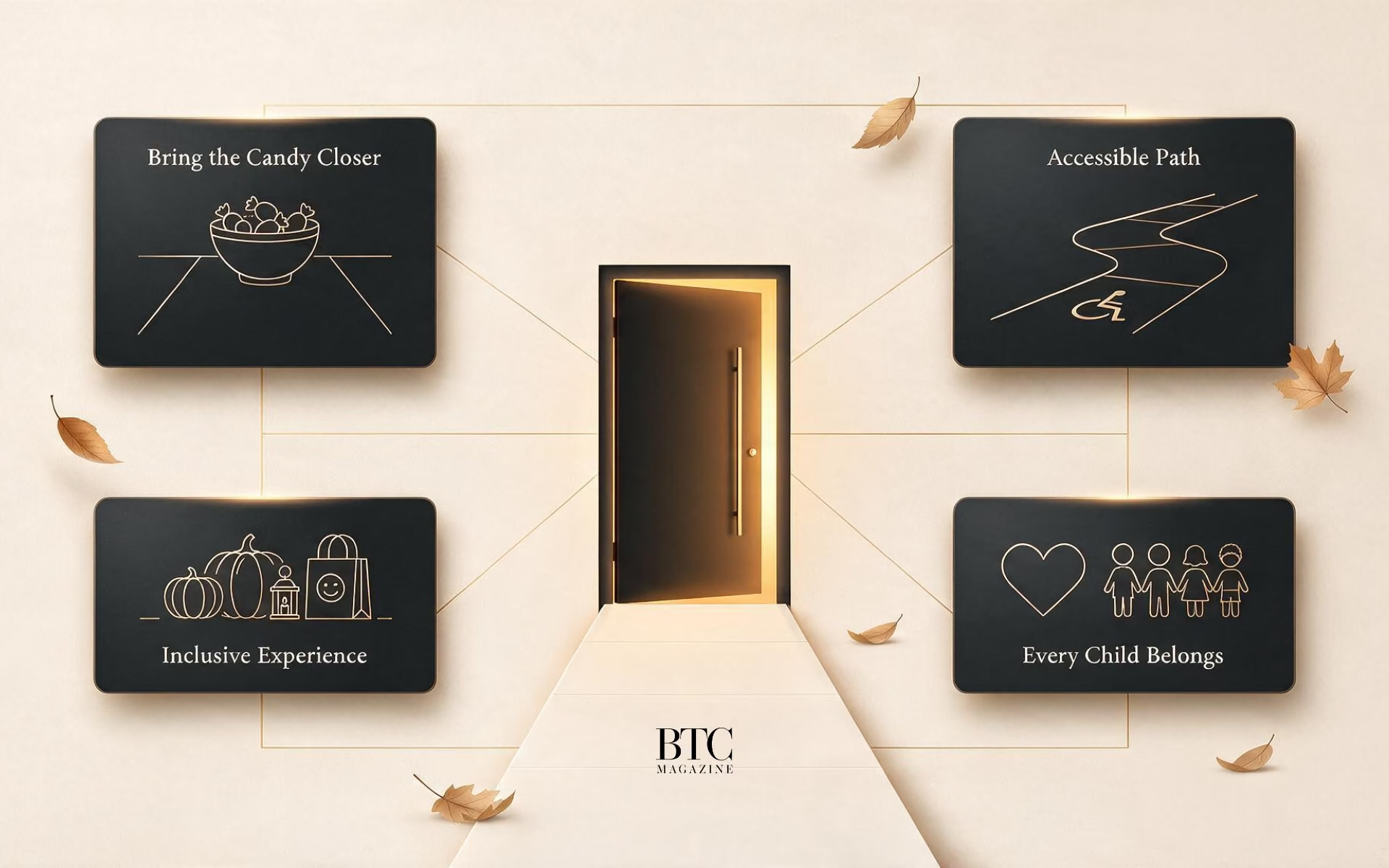
Halloween has always been one of childhood's purest rituals.
For one night, every child gets to become whoever they dream of being.
A superhero. A dinosaur. A princess. An astronaut.
The costume matters. The candy matters.
But neither matters as much as what the night quietly tells children about their place in the world.
Do you belong?
Can you participate?
Will people think about you before you arrive?
Children notice these things long before adults imagine they do.
They remember the house they couldn't reach.
The doorway they weren't invited through.
The moment everyone else continued walking while they stayed behind.
Those memories become stories children tell themselves.
Maybe this wasn't meant for me.
Treat Accessibly changes that story.
Not because of candy.
Because of consideration.
Accessibility Isn't Just for a Few — It's for Everyone Eventually
Rich Padulo often says this movement isn't about ramps.
It's about belonging.
He's right.
Accessibility is sometimes misunderstood as something only relevant to a small number of people.
Reality is much broader.
Every family will eventually encounter accessibility in some form.
A temporary injury.
A grandparent.
A chronic illness.
A stroller.
A child with sensory sensitivities.
A neighbour recovering from surgery.
Life has a remarkable way of reminding us that independence isn't permanent.
Community is.
When we make spaces easier for someone else to enter, we rarely make them worse for anyone else.
We simply make them kinder.
The Push Toward One Million Homes on October 31, 2026
October 31, 2026 falls on a Saturday.
That matters more than it sounds.
Children won't be rushing home from school.
Parents won't be squeezing celebrations between homework and bedtime.
Communities will have the opportunity to slow down.
To think.
To participate.
Treat Accessibly has set an ambitious goal: one million participating homes across Canada.
On paper, that sounds enormous.
In reality, it asks each family for only one decision.
One sign.
One conversation.
One adjustment.
One evening.
History often teaches us that meaningful change arrives through massive legislation or sweeping reform.
Sometimes it does.
Sometimes it begins because someone looked at a staircase differently.
A Reflection of the Canada Many Still Believe Is Possible
There is something beautifully Canadian about this movement.
Not because it started here.
Because it reflects the version of Canada many people still believe is possible.
A country where neighbours think about one another.
Where kindness isn't performative.
Where inclusion isn't a slogan printed on a banner but something visible in ordinary places.
Driveways.
Sidewalks.
Front lawns.
Children won't remember whether a neighbourhood had the biggest candy bars.
They'll remember how it made them feel.
Whether someone expected them.
Whether someone planned for them.
Whether someone saw them.
That may be the greatest gift any community can offer.
Not chocolate.
Not decorations.
Not costumes.
Simply the quiet reassurance that every child deserves to hear, whether they arrive walking, rolling, signing, or holding someone's hand.
You belong here.
How You Can Help
Participation is intentionally simple:
Register your home and request a free Treat Accessibly lawn sign.
Think about small adjustments that make trick-or-treating easier for every child.
Talk with neighbours and encourage your community to participate.
On October 31, 2026, help create a Halloween where no child has to wonder whether they were included.


.webp)
.webp)
Comments
No comments yet
No comments to show yet. Subscribe to join the conversation.
Log in or subscribe to comment on this article.