

Hand & Body Moisturizer — Daily Lotion
$25This light daily lotion provides essential hydration for the hands and body to maintain skin softness while ensuring a fast-absorbing, matte finish.
+ Add to cart
Carry the full magazine experience in your pocket — stories, podcasts, exclusive perks, and more. Download the free app today.
Retinol speeds up skin cell turnover, helping reduce rough texture, unclog pores, improve radiance, and reveal smoother, healthier-looking skin with consistent long-term use.
Regular retinol use supports collagen production, helping soften the appearance of fine lines, improve skin firmness, and promote a more even-looking complexion over time.
Begin with retinol two to three nights weekly, apply it to dry skin, moisturize afterward, and increase frequency only as your skin adapts comfortably.
Daily sunscreen is essential when using retinol, as it increases skin sensitivity to sunlight and helps protect your skin from UV-related damage.
Retinol can be used on both the face and body, improving rough patches, uneven texture, and early signs of sun damage with gradual application.
If you've spent any time reading about skincare, you've probably noticed one ingredient keeps coming up in almost every conversation about aging skin, texture, and acne: retinol. It has a reputation for being both a miracle worker and a little intimidating, which makes sense, because retinol for beginners can feel confusing when so much conflicting advice is floating around.
This guide breaks down what retinol actually is, what it's good for, the side effects you should genuinely expect (not just the scary internet stories), and exactly how to start using it without overwhelming your skin. Whether you're curious about a facial serum or wondering about body retinol for rough patches on your elbows and knees, you'll leave with a clear, realistic starting point.
Retinol is a derivative of vitamin A, and it belongs to a broader family of ingredients called retinoids. Once applied to the skin, retinol gradually converts into retinoic acid, the active form your skin cells actually respond to. This conversion process is part of why retinol tends to be gentler than prescription-strength retinoids like tretinoin, even though it works through a similar pathway.
So what is retinol good for, specifically? In simple terms, it helps speed up the rate at which your skin cells turn over. Instead of old, dull cells lingering on the surface longer than they should, retinol encourages fresher cells to come through more efficiently. That single mechanism is behind most of the benefits people associate with it, from smoother texture to fewer clogged pores.
It's worth being clear here: retinol isn't a magic eraser, and it isn't going to transform your skin overnight. What it does offer, when used consistently over weeks and months, is a well-documented way to support smoother, more even-looking skin over time.
Understanding retinol effects on skin makes it much easier to use the ingredient patiently instead of expecting instant results.
When retinol converts to retinoic acid in the skin, it interacts with skin cell receptors that regulate how quickly new cells are produced and how old cells shed. This increased cell turnover is one reason retinol is commonly recommended for:
Rough or uneven texture
Clogged pores and occasional breakouts
Fine lines that develop from repeated expression and sun exposure over time
Dullness caused by a buildup of surface skin cells
Retinol is also associated with supporting the skin's natural collagen production process. Collagen is a structural protein that keeps skin firm, and its production naturally slows with age. While retinol won't reverse aging, consistent use is widely recognized in dermatology as one of the more evidence-backed ways to support a smoother, firmer-looking complexion over the long term.
None of this happens quickly. Most people need eight to twelve weeks of consistent use before they notice a meaningful difference, which is exactly why so many beginners give up too early or assume it isn't working.
Let's go through the retinol benefits people usually care about most, in plain language.
One of the most noticeable retinol skincare benefits is a gradual improvement in how skin feels. As cell turnover normalizes, rough patches and unevenness tend to soften.
Because retinol helps prevent dead skin cells from building up inside pores, it's frequently recommended for people dealing with clogged pores or occasional congestion, particularly along the forehead, chin, and nose.
Retinol serum benefits are most commonly discussed in the context of fine lines and early signs of aging. This is one of the better-researched uses of the ingredient, though results are gradual rather than dramatic.
By encouraging fresher skin cells to reach the surface, retinol can help reduce the appearance of dullness and mild unevenness, though it isn't a direct treatment for stubborn discoloration on its own.
With consistent, careful use, many people find their skin becomes more resilient and better able to handle other actives in their routine, simply because the surface layer is functioning more efficiently.
Let's talk honestly about retinol side effects, because this is where most beginners either panic unnecessarily or push through irritation they shouldn't ignore.
In the first few weeks, it's common to notice some dryness, mild flaking, or a few small breakouts. This is often referred to as "purging," and it happens because retinol is speeding up cell turnover, which can temporarily bring underlying congestion to the surface faster than usual.
There's a difference between mild purging and genuine irritation. Purging tends to show up as small, similar-looking breakouts in areas where you already tend to break out, and it typically settles within a few weeks. Irritation, on the other hand, shows up as redness, burning, stinging, or peeling that feels uncomfortable rather than simply dry. If you're experiencing the second type, it's a sign to slow down, not push through.
Retinol can make skin more sensitive to sunlight, since fresher skin cells at the surface are more vulnerable to UV exposure. This is one of the most important safety considerations with any retinoid: daily sunscreen isn't optional once retinol is part of your routine, it's essential.
Especially in the first month, mild dryness and flaking are common, particularly for people with naturally dry or sensitive skin. Pairing retinol with a solid moisturizer helps buffer this effect considerably.
Retinol and other retinoids are generally not recommended during pregnancy or breastfeeding, and anyone with a diagnosed skin condition such as eczema or rosacea should talk to a dermatologist before introducing it. If you're on prescription skincare already, check with your provider before adding retinol into the mix to avoid overlapping actives that could increase irritation.
Body retinol doesn't get talked about nearly as often as facial retinol, but it has genuine uses. Areas like the chest, upper arms, and even hands can benefit from the same cell turnover support that makes retinol popular for the face, particularly for rough texture, bumpy skin, or early sun damage on frequently exposed areas.
That said, body skin behaves a little differently than facial skin. It's often thicker in some areas (like elbows and knees) and thinner and more delicate in others (like the chest and back of the hands). If you're introducing retinol to the body, start with a lower frequency than you might use on your face, and prioritize a rich, barrier-supporting moisturizer afterward.
This is also where ingredient pairing matters. Retinol works well on its own, but not everything in your body care routine plays nicely with it.
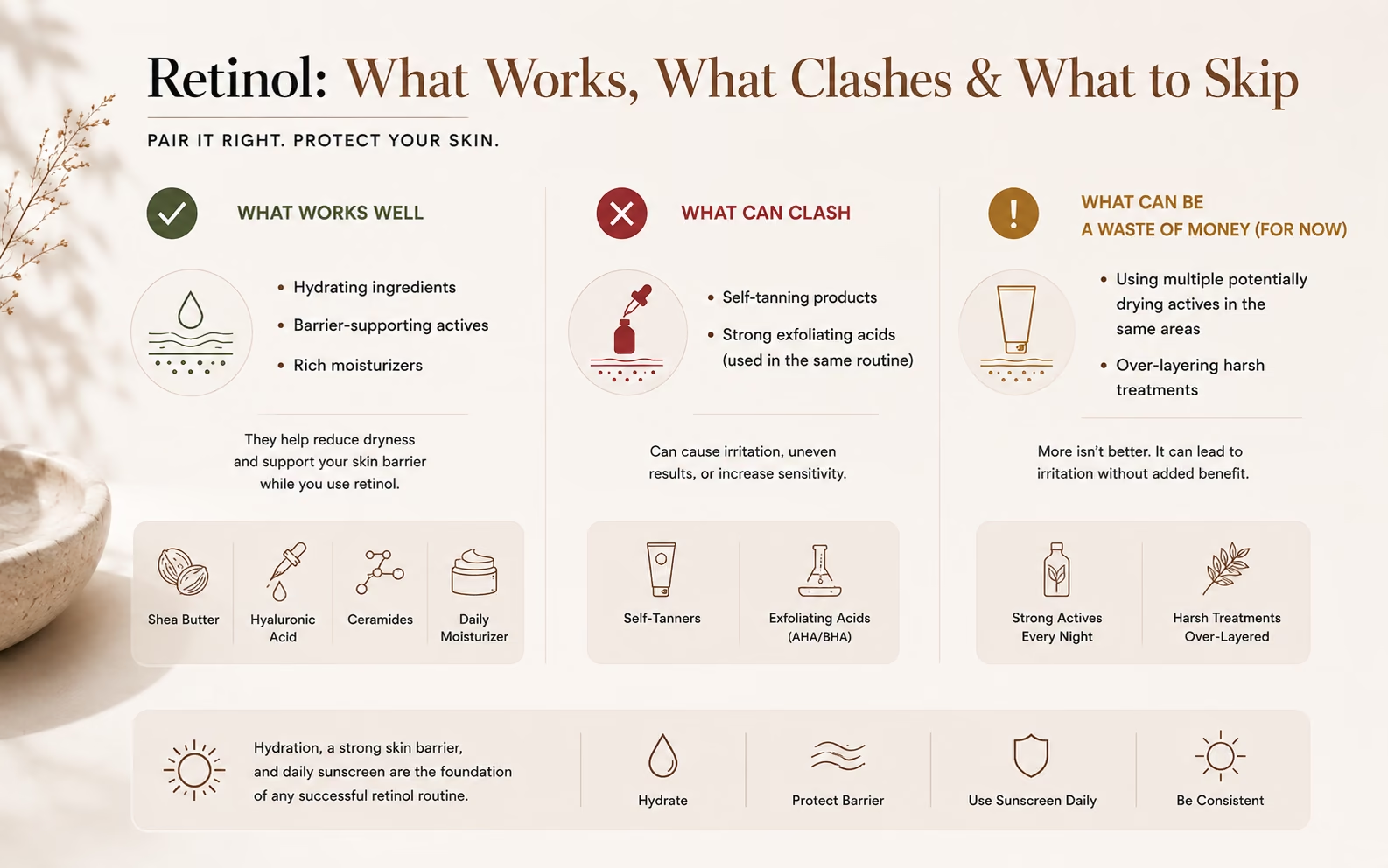
Since retinol changes how your skin barrier behaves, what you pair it with matters just as much as the retinol itself.
What tends to work well: Hydrating, barrier-supporting ingredients like shea butter and gentle daily moisturizers help offset dryness without diluting retinol's effectiveness. Applying a rich moisturizer after retinol, rather than before, is generally the better order for beginners.
For daily hydration on hands and body areas where you're introducing retinol, a straightforward option like the Hand & Body Moisturizer — Daily Lotion can help maintain comfort between retinol applications without adding unnecessary ingredients into the mix.
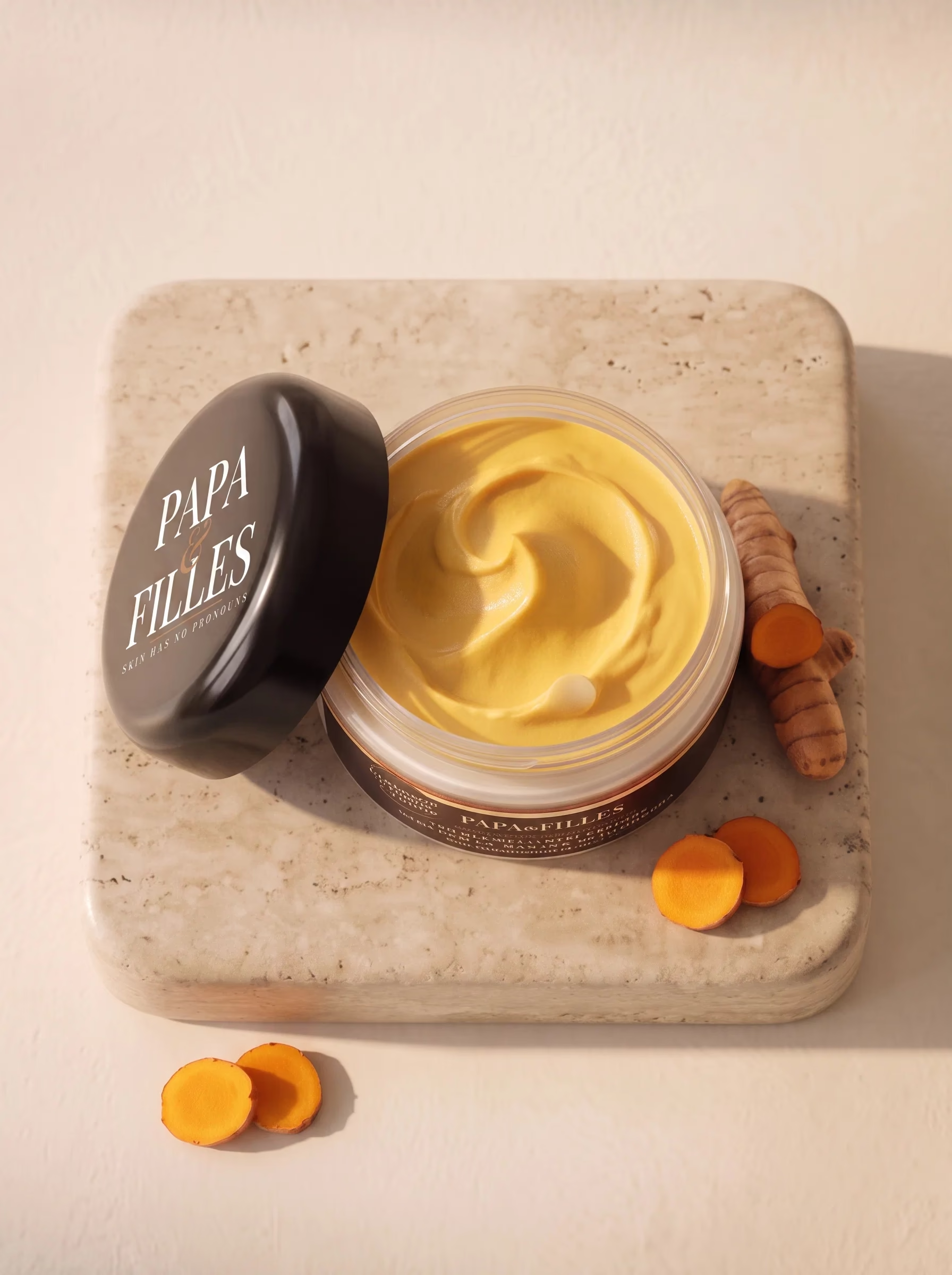
For richer, more intensive barrier support after a retinol night, something like the Turmeric Shea Body Butter — Whipped 236 mL can help replenish moisture, especially on areas prone to dryness like elbows, knees, and hands.
What can clash: Retinol and self-tanning products are best kept on separate nights. Self-tanners rely on the surface layer of skin cells to develop color, and retinol speeds up how quickly those cells shed, which can cause self-tan to fade unevenly or patchily. If you use something like the Self-Tan Mousse — Face & Body , plan to skip retinol the night before and after application rather than layering them together.
What can be a waste of money (for now): If you're dealing with occasional body breakouts alongside starting retinol, a targeted option like the Tea Tree Gel — Targeted Aloe Gel can be useful for spot treatment, but it's not necessary to apply all over the same areas where you're using retinol every night. Doubling up potentially drying ingredients in the same spot usually just adds irritation without adding benefit.
You can browse the full range of body care options, including moisturizers and treatment products designed to pair sensibly with an active ingredient like retinol, in the Papa & Filles body care category.
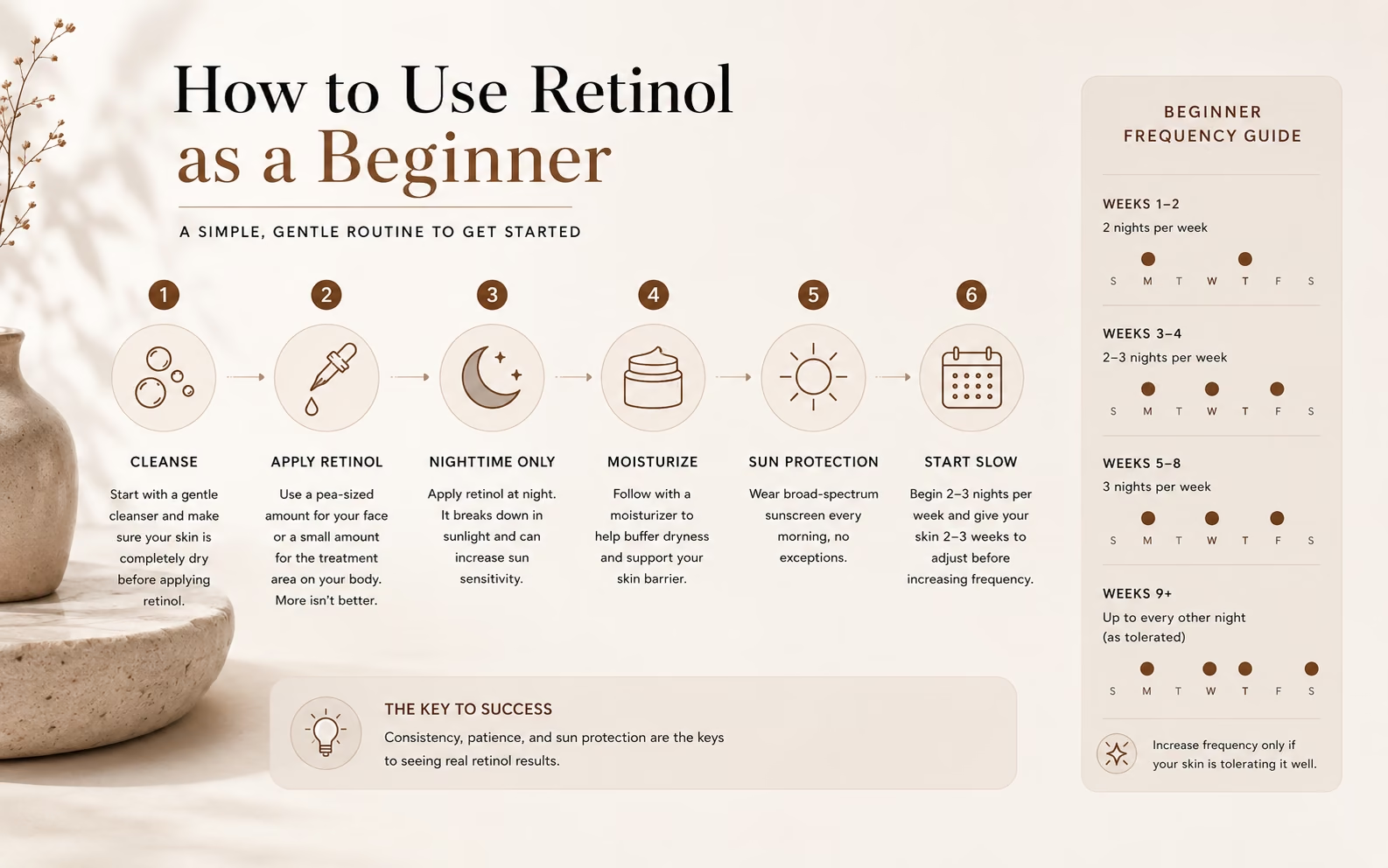
If you're wondering how to apply retinol without irritating your skin, this simple sequence works well for most beginners.
Cleanse and fully dry your skin. Applying retinol to damp skin can increase absorption too quickly, which often leads to unnecessary irritation.
Apply a pea-sized amount (for the face) or a similarly small amount for the treatment area on the body. More product does not mean faster results, it usually just means more irritation.
Apply at night only. Retinol breaks down in sunlight and increases sun sensitivity, so nighttime application is standard practice.
Follow with a moisturizer. This helps buffer the ingredient and reduce dryness, especially in your first few weeks.
Apply sunscreen every morning, without exception, for as long as retinol is part of your routine.
For beginner retinol use, starting two to three nights a week is far more sustainable than jumping straight into nightly application. Give your skin two to three weeks at that frequency before considering an increase, and only increase if your skin is tolerating it well, with no ongoing redness or excessive dryness.
A common question is when to start using retinol in the first place. There's no single universal age, but many dermatologists suggest that the mid to late twenties is a reasonable time to introduce it as a preventative step, particularly once fine lines from repeated facial expressions start to become visible or when texture and clogged pores become an ongoing concern.
That said, how to start using retinol matters more than exactly when. Someone in their thirties who introduces it carefully, with proper hydration and sun protection, will generally do better than someone who starts too aggressively at any age.
Starting with too high a strength. Beginners often assume a higher percentage will work faster, but it usually just increases irritation without meaningfully speeding up results.
Applying it every night immediately. Give your skin time to adjust gradually rather than committing to daily use in week one.
Skipping sunscreen. This is one of the most common and most avoidable mistakes among new retinol users.
Layering too many actives at once. Combining retinol with strong exfoliating acids in the same routine, especially early on, is a common cause of unnecessary irritation.
Giving up too soon. Since visible results take weeks, not days, many beginners stop before they've given the ingredient a fair chance to work.
Myth: Retinol thins your skin. Fact: Retinol actually supports the deeper layers of skin over time. The temporary flaking some people experience is surface dryness, not thinning.
Myth: You need to feel a strong tingling for it to be working. Fact: A well-tolerated retinol routine shouldn't cause ongoing burning or stinging. Mild warmth or slight sensitivity in the early weeks is common, but discomfort isn't a sign of effectiveness.
Myth: Retinol works the same for everyone. Fact: Skin type, sensitivity, and consistency all affect how quickly and how noticeably someone responds to retinol.
Myth: You can only use retinol on your face. Fact: Body retinol is a legitimate and increasingly common use case, particularly for texture and early sun damage on the chest, arms, and hands.
Retinol tends to be a good fit for people dealing with early fine lines, uneven texture, occasional clogged pores, or dullness who are prepared to introduce it gradually and pair it with consistent sunscreen use.
It's generally not recommended during pregnancy or breastfeeding, and people with active eczema, rosacea, or highly reactive skin should speak with a dermatologist before starting, since retinol can sometimes aggravate these conditions if introduced without guidance.
Since everyone's skin tolerates retinol a little differently, guessing your ideal starting frequency and product pairing isn't always straightforward. If you'd like a clearer starting point based on your specific skin type and concerns, take our Papa & Filles beauty quiz for a personalized recommendation before you introduce retinol into your routine.
For a related read on supporting your skin barrier while introducing new actives like retinol, take a look at our guide on building a simple, sustainable nighttime skincare routine.
The most common side effects include mild dryness, flaking, and temporary breakouts often called purging, especially in the first few weeks of use. Increased sun sensitivity is also common, which is why daily sunscreen is essential alongside retinol. True irritation, such as burning or persistent redness, is a sign to reduce frequency rather than push through.
Start by applying a small amount to clean, dry skin two to three nights a week, followed by a moisturizer to help buffer any dryness. Avoid applying it every night right away. Give your skin two to three weeks to adjust before considering more frequent use, and always follow up with sunscreen the next morning.
Yes, body retinol is commonly used on areas like the chest, arms, and hands to support smoother texture and address early sun damage. Body skin can behave differently from facial skin, so it's worth starting with lower frequency and pairing it with a rich, barrier-supporting moisturizer afterward.
There's no single correct age, though many dermatologists suggest the mid to late twenties as a reasonable time to introduce it, particularly once early fine lines or texture concerns appear. How carefully you introduce it, with gradual frequency and proper sun protection, matters more than the exact age you start.
No. Skin type, sensitivity level, and consistency of use all influence how someone responds to retinol. Some people notice smoother texture within a few weeks, while others need a couple of months of steady use before seeing a meaningful difference. Patience and gradual introduction tend to produce the best long-term results.
Join Between the Covers
Subscribers get every article, digital issues, and perks — not just the free reads.
7-day free trial, then from $3.99/mo. Cancel anytime.
Keep exploring
Read the full story
7-day free trial · From $3.99/mo
Discover every article featured in our latest BTC issues, bringing the month's stories together in one place, so you can easily read and explore everything.
Read Now →Skin has no pronouns, and neither does great skincare. Discover clean beauty made for every skin type, age, and identity. Honest formulas, clear ingredients, and inclusive beauty that actually belongs to you.
Clean beauty for skin, not labels. Face mists, serums, moisturizers, and masks made for you, whoever you are.
Colour makeup and body care that work with your skin, not against it. Inclusive beauty, made honestly.
Beauty gifts and skincare gifts, curated into sets your favourite person will actually use and love.
You deserve stories that actually get you. A BTC magazine subscription unlocks unlimited access to in-depth, unfiltered articles, exclusive podcasts, and member perks you'll genuinely love. Try it free for seven days, then keep enjoying full access from just $3.99 a month. Cancel anytime, no pressure at all. Ready to go deeper?
7-day free trial, then from $3.99/mo. Cancel anytime.
Comments
No comments yet
No comments to show yet. Subscribe to join the conversation.
Log in or subscribe to comment on this article.