Let's be real ,reading a beauty ingredient list can feel like you're deciphering a foreign language. You've probably stood in the skincare aisle wondering what actually matters. Honestly, buying new beauty products shouldn't feel like you're taking a chemistry exam.
I used to buy whatever looked pretty on the shelf. Spoiler: my skin didn't love that approach. (Yes, I'm speaking from experience.) You've probably done the same thing. You might have a friend who spent years buying expensive products without ever checking the ingredient list. Her bathroom looked like a Sephora. Her skin looked tired.
If you're anything like me, you've probably bought a product purely because the packaging was cute. We've all done it. Are you guilty of this one?
But here's the thing you might not realise. Those pretty bottles hide a lot. Some ingredients will transform your skin. Others will wreck your barrier. And the packaging? It tells a story you need to hear.
This guide breaks down exactly what to look for in new beauty products. You'll learn about ingredients, packaging, and ethical claims. You'll discover what works for BIPOC women and women of colour. You'll get tips for Canadian winters and mature skin. You'll walk away knowing how to shop smarter.
Your bathroom shelf holds more than bottles. It's full of self care items that should actually care for you. You deserve health and wellness products, not just pretty packaging.
You don't need a PhD. You just need honest, practical advice from someone who's made every mistake so you don't have to.
When you're evaluating new beauty products, start with the back label. Beauty trends come and go. You need good ingredients that don't.
Why Ingredient Transparency Matters
What Is the INCI List?
Ever flip a bottle over and see a wall of Latin? That's the INCI list. It stands for International Nomenclature of Cosmetic Ingredients. (Trust me on this one.) It's the official naming system for beauty ingredients you'll encounter.
Here's what you need to know. Ingredients appear in descending order. The first five make up most of the product. You'll often see water topping the list. That's normal.
The INCI list doesn't lie. It can't use marketing fluff. It tells you exactly what's inside. Learning to read it is your first superpower when you're shopping for new beauty products.
Why Brands Hide Behind Confusing Names
Brands love scientific names. They sound fancy. They intimidate you. But most ingredients have simple explanations you can learn.
Tocopherol? That's vitamin E. Ascorbic acid? Vitamin C. Sodium hyaluronate? It's hyaluronic acid's cousin. (I learned this the hard way, so you don't have to.)
Brands don't want you to feel dumb. They want you to feel overwhelmed. Once you see through the confusion, you take back control. You stop guessing. You start choosing.
The First Five Ingredients Rule
You need to focus on the first five ingredients. They make up roughly 80% of the formula. Everything after that? Smaller amounts.
If you're buying a serum and the active ingredient shows up at number twelve, you should keep looking. You want the star player sitting near the top. This rule simplifies everything for you.
You don't need to memorise the whole list. Just the first five. That simple.
How to Read a Beauty Ingredient List
Active Ingredients vs. Fillers
You want active ingredients doing the heavy lifting. They treat your skin. You'll find retinol fights wrinkles. Niacinamide brightens your complexion. Hyaluronic acid hydrates your face.
You don't want fillers dominating your formula. They make the product feel nice. But they don't treat your skin. Water, silicones, and thickeners fall here.
Both have roles. But you want actives near the top. Fillers should never dominate your beauty products.
Recognizing Common Marketing Tricks
You need to know that "natural" means almost nothing legally. "Clean" has no standard definition. "Unscented" might still hide fragrance chemicals. "Dermatologist-tested skincare" sounds official. But it doesn't mean dermatologist-approved.
These phrases sell you hope. They don't guarantee results. You should read the back label. Ignore the front. The INCI list tells you the real story.
Where to Find Reliable Ingredient Information
You can use apps like INCI Decoder. They break down ingredient lists for you. EWG Skin Deep rates safety. Paula's Choice Ingredient Dictionary explains everything in plain English.
Knowledge is power when you're shopping for new beauty products. You don't need to become a chemist. You just need to know where to look.
Read our deep dive on skincare ingredients for beginners → /skincare-ingredients-guide. It'll save you hours of confusion.
Key Ingredients to Look For in New Beauty Products
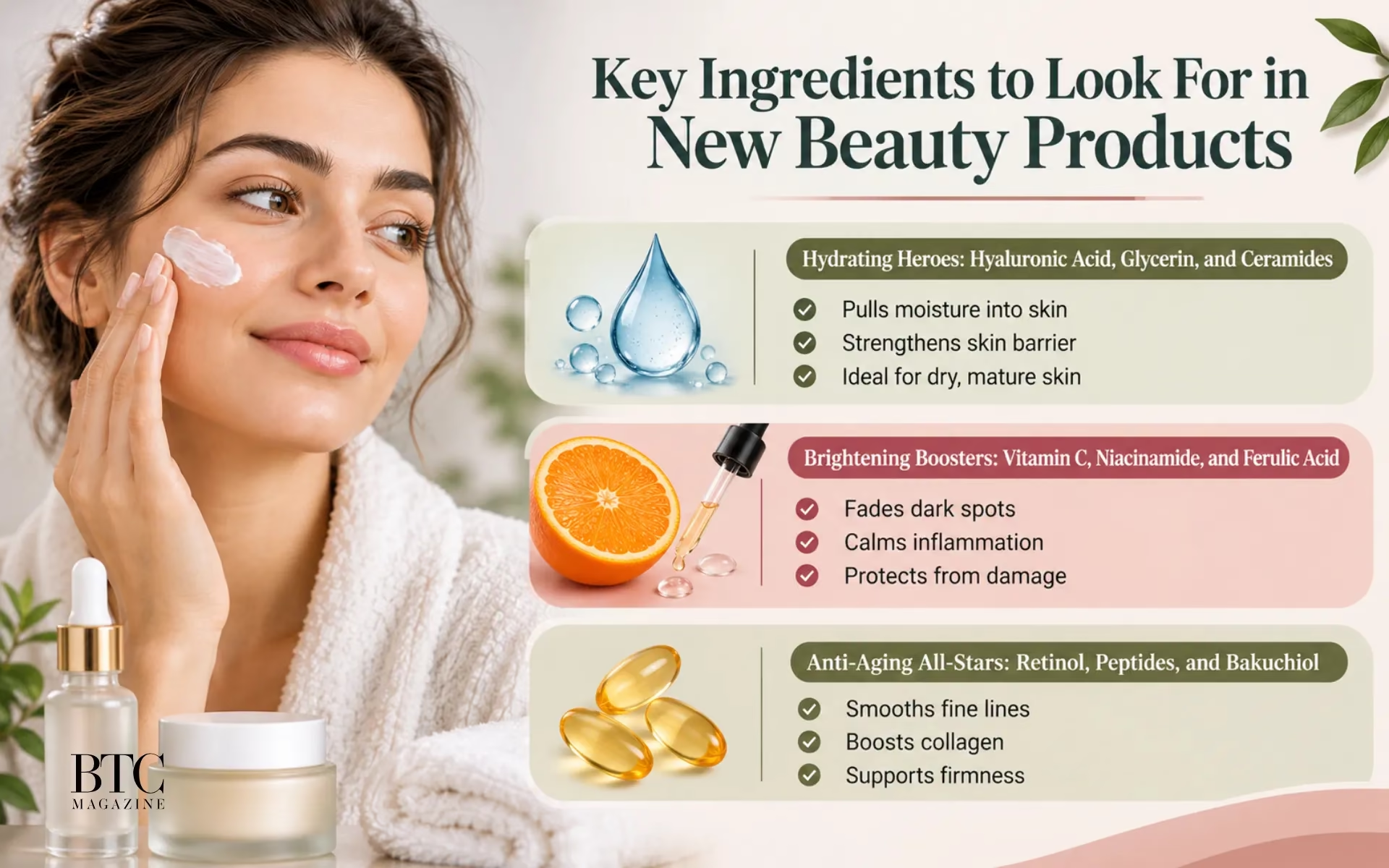
Hydrating Heroes: Hyaluronic Acid, Glycerin, and Ceramides
Canadian winters are brutal on your skin. Trust me, I know. You need hydration that actually sticks.
Hyaluronic acid pulls moisture into your skin. It holds up to a thousand times its weight in water. Glycerin does similar work at a lower price point. Ceramides repair your skin barrier. They lock everything in for you.
Dry, mature, and melanin-rich skin especially loves these. If your face feels tight by noon, you need more of them. Our Hyaluronic Acid Serum delivers deep, lasting hydration without heaviness. These are the skincare products that actually deliver for you.
Brightening Boosters: Vitamin C, Niacinamide, and Ferulic Acid
Dark spots don't discriminate. But they show up differently on your deeper skin tones. Vitamin C fades your hyperpigmentation over time. Niacinamide calms your inflammation. Ferulic acid boosts vitamin C's power.
These ingredients work slowly. You need consistency. But they transform your skin without harsh bleaching agents. Our Vitamin C Serum brightens gently while protecting your skin against environmental damage. When you're browsing new beauty products for dark spots, look for these.
Anti-Aging All-Stars: Retinol, Peptides, and Bakuchiol
Women 40+, this section's for you. Retinol speeds up your cell turnover. It smooths your fine lines. Peptides signal your skin to produce more collagen. Bakuchiol offers you retinol-like results without the irritation.
You don't need all three. You can start with one. Build your tolerance. Our Collagen Serum supports your firmness and elasticity. Mature skin needs new beauty products with real science.
Red Flags: Ingredients to Avoid
The "Dirty Dozen" – Ingredients to Watch Out For
You need to watch out for parabens. They disrupt your hormones. Sulfates strip your skin barrier. Phthalates hide in fragrance. Synthetic fragrances trigger your reactions. Formaldehyde releasers preserve products but irritate your skin.
These show up in plenty of beauty products. They don't belong near your face. You should check your current bottles. You might be surprised. Always scan new beauty products for these red flags.
Fragrance: Why "Fragrance-Free" Often Matters
"Fragrance-free" means no added scent. "Unscented" might mask odours with hidden chemicals. Fragrance is the top cause of your contact dermatitis. It's especially risky for your sensitive and melanin-rich skin.
If your skin reacts to everything, you should go fragrance-free. Your nose might miss the perfume. Your skin won't miss the rash. If you need fragrance-free skincare, check the full ingredient list.
Ingredients That Don't Belong on Melanin-Rich Skin
You should know hydroquinone can cause ochronosis on darker skin. That's a blue-black discolouration. Benzoyl peroxide often leaves your dark marks. High-strength acids can trigger your post-inflammatory hyperpigmentation.
This isn't fear-mongering. It's facts. Your melanin-rich skin needs gentler, consistent care. Not aggressive treatments.
Clean Beauty and Ethical Claims
What "Clean" Actually Means
"Clean beauty" has no legal definition. None. Zero. Brands define it themselves. Usually, it means free from parabens, sulfates, and synthetic fragrances. But the list varies, so you need to check.
Many readers ask me about skin care using natural ingredients. Here's the truth you need. Natural doesn't always mean safe. Poison ivy is natural. You don't want it on your face.
You should ask questions. Read your labels. Don't trust a green leaf on the packaging. Clean beauty starts with ingredient transparency. It ends with your own research.
Cruelty-Free vs. Vegan – Know the Difference
Cruelty-free means no animal testing. Vegan means no animal-derived ingredients. A product can be one, both, or neither. You need to know the lines between cruelty-free beauty and vegan beauty blur sometimes.
Leaping Bunny and PETA certifications help verify claims. But they check different things. You should know what you're supporting when you shop.
How to Spot Greenwashing
Greenwashing looks eco-friendly. It isn't. Think bamboo packaging wrapped in plastic. "Natural" formulas loaded with synthetics. Vague terms like "green" or "pure" should warn you.
You should look for certifications. Check your ingredient lists. Support brands that back up their claims with real action. Conscious beauty shopping means you're thinking beyond the label.
Sustainable Packaging Matters
Why Packaging Matters Beyond Aesthetics
You should know the beauty industry produces over 120 billion units of packaging yearly. Most of it isn't recyclable. It sits in landfills. It pollutes oceans. Your moisturiser shouldn't cost the earth.
Canadian beauty brands are stepping up. They're rethinking bottles, boxes, and pumps. You can vote with your wallet.
What to Look For: Recyclable, Refillable, Minimal
You want recyclable packaging. It uses materials that break down properly. You want refillable beauty packaging. It lets you reuse the outer container. You want minimal packaging. It skips unnecessary boxes and wrappers.
You should look for glass over plastic. Look for aluminium. Look for brands that offer you refill programmes. Sustainable packaging isn't a trend. It's a necessity for you.
Canadian Beauty Brands Leading the Way
Canada's home to some serious innovators. Brands here face strict regulations. They often exceed them. Many local companies use refillable beauty packaging and recyclable packaging as standard.
Supporting Canadian beauty brands reduces your shipping emissions. It keeps money in your communities. It proves that ethical beauty and great results go hand in hand. You'll find more new beauty products from Canada use sustainable materials now.
Explore our favourite Canadian beauty brands making waves → /https://papafilles.com
How to Choose New Beauty Products for Your Skin Type
These same rules apply whether you're buying serums or natural makeup. Your body deserves the same care too. You should apply these tips to your body care products.
Dry Skin: What to Look For
Your dry skin craves barrier repair. You should look for ceramides, fatty acids, and plant oils. Avoid alcohol-heavy formulas. They feel refreshing. They strip your moisture long-term. Here's what you should look for in new beauty products for dry skin.
Our Face Moisturizing Cream locks in your hydration without greasiness.Oily and Combination Skin: What to Look For
Your oily skin needs balance, not punishment. Lightweight hydration actually reduces your oil production. Niacinamide and salicylic acid help you. Harsh cleansers don't. New beauty products for oily skin should balance, not strip.
Our Enriched Foaming Cleanser removes dirt without destroying your barrier.Sensitive Skin: What to Look For
Your sensitive skin wants simplicity. You need fewer ingredients. No fragrance. No essential oils. You need calm, gentle care. New beauty products for sensitive skin need fewer ingredients.
Our Lavender Face Mist soothes your irritation after cleansing.Mature Skin (40+): What to Look For
Your mature skin loses collagen and moisture. It needs peptides, retinoids, and rich hydration. Don't skip your neck. Don't skip your sunscreen. The best new beauty products for women 40+ include peptides.
Our Night Cream works overnight to support your elasticity and firmness Still Not Sure? Take the Quiz
Not sure where you fit? That's okay. Your skin changes. Seasons change. Your hormones change.
Don't Forget: Your Skincare Routine Matters Too
Great Products Need a Great Routine
Even the best new beauty products won't work in chaos. Your layering matters. Let's talk order.
You should cleanse first. Then apply toner or mist. Then serum. Then moisturiser. You need sunscreen last in the morning.
Keep a simple skin care products list. It helps you track what works. Check out our guide to building a simple skincare routine that actually works → /skincare-routine-guide.
Browse the Papa & Filles skincare collection →https://papafilles.com/shop for carefully curated formulas.
Consistency Over Perfection
You don't need twelve steps. You need five good ones you actually use. Skincare takes time. Most ingredients need six to eight weeks to show you results.
Be patient. Be consistent. Your skin will thank you.
Conclusion
You don't need to be an expert to shop smarter. You just need to know what to look for in new beauty products. Check your ingredients. Read past the marketing. Consider your packaging. Match everything to your real skin.









Comments
No comments yet
No comments to show yet. Subscribe to join the conversation.
Log in or subscribe to comment on this article.