The Strategy That Protects You Can Also Imprison You
"The strategy that protects you at eight can imprison you at forty-eight."
Done Is Not the Same as Healed
Done is not healed. It is not necessarily enlightened, and it does not mean you have forgiven everyone, found the lesson or tied the whole damn thing up with a pretty therapeutic bow. Sometimes, done is simply done. It is the moment a woman stops explaining herself, stops apologizing for who she has become and stops negotiating with people who have benefited from her silence. Making herself smaller has never made anyone else bigger. It has only made her disappear.
How I Learned to Disappear
I know something about disappearing. For a long time, I was very, very good at it.
I did not become a psychotherapist by accident. Long before I had degrees hanging on walls or sat behind a therapy-room door, I knew how to read a room. I could feel when the energy shifted. I could recognize anger before anyone raised a voice. I knew when to speak, when to stay quiet and when to get the hell out of the way.
Growing up around big personalities, witnessing violence and behaviours that a child should never have had to make sense of, I learned something early — if the spotlight was not on me, I might be safe. So I stayed out of it.
How Childhood Survival Skills Shape Adult Identity
Children cannot redesign the rooms they are trapped in, so they redesign themselves. Some become loud or rebellious. Others become funny, perfect, useful or fiercely independent. I became watchful. I made room for everyone else's feelings and convinced myself I did not need much room of my own.
Those instincts served me. They helped me survive, and later they helped me become very good at my work. I learned to notice what was not being said, sit with discomfort and look beneath anger, control, perfectionism and withdrawal.
But survival skills have an expiry date. The strategy that protects you at eight can imprison you at forty-eight.
When Keeping the Peace Means Losing Yourself
Eventually, being easygoing begins to look suspiciously like erasure. Being understanding means everybody gets understood except you. Keeping the peace costs you yours. And being the dependable one can quietly place you at the bottom of everyone's list, including your own.
The Moment I Finally Found My Voice
My done moment did not arrive in a therapy room. It arrived under stage lights, with hundreds of people waiting for me to speak. I stood just beyond the curtain, notes in my hand, feeling the old instinct rise: soften it, make it easier, do not be too much. Then I heard my name. For once, I did not edit myself before anyone else had the chance. I walked into the light and told the truth about the concrete basement, the recycled furniture, the impossible hours and the woman who built a life without anyone handing her a blueprint. My voice shook, but I kept going. When I stepped off that stage, I knew I could never willingly return to the background. I had not simply found my voice. I had used it in public.
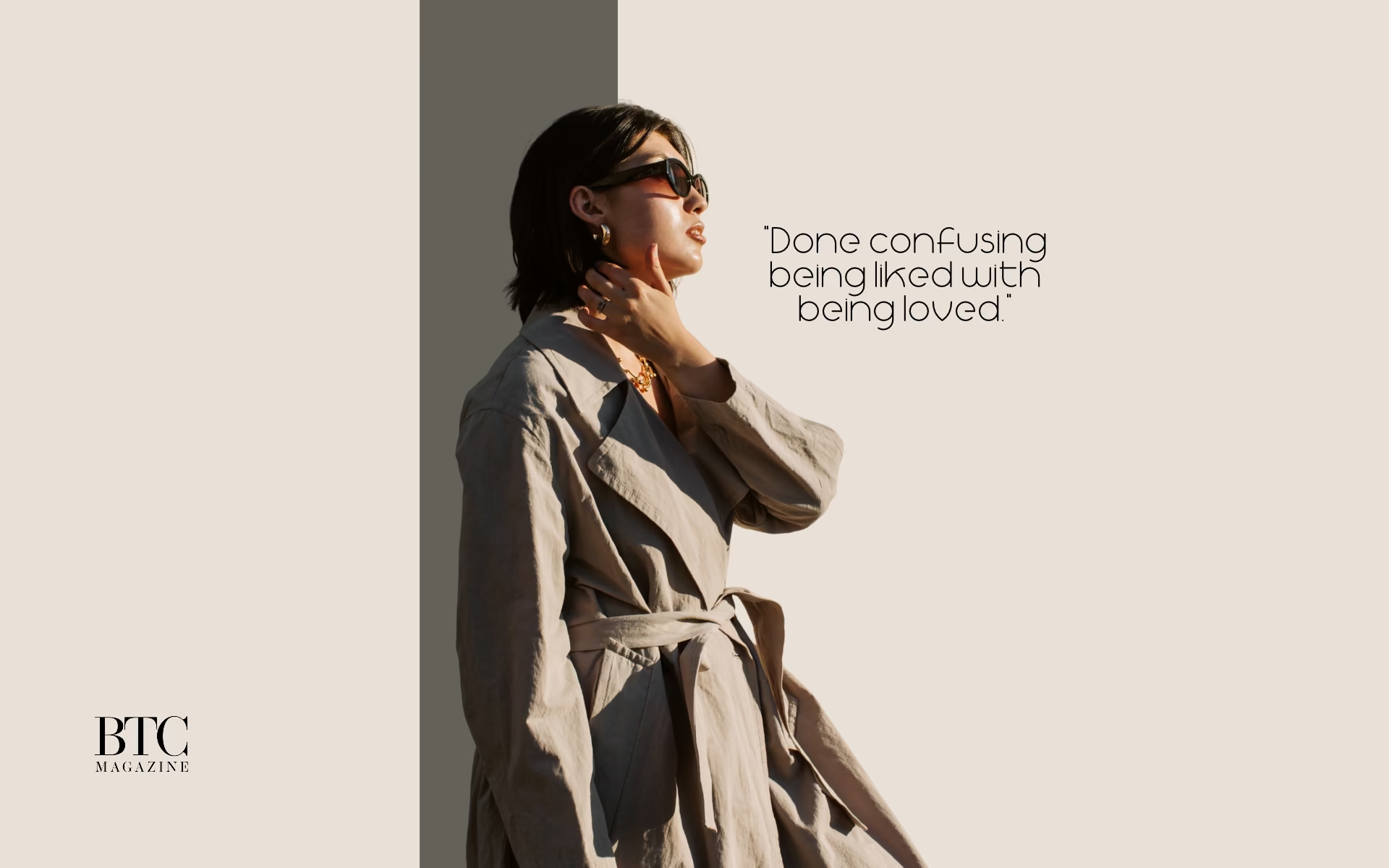
"Done confusing being liked with being loved."
That was the act. Not a private insight. Not a sentence underlined in a journal. I walked into the place I had spent a lifetime avoiding and let myself be seen.
I was done being the dim light in the background because my brightness might make someone uncomfortable. Done softening my ambition and shrinking what I had built. Done confusing being liked with being loved.
Choosing Yourself Without Losing Your Compassion
Choosing myself did not mean I had stopped caring about everyone else. It meant I finally made the list.
Recognizing the Patterns of Self-Abandonment
Behind the therapy-room door, I have worked with hundreds of women whose lives look nothing alike, yet I have watched this same disappearance happen in different clothes.
One woman sat across from me in a tailored suit, her phone vibrating every few minutes with decisions only she could make. She ran a company and managed a staff, but when her mother called, her whole body changed. Her shoulders lifted. Her voice became small. She had been invited to accept an award in another city, and her mother had called the trip selfish. She had already drafted the email declining it. 'It will just be easier,' she said. I asked her to read the email aloud. Halfway through, she stopped. She stared at the screen, deleted the message and whispered, 'I am going.' Nothing exploded. No relationship ended. A grown woman simply stopped asking for permission to enter a room she had earned her way into.
What It Really Means to Be Done
That is often how done first appears. Not as a dramatic exit, but as the first completely honest sentence a woman has spoken in years: 'I cannot do this anymore.' And sometimes I think: good.
Not because I want her marriage to end, her family to fracture or her life to fall apart. Quite the opposite. That sentence may be the first sign that she is returning to her own life.
Setting Boundaries Without Walking Away From Everything
Done does not necessarily mean divorce, quitting tomorrow, cutting off your family or burning everything to the ground. We have made the language of limits sound so dramatic that people think the only choices are tolerating everything or leaving everything. There is an enormous amount of territory in between.
Sometimes the relationship stays, but the version of you inside it changes.
You stop saying yes while your entire body is screaming no.
You stop accepting crumbs and calling yourself grateful.
You stop asking permission to become who you already are.
That is the kind of done I am interested in.
"She got me here. But she does not get to decide where I go next."
Learning to Accept Disappointment and Misunderstanding
If I am going to sit across from women and encourage them to speak plainly and take up space in their own lives, then I damn well better do the same. I have to tolerate someone being disappointed in me. I have to survive being misunderstood. I have to accept that becoming more fully myself may make me considerably less convenient for somebody else.
That may be one of the hardest truths about change: the fuller version of you will not work for everyone.
Why Some People Prefer You to Stay Small
Some people preferred you quiet. Others preferred you accommodating because it made their lives easier. They liked the woman who would bend until she broke and then apologize for making a mess.
Making Peace With Your Past Self
I do not hate the earlier version of myself. She figured out how to navigate experiences she did not create and circumstances she could not control. She survived. Eventually, those same instincts became part of the work I have dedicated my life to doing.
She got me here. But she does not get to decide where I go next.
How to Stop Disappearing to Keep Others Comfortable
That, for me, is what done means. It can come before understanding. It can be messy, uncomfortable and deeply inconvenient. It can mean standing in the middle of your own life with shaking knees and saying: I can love you. I can understand you. I may even forgive you. But I will no longer disappear to keep you comfortable.
At this stage of my life, I am not interested in becoming more palatable. I am interested in becoming more me — louder when something matters, softer when I choose, visible without apology, successful without explanation and loving without disappearing.
Ask Yourself: What Are You Finally Done With?
So perhaps the first question is not, What do I need to heal? Perhaps it is more immediate and more dangerous… What am I finally done with?
Not what your partner thinks you should change. Not what your mother expects. Not what your family has always needed you to be. What are you done carrying?
Your Next Chapter Does Not Require Closure
Sometimes the next chapter does not begin with closure, forgiveness or enlightenment.
Sometimes it begins when you hear your own voice above everybody else's and realize you have had enough.










Comments
No comments yet
No comments to show yet. Subscribe to join the conversation.
Log in or subscribe to comment on this article.