AVAILABLE ON iOS & ANDROIDRead Between The Covers
Read Between The Covers
Anywhere
Carry the full magazine experience in your pocket — stories, podcasts, exclusive perks, and more. Download the free app today.
Carry the full magazine experience in your pocket — stories, podcasts, exclusive perks, and more. Download the free app today.
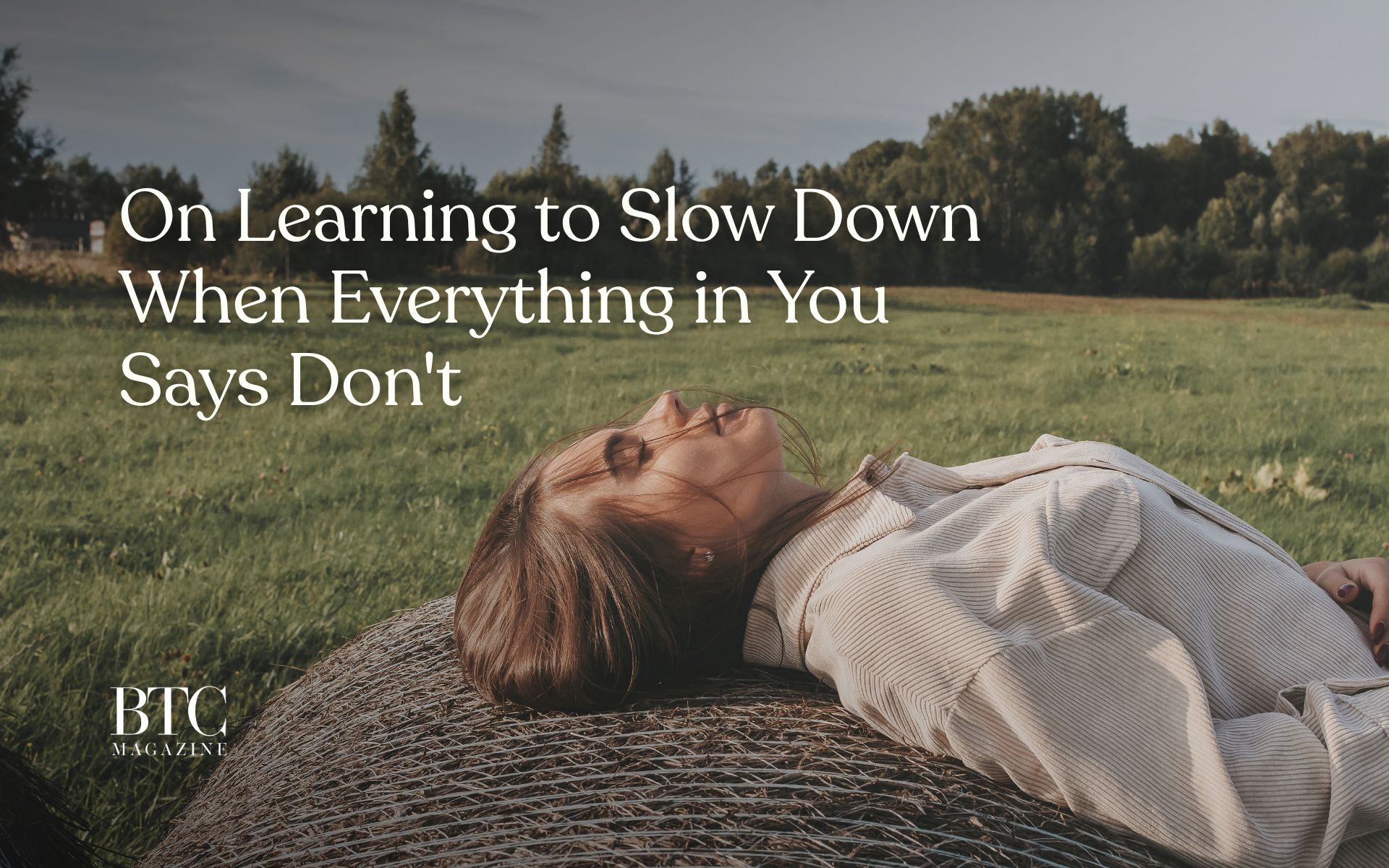
Speed was never the goal. We just confused it for one.
She went on vacation for the first time in four years and spent the first three days feeling like she was failing at relaxing. There was a stack of books she'd brought and wasn't reading. A beach she was sitting on and not enjoying. A brain that kept generating to-do lists even when there was, technically, nothing left to do.
This is what happens when you've been running for so long that stillness doesn't feel like rest — it feels like danger. Like falling behind. Like losing something, though you can't quite name what.
Learning to slow down is one of the hardest things a high-achieving woman can do — not because she lacks discipline, but because her entire nervous system has been rewired to equate stillness with failure.
The culture we've built — for women in particular, and for high-achieving women especially — rewards velocity. Do more. Move faster. Optimize. The productivity industry, valued at over $90 billion globally, sells the idea that the problem is always efficiency, never the fundamental pace
of the system itself. But research on what actually sustains long-term performance points clearly in the opposite direction. Studies on rest, creativity, and cognitive function consistently find that periods of genuine disengagement are essential. You cannot think well, create well, or lead well when your nervous system has never been allowed to fully discharge.
"She was failing at relaxing. And she realized: that is a sentence that should never have made sense."
For women who have built their sense of safety around being capable and needed, rest doesn't feel like maintenance. It feels like exposure. Like the moment you stop performing, someone will notice that you were never quite as together as you appeared.
Learning to slow down requires something more radical than a changed schedule. It requires a changed relationship with what your worth actually rests on. Because as long as you believe — even quietly, even unconsciously — that you are only valuable when you are producing, stillness will always feel like a threat.
Women who describe successfully integrating rest into their lives don't talk about it as having discovered a better productivity hack. They talk about it as a philosophical shift: toward understanding that they are not a machine to be optimized, and that time spent doing nothing is not wasted — it is the source.
It looks like leaving the party early because you're genuinely tired. It looks like taking the walk without the podcast. It looks like a weekend that is actually unstructured — not scheduled with restorative activities, but genuinely open. Those choices feel small. They're not.
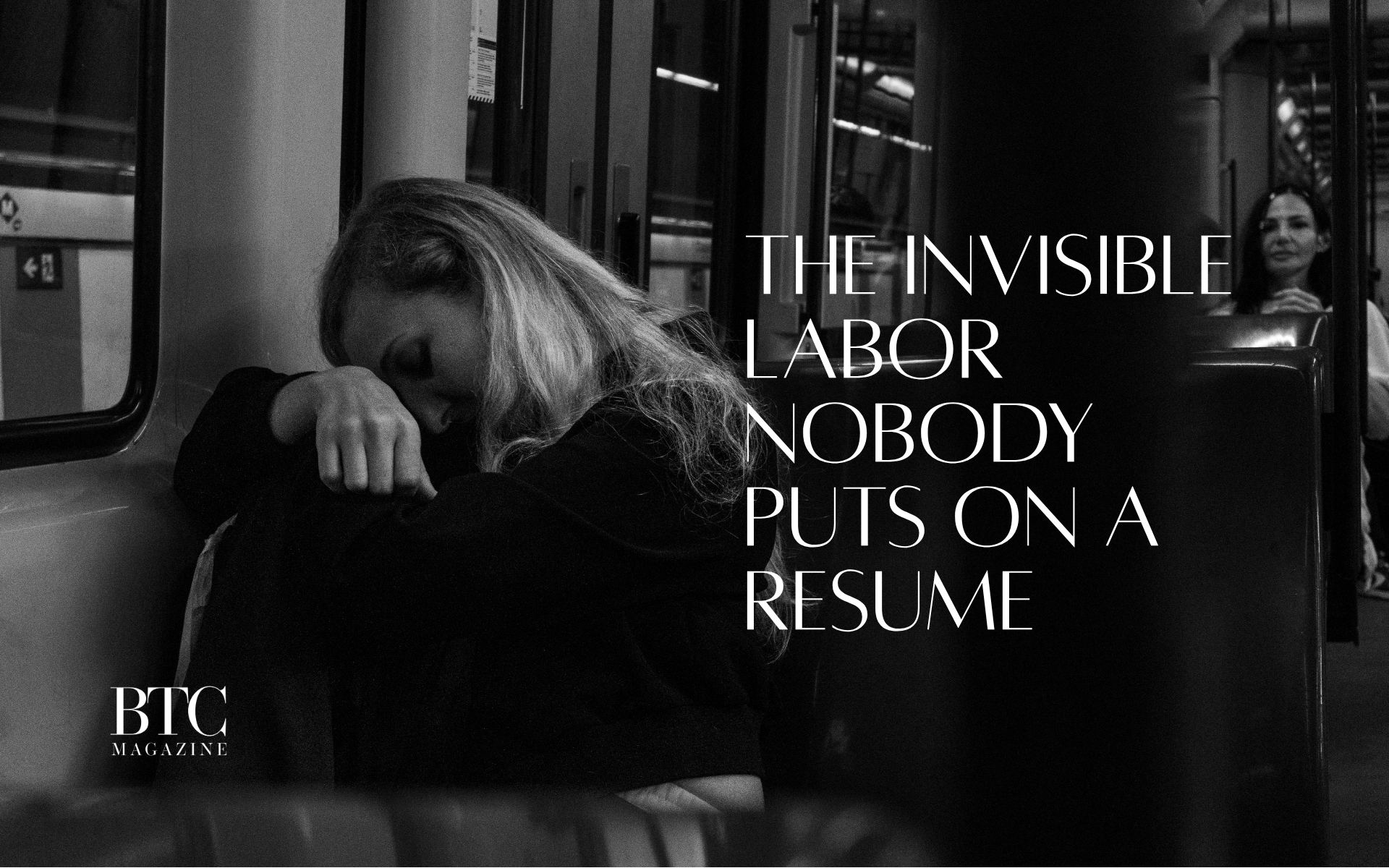
The mental exhaustion underneath the inability to rest often connects directly to the weight of what you've been carrying alone. Read: The Invisible Labor Nobody Puts on a Resume.
→ Rest doesn't restore you the way it used to
→ You feel anxious when you're not being productive
→ Vacations feel more stressful than restful
→ You can't remember the last time you were truly present
→ You keep waiting for a moment to exhale that never comes
→ Stillness feels like failure, not recovery
The thing about slowing down is that at first, you notice how fast everything is. Then, gradually, you start to notice quieter things — the things that don't announce themselves at full volume.
You've been missing them. They've been there all along.
Members only from here
You've reached the preview. Subscribe for the full article — plus every issue and subscriber perks.
7-day free trial, then from $3.99/mo. Cancel anytime.
Instant access · Cancel anytime
“I started reading for the fashion pieces, but the essays are what kept me coming back.”
Maya R. · Toronto reader
Keep exploring
Read the full story
7-day free trial · From $3.99/mo
Thoughtfully designed products for the discerning reader
Curated book accessories for the discerning reader
Thoughtfully designed products for book lovers
Unique items for the bibliophile in your life