EDITOR'S NOTE
New commission for The Appetite Issue. This is the issue's INTERVIEW / Q&A, with Joseph Tito as interviewer. IMPORTANT: the subject below ("Sandra Dezan.") is a COMPOSITE PLACEHOLDER written to model the piece's tone, structure and pull-quotes. Do NOT publish the composite — cast a real subject (Vivian Risi is the obvious candidate given the cover-essay reference), run the real interview, and swap in verified quotes. Treat this as the template + question set + target beats. ~1,300 words. Needs subject portrait.
SECTION: Interview / Q&A | TYPE: Interview | TEMPLATE: Interview / Q&A
SUGGESTED HEADLINE: Say the Number
SUGGESTED DEK: Women are allowed to earn money. They are not allowed to want it out loud. Joseph Tito sits down with one who refuses to whisper.
PULL QUOTE 1: "A man says he wants to be rich and we call it ambition. A woman says it and the room goes cold. Same sentence. They just don't like it in our mouths."
PULL QUOTE 2: "I stopped discounting myself the day I realized 'I don't want to seem greedy' is just 'good girl' wearing a blazer."
IMAGE NOTES: Power portrait, but warm — no cold-CEO cliché. She should look like she's enjoying it. Real subject's environment once cast.
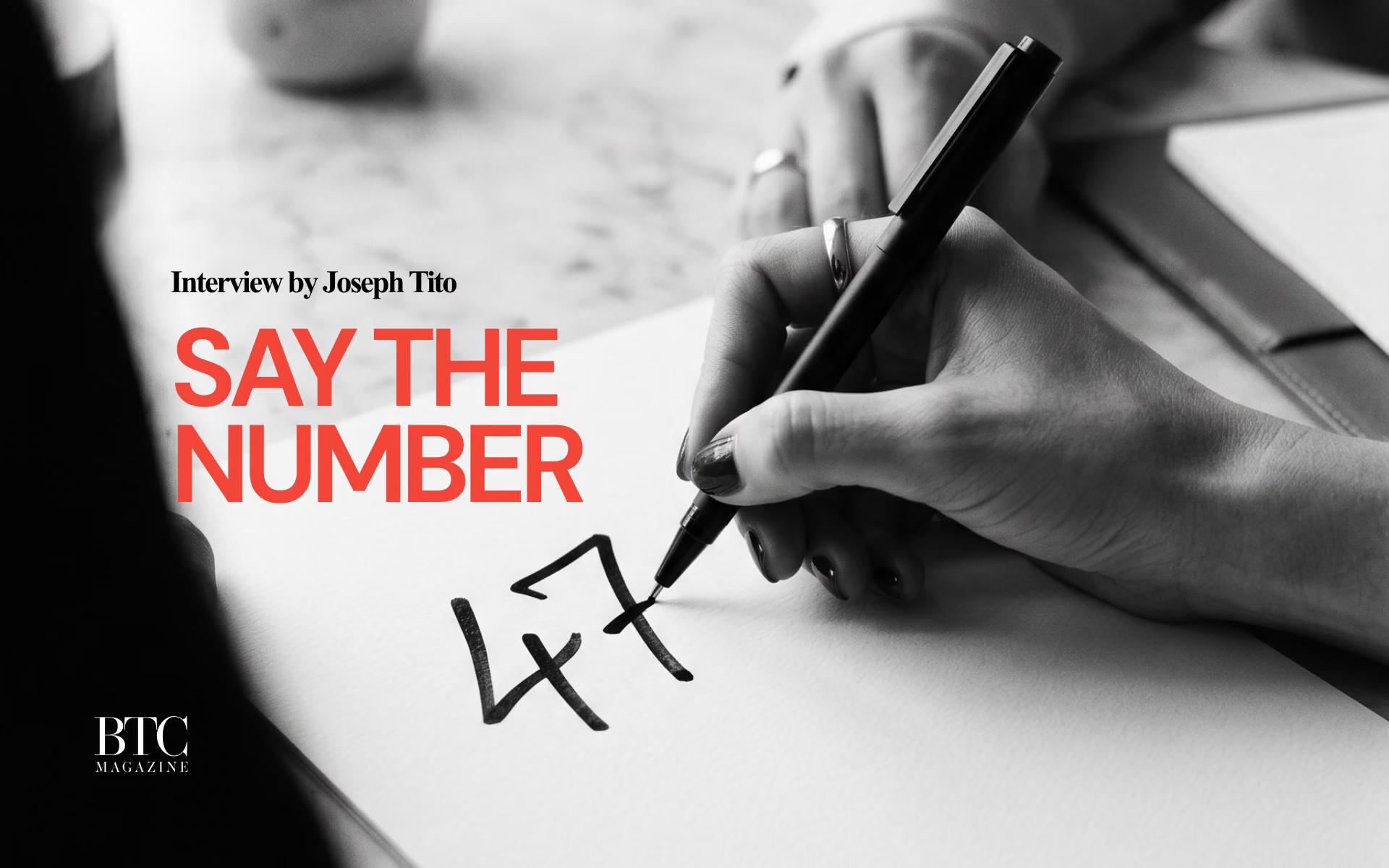
SAY THE NUMBER
Interview by Joseph Tito
Intro
There's a thing women do with money that I clocked years ago and have never stopped noticing. They round down. They say "I do okay." They name a price for their work and then, in the same breath, before anyone has even flinched, they start negotiating themselves backward. We have built a whole etiquette around a woman pretending she doesn't want the thing she has spent her entire life working for. Money is the last appetite we still ask women to perform shame about, and I wanted to talk to someone who quit performing.
[COMPOSITE PLACEHOLDER — replace with cast subject.] Sandra Dezan. built her company from a spare room and sold a piece of it for a number that made her accountant sit down. She is exactly as charming as the stories say and considerably less polite about it, which is why I wanted her. We talked about wanting money out loud, the price of being coy, and what she's teaching her daughters that no one taught her.
Opening — Naming the Number
JOSEPH TITO: Let's start where women never start. How much do you want?
Sandra Dezan: [laughs] See, you can feel it, right? Even me, even now — there's a half-second where the good girl wants to say "oh, it was never about the money." It's such a reflex. Let me actually answer you. I want a lot. I want more than I have, and I have a lot. I want the kind of money that means no man, no bank, no board ever gets to decide what I do with my afternoon. That's the real number. The real number is sovereignty.
JT: Why is that sentence so hard for women to say?
SD: Because we're trained that wanting money is unfeminine and unspiritual and a little disgusting. A man stands up and says he wants to be rich and the room calls it ambition, drive, vision. A woman says the identical sentence and the temperature drops. You can watch people physically recoil. Same words. They just don't like the words in our mouths. So we learn to launder it. "I just want to be comfortable." "I want to help people." All true, and also armor, so nobody catches us wanting the actual thing.
The Laundering — Undercharging and Self-Discount
JT: You used to do that. The laundering.
SD: For years. I undercharged so aggressively it's embarrassing to look back on. I'd quote a price and then immediately say "but we can be flexible," before the client said a word. I was negotiating against myself for free. And I told myself it was generosity, it was relationship-building, it was being easy to work with. It was fear wearing a nicer outfit. I stopped discounting myself the day I realized "I don't want to seem greedy" is just "good girl" wearing a blazer. It's the exact same training. It just followed me to work.
JT: What changed it?
SD: A man on my own team, more junior than me, asked for nearly double what I was paying myself. Casually. Like he was ordering lunch. No shame, no apology, no little nervous laugh at the end of the sentence. And I had two reactions at once. The first was outrage. The second, underneath, was awe. He thought he was worth it because nobody had ever once suggested to him that he wasn't. That's the whole inheritance, right there. He'd been handed permission at birth and I'd been handed a discount code.
The Turn — Saying It and Letting the Silence Sit
JT: So what did you do?
SD: I gave myself the raise first. Before I gave it to anyone else. And I made myself say the number out loud, to my CFO, with no softening words around it. Just the number, full stop, and then — this is the hard part — silence. Women fill the silence after a number. We can't stand it. We rush in with justifications. The discipline is saying the number and then shutting up and letting it sit there and be true.
JT: There's research on this — the "ask gap," women asking for less, being penalized more when they do ask. [Note: confirm/cite current figures.] But you're describing something underneath the data.
DR: The data's real, and also the data lets everyone off the hook by making it sound like a glitch women can fix with a better script. It's not a script problem. It's a permission problem. I can teach a woman the exact words to ask for a raise. I cannot, in one afternoon, undo thirty years of her being told that a woman who wants money is cold, calculating, after something. We don't have a flattering word for an ambitious woman and a rich woman. We have "gold digger." Think about that. The only widely understood phrase we have for a woman who wants money is an insult that assumes she had to get it through a man.
The Legacy — Daughters and What Gets Passed Down
JT: You have daughters. What are you doing differently?
SD: I say the numbers in front of them. On purpose. When I close something, I tell them what it was worth. When I'm proud of a deal, I let them see me be proud — not "we're so blessed," actually proud, the way their friends' fathers are allowed to be proud. I want money to be a normal thing they're allowed to want and name, like wanting to be tall or wanting to travel. I never want either of them, at thirty-five, negotiating against herself for free in a spare room, calling it generosity.
The Cost — What Wanting Out Loud Costs Her
JT: Does anyone make you pay for talking like this?
SD: Constantly. I'm "intense." I'm "a lot." I've been called intimidating by men who would describe an identical man as impressive. And early on it stung, because the whole apparatus is built to make that sting — the discomfort is the leash. But here's what I figured out. The discomfort other people feel when I want out loud is not my bill to pay. I carried that bill for two decades. I'm not picking it back up so a roomful of people can feel more relaxed about a woman who knows her own worth.
Closing — For the Woman Who Can't Say It Yet
JT: Last one. For the woman reading this who can't say her number yet.
SD: Practice in the mirror if you have to. I mean that literally, not as a cute line. Say the number with no sentence after it. No "but," no "if that works," no "I'm flexible." Just the number, and then the silence, and feel how badly your body wants to apologize into that silence — and don't. That silence is where the money is. That silence is the whole thing. We were raised to fill it. Learn to leave it there. Everything you actually want is on the other side of you finally shutting up and letting yourself be worth it.


.webp)