She Wasn’t Lost. She Was Buried
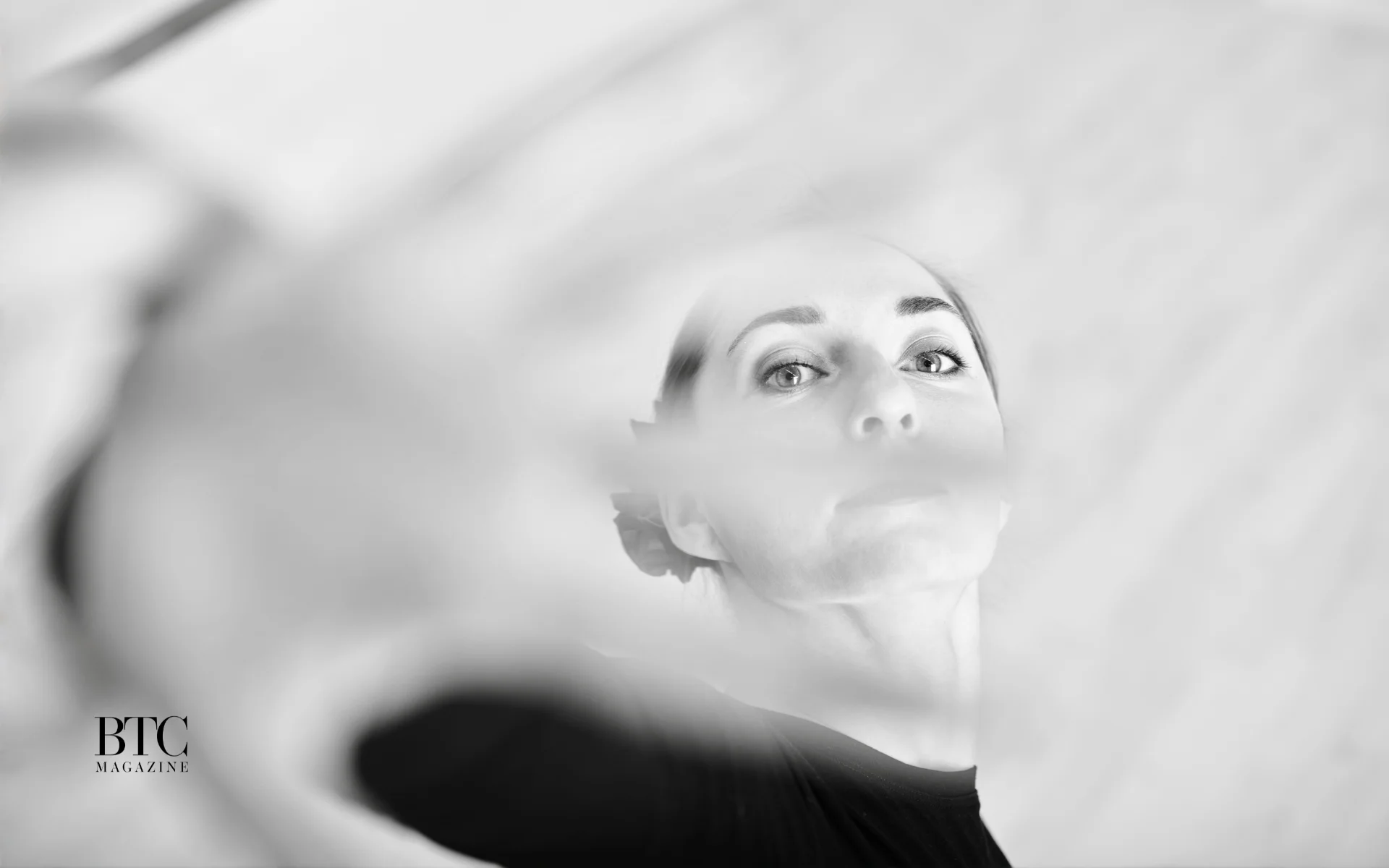
I was maybe fourteen when I told my father I wanted to be a dancer.
I remember the exact look on his face. It wasn’t anger — it was something worse. A kind of exhausted disbelief, as though I had said something naïve beyond his ability to understand. He had left the old country with one suitcase and a huge dream. He had sacrificed the particular sacrifices that first-generation fathers sacrifice — the ones that never get named out loud but live in every room of the house, in every expectation placed quietly on a daughter’s shoulders. There was a plan. The plan involved a profession with a title — accountant, lawyer, doctor. Something that justified the crossing.
He looked at me and said: “I didn’t leave everything behind so you could be broke.”
He wasn’t being unkind. He was afraid. Because he loved me the way you love when fear looks like protection — fiercely, and without question.
What neither he nor my mother had language for — what nobody at that time had language for — was that I had an essence. And she was creative. She was expressive. She was free-spirited. There was no word for that in the family vocabulary. “Essence” was not a thing. What was a thing was duty, sacrifice, and not wasting what had been given.
At that moment, something was decided. Not by him. By me.
I decided, without ceremony, that this self — the one who wanted a life that looked nothing like a plan — was a problem. Too risky. Too inconvenient to carry inside a family where goodness meant gratitude, gratitude meant compliance, and compliance meant you did not waste what was given to you by wanting something else.
So I buried free-spirited dancer me.
I just knew the wanting had to go.
The living core of who she is. The part that is creative and expressive and alive in a way that belongs to no one else. The part that, if you silence it long enough, stops announcing itself and just stops knocking.
That is what “being good” actually costs.
Your true self.
And you hand it over willingly — because you were never told that was what you were handing over. You were told you were being responsible. Grateful. Realistic. You were told you were growing up.
No one tells us that the good girl doesn’t just learn to behave.
She learns to disappear.
The disappearance is gradual — so gradual it never registers as loss. It registers as learning. As maturity. As simply understanding how the world works and adjusting accordingly. The family that means well. The culture that carries its rules like scripture, without ever examining whether the scripture still serves. The community where being “good” is the condition, not the suggestion — and where falling short of it has consequences a girl can feel before she has words for them.
The ones laughing hardest are the ones who lived it.
Living it means you grow up inside a framework so complete that it doesn’t even register as a framework. It reshapes your identity from the inside, quietly and so thoroughly that the second version — the good one, the safe one — starts to feel like the true one. You eventually forget there was ever another.
No funeral. No marker. No moment of acknowledged loss. Just the slow forgetting of a self you were never given permission to even fully get to know.
The dancer was only what I could name. What followed had no name at all. I became very good at reading rooms. A reflex developed so early it felt like instinct — walk in, assess, become whoever the room needs. Pre-edited. Pre-approved. Edges filed smooth before anyone had to ask.
This is the chameleon adaptation. And it is, in its own way, a remarkable survival skill.
It’s also how a woman’s voice goes — through endless translation rather than sudden silence.
Because the chameleon doesn’t stop speaking. She speaks fluently, warmly, often brilliantly. But everything passes through a filter so practised it becomes invisible: Is this safe? Will this cost me something? Does this fit who I need to be in this room? After enough years of that, the filter stops feeling like a filter. You just genuinely believe the adjusted version is what you think — because the original thought, the one that existed before the editing, has stopped surfacing at all.
The voice doesn’t get taken. It learns to take itself away.
I remember a moment in high school — my favourite English teacher turned to me mid-class and asked what I believed about something we were reading. Her curiosity was genuine — she leaned forward slightly, looking at me the way people look when they actually intend to listen to the answer.
That alone was disorienting. An elder. An authority. Someone who wanted nothing from me — who was asking simply because she wanted to know what I thought.
I opened my mouth.
And nothing came.
The question had landed somewhere inside me and found an absence. A practised emptiness where a point of view should have been. I had spent so many years reading rooms before I spoke, calibrating my words to what was safe and expected and welcome, that somewhere along the way I had stopped forming real opinions at all.
That moment followed me for years.
Because I understood eventually that it wasn’t a bad day. It was the accumulated cost of burying that free spirit. Of learning that my wanting was inconvenient, that my real self had no name, and the safest version of me was the adjusted one.
After fourteen years of working with women, I’ve stopped being surprised by how many describe this same vertigo. The blank. Women who are sharp and self-aware and fully capable of thought, undone by the simple experience of someone wanting to know what they actually want. They call it not trusting their judgment. They call it being bad at decisions. They call it not having strong opinions, as though agreeable were simply a personality type.
They were not born without opinions.
They just learned to bury them. Slowly, faithfully, in service of being loved. ———
The cost of all this is not dramatic. It’s just cumulative.
It lives in the relationships where you are endlessly accommodating and obscurely resentful, and cannot explain why, because you agreed to everything. In the creative life lived quietly, privately, or not at all. In a career that looks correct from the outside and feels, from the inside, like wearing someone else’s clothes. In the particular loneliness of being well-liked and deeply unknown — because the self that is liked is the adapted version, shaped to fit the room, and some part of you has always known this.
The grief that arrives without explanation in the middle of a life that should be enough.
The irritation when someone else says the thing you swallowed. The feeling, quiet but persistent, that you are living someone else’s version of you.
That is her. Still there. Still knocking.
The recovery of a woman’s voice is not an event. It doesn’t happen in a single conversation or a single act of courage, though both of those things can open the door.
It happens in the slow, repeated practice of noticing what you think before you edit it. Of saying the uncomfortable thing once, and surviving. Of discovering that a room can hold your full self and remain standing. Realising, gradually, that what you were managing — containing, adjusting, filing smooth — was never what needed fixing.
She was never the problem.
It was the most real thing in the room. It just had no name in the world you grew up in — and what has no name cannot be protected.
The dancer knew this. The free spirit knew this. Before the look on my father’s face taught her otherwise, she knew it in her body, completely. That is the particular truth about our original self: it doesn’t carry doubt. The doubt came later, from the outside, applied so consistently that it eventually felt like her own.
It wasn’t.
She is not lost.
She was buried. And burial — however long, however deep — is not the same as death.
What I know now, after the years it took to find my way back to her, is that being good was never actually the goal. The goal — the real one, underneath all the compliance and the adjustment and the careful performance of not-too-much — was always to belong. To be loved without condition.
What none of us were told is that the version of us they were asking for — the good, agreeable, essence-free version — was never going to be loved the way we needed anyway. Because you cannot truly be loved for a performance.
Only for what you actually are.
Josephine Carmela
is the founder of The Aligned Woman and an award-winning Feminine Leadership Mentor and somatic practitioner whose work bridges embodiment, nervous-system science, and spiritual psychology. For over fourteen years, she has guided women to distinguish who they truly are from who they had to become to survive.
Frequently asked questions
It reframes losing yourself not as something missing but as something deliberately buried. To belong and feel safe, a woman sets aside her freer, more expressive self until it stops announcing itself.
Good girl conditioning is the gradual training to be agreeable, dutiful, and self-sacrificing. It often feels like maturity or gratitude, but it teaches a person to disappear rather than simply behave.
Reclaiming yourself begins by noticing the parts you silenced, the desires, creativity, and directness you traded for approval. Awareness is the first step, followed by allowing those buried parts to surface again.
Tradition-bound and first-generation families often equate goodness with gratitude and compliance. Expectations are rarely stated aloud, yet they quietly teach daughters that wanting something different is a problem to suppress.