On her first day of kindergarten, my sister broke away from my mothers hug, turning around and walking into the classroom, making herself right at home. My first day of kindergarten was a little different. My mom had to tear my arms from her waist, walking me to the classroom door like a lamb being led to the slaughter; digging my heels into the ground as she guided her hand on my back. Wiping the flowing tears from my cheeks, she kissed me on the head and told me to go inside and ‘have fun’.
At the moment, that felt impossible.
The classroom felt both too big and too small, larger than any room in my house but filled with too many children my age running amuck. Though it was the first day of school, I felt like I had joined an established society. As if all of these four year olds already had pasts and histories together, and I was the newcomer that they rarely found themselves welcoming.
My new teacher had dark hair, bangs, and glasses. She wore a thick leather belt and pointed toe heels that made me think of an evil villain. She clapped three times and told us to put our ‘hands on top’, calling all the students to sit in a circle on the carpet. After seating myself in a gap in the circle, a young girl with braided hair tied with pink beaded hair ties seated herself beside me. At first we were silent, sitting in isolation, knee to knee. Yet soon after, I came to know her as Aliyah. Though she was my very first friend, Aliyah was also the easiest friend I had ever made. I understood then why the society of four year olds had already felt established; they had arrived a whole ten minutes before me, which was all a group of four year olds needed to form friendships.
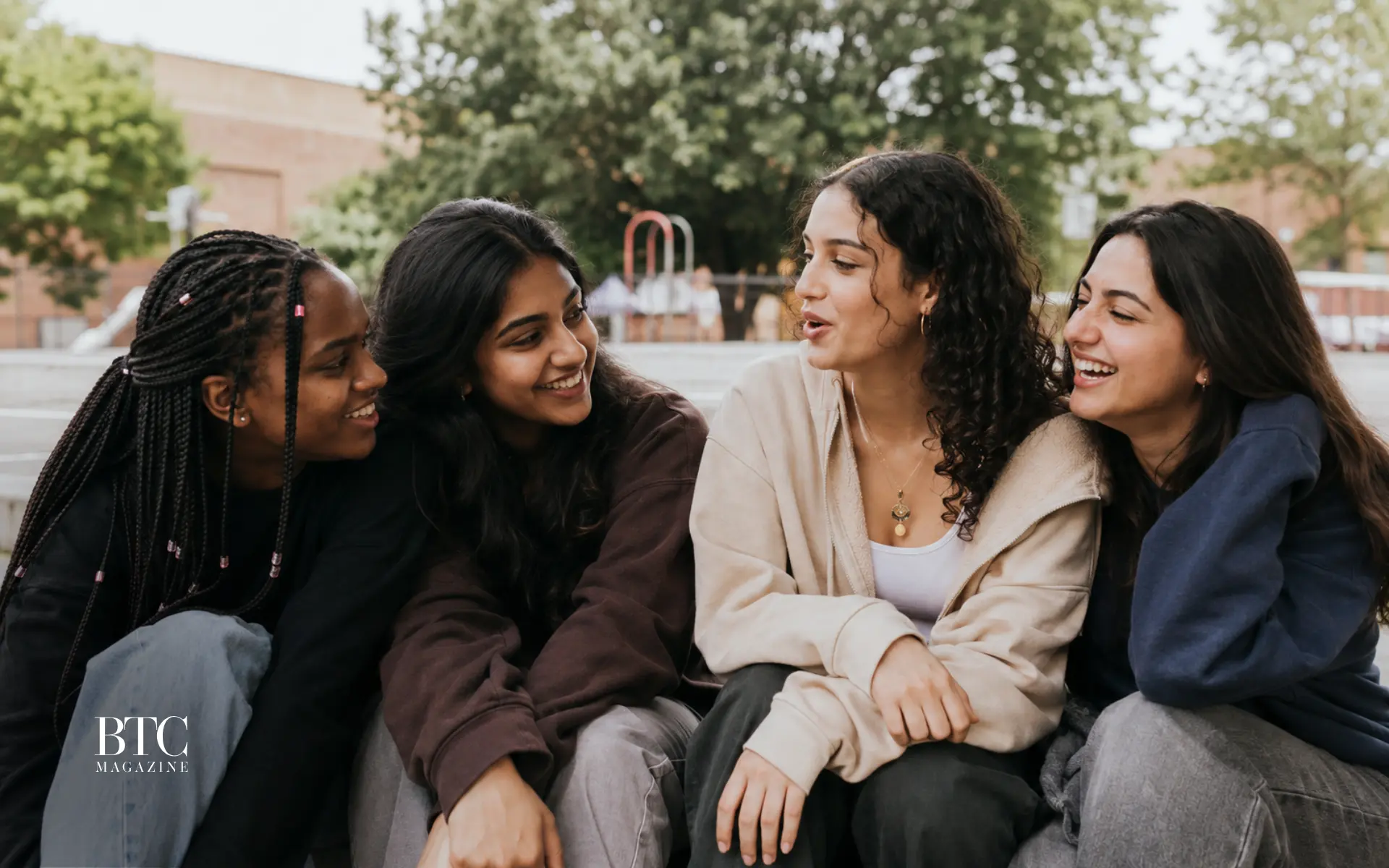
At twenty three years old, Aliyah is still one of my closest friends. My circle is pretty close-knit, and only includes two others: Jasneen, and Liana.
I met Jasneen in the first grade. I was introduced to her as ‘Aliyah’s other friend’, which naturally, I didn’t like. Though the more that we played at recess; the more dirt cakes we built and singing contests we had, she slowly became my friend.
We all went to elementary school with Liana, but she was a year older than us. Our circles sometimes overlapped, but it wasn’t until high school that they truly merged.
That is the story of how I’ve made my life long friends. How the friendships I made in my early childhood have stayed with me and shaped me through life. Now entering adulthood, the connections are closer to family.
The downside however to this gift of longevity, is the standard that accompanies it. Being someone who has had friendships lasting the majority of my life, I find that at the young age of twenty three, I don’t have the correct skills I need to develop new friendships.
On my first day of university, I walked myself to the classroom door. With my heart in my stomach and tears brimming behind my eyes, my mom wasn’t there to kiss me goodbye. I walked into the classroom and searched for a gap in the seats. I left the seat next to me free and set my bag down on the floor, but no one seated themselves beside me. The lecture room was huge, and most of the students seemed to have known each other from high school, or orientation. I wanted to break through their pre-established walls, but I didn’t know how.
What I know to be a gift –a built-in family of sisters, a set of women who understand me thoroughly– also burdens me in a way. These friendships are rooted in my identity, I have actualized myself around them and have grown through their support. They have become a simple extension of myself; the only things I wouldn’t admit to them are the things I cannot admit to myself. The act of confiding in them feels no different than speaking aloud to myself in a locked room.
With these three girls, I am safe in every way.
There is a delicacy to forming adult friendships, or so I am learning. It is not as simple as sitting with the lonely girl on the carpet, and resting your knee against hers. There is more intention involved, as well as risk and fear. Children have an inherent curiosity, making forming friendships as simple as breathing. Yet into adulthood we eventually find that curiosity replaced with judgment, or discernment. We put up walls where we once asked questions; we isolate where we once had joined.
Forming friendships at this age is not something I am currently skilled at, but it is a skill I am happy to learn as I proudly blame my inexperience on the matter on the three women who never let me feel alone.



Comments
No comments yet
No comments to show yet. Subscribe to join the conversation.
Log in or subscribe to comment on this article.