There is a very specific voice buried somewhere in the childhood memories of millions of women.
Soft. Warm. Earnest without being saccharine.
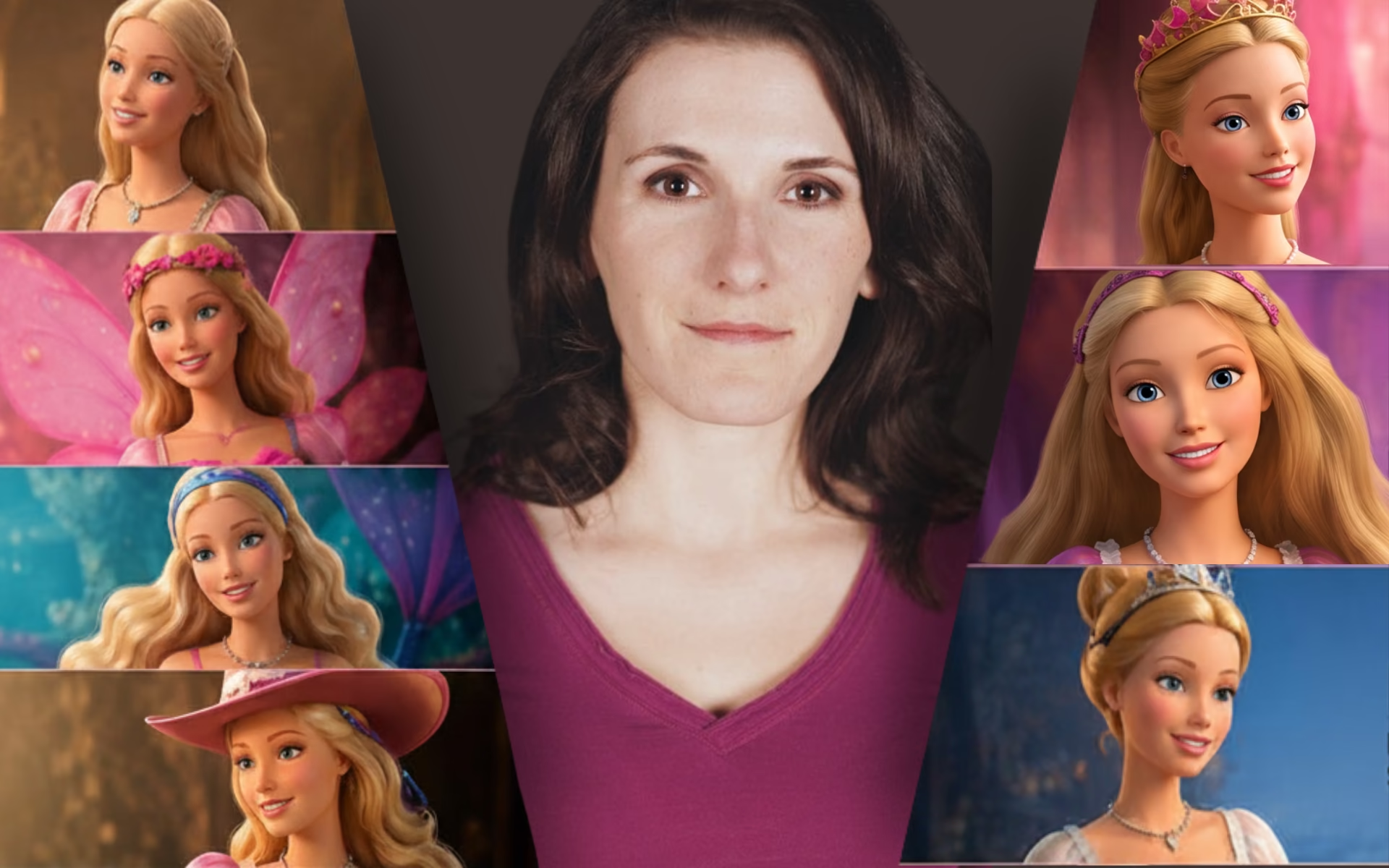
It belonged to a princess, a pauper, a mermaid, a fairy, Rapunzel, Odette, Clara, Alexa, Liana, Rosella and enough other women to make Barbie's résumé look less like a toy franchise and more like someone who has been aggressively avoiding LinkedIn.
But the voice was largely the same.
Kelly Sheridan.
A Canadian actress from Ottawa who became, for an entire generation, the voice of Barbie.
Not the face. Not the name on the lunchbox. Not the celebrity doing press tours.
The voice.
And maybe that is precisely why her contribution deserves another look.
Because before Barbie became a billion-dollar live-action cultural argument about womanhood, patriarchy and whether Ryan Gosling could make a mink coat emotionally devastating, Barbie had already spent years telling girls something surprisingly progressive:
You can be the person who saves yourself.
Sheridan began voicing Barbie in 2001 with Barbie in the Nutcracker, playing Clara, who becomes the Sugar Plum Princess. She went on to voice Barbie across the franchise's defining direct-to-video era, appearing in 27 Barbie films overall.
Then came the films an entire generation can probably identify from three seconds of orchestral music.
Barbie as Rapunzel.
Barbie of Swan Lake.
Barbie as the Princess and the Pauper.
Barbie: Fairytopia.
Barbie and the Magic of Pegasus.
Barbie Fairytopia: Mermaidia.
Barbie in the 12 Dancing Princesses.
Barbie Fairytopia: Magic of the Rainbow.
Barbie as the Island Princess.
Barbie Mariposa.
Barbie and the Diamond Castle.
Barbie in A Christmas Carol.
Barbie Presents: Thumbelina.
Barbie and the Three Musketeers.
Barbie in a Mermaid Tale.
And that was only the first run.
In 2010, Sheridan was replaced by fellow Canadian Diana Kaarina beginning with Barbie: A Fashion Fairytale. Two years later, Sheridan returned for Barbie in a Mermaid Tale 2. She stayed through 2015, with later films including Barbie: The Princess & the Popstar, Barbie in the Pink Shoes, Barbie Mariposa & the Fairy Princess, Barbie & Her Sisters in a Pony Tale, Barbie: The Pearl Princess, Barbie and the Secret Door, Barbie in Princess Power and Barbie in Rock 'N Royals. Mattel moved on to Erica Lindbeck for 2016.
Which means Sheridan didn't simply voice Barbie.
She grew up with the girls watching her.
We Remember The Character. We Forgot The Woman.
That's the strange thing about voice acting.
A live-action star gets photographed, interviewed, dressed by stylists and eventually immortalized on red carpets.
A voice actor can become part of millions of childhoods while walking through an airport completely unnoticed.
There is something beautifully backwards about that.
Sheridan helped create one of the most recognizable versions of one of the most recognizable women on Earth, yet most of the girls repeating Barbie's lines never knew her name.
Maybe you didn't either.
But you knew her voice.
And Sheridan understood something about Barbie that popular culture often didn't.
Years later, when asked about the stereotype of Barbie as the relentlessly cheerful, ditzy blonde, Sheridan rejected it. She said she had always played Barbie sincerely. Mattel's direction to her centred on three qualities: kind, clever and brave.
More importantly, Sheridan said she saw Barbie as someone who was intelligent, capable of getting herself out of trouble and didn't need a prince to rescue her.
Go back and watch those films as an adult and she's right.
The dresses were enormous.
The hair was physically impossible.
There were castles everywhere.
But underneath all that glitter was a heroine repeatedly being given something girls weren't always given in children's entertainment
agency.
Barbie Was Playing Everyone Except Herself
There is another weirdly fascinating thing about Sheridan's Barbie years.
Barbie was rarely just Barbie.
She was Clara.
Rapunzel.
Odette.
Anneliese and Erika.
Elina.
Rosella.
Liana.
Corrine.
Merliah.
Tori.
Kristyn.
Alexa.
Kara.
For years, Barbie's entire cinematic existence was built around becoming someone else.
Sound familiar?
Women spend an astonishing amount of their lives doing versions of exactly that.
Daughter.
Student.
Girlfriend.
Wife.
Mother.
Professional.
Caretaker.
The dependable one.
The attractive one.
The easygoing one.
The woman who can handle everything.
We change costumes without calling them costumes.
That is partly why those ridiculous little Barbie movies hit harder than they had any business hitting.
Underneath the castles and magic necklaces was the fantasy that a woman could inhabit a hundred different identities without losing the thing that made her herself.
Sheridan's performance provided that continuity.
The circumstances changed.
The century changed.
The hair definitely changed.
But the voice remained recognizable.
Maybe that's why hearing it now can feel strangely emotional.
It isn't simply nostalgia.
It is recognition.
Then Barbie's Voice Changed
Sheridan's departure also contains a less magical lesson.
Characters survive their performers.
Companies evolve.
Brands reposition.
Someone else gets the job.
Sheridan had already been replaced once in 2010 before returning in 2012. Then, after 2015, the franchise moved forward again without her.
There was no grand cinematic goodbye.
No emotional final scene where Barbie turned around and thanked the woman who had given her a voice for more than a decade.
The machine simply continued.
Anyone who has ever left a company, raised children who no longer need them in the same way, ended a marriage, sold a business or watched someone younger take over a role they once defined knows that feeling.
We like to believe being important makes us permanent.
It doesn't.
Sometimes you build something, give it everything you have, and eventually watch it continue without you.
That doesn't erase what you built.
Sheridan's Barbie belongs to a particular generation precisely because it ended.
Before Barbie Became A Feminist Discourse
Then 2023 happened.
Greta Gerwig's Barbie turned the doll into a global cultural referendum.
Suddenly adults were debating Barbie.
Was she feminist?
Was she anti-feminist?
Was she an impossible beauty standard?
Was she empowerment packaged in plastic?
Was Ken okay?
Meanwhile, millions of women who had grown up with Sheridan's Barbie had already been introduced to a much quieter version of that conversation.
We had watched Barbie become a writer, princess, fairy, adventurer, musketeer, singer and mermaid.
We had watched her solve problems.
Lead.
Choose.
Leave.
Fight.
Fail.
Try again.
Yes, she generally did all of this while looking like she'd just left a blowout appointment.
Nobody said feminism couldn't have excellent hair.
But Sheridan's Barbie was rarely waiting around helplessly for somebody to decide her life.
And perhaps that matters more than we realized.
The Woman Behind The Voice
Sheridan never disappeared when Barbie moved on.
She has continued a long voice-acting career across animation, anime and commercial work, with credits including Inuyasha, My Little Pony: Friendship Is Magic, Ninjago, Beyblade Burst and others. Her own professional biography describes nearly three decades in voice-over and more than a decade working with Mattel.
But Barbie remains different.
Because somewhere right now, a woman in her thirties is hearing two seconds of Princess and the Pauper and suddenly remembering a bedroom she hasn't thought about in twenty years.
The DVD case.
The television.
The friend sleeping over.
The version of herself who still believed becoming anything was entirely possible.
And behind that memory is a Canadian woman most people wouldn't recognize walking down the street.
Kelly Sheridan never needed to look like Barbie.
She gave Barbie something considerably more important.
A voice.
And for millions of girls growing up listening, maybe she gave us one too.


Comments
No comments yet
No comments to show yet. Subscribe to join the conversation.
Log in or subscribe to comment on this article.