
The Autopsy of the Good Woman
What a travel agent learns watching women finally leave
I sometimes imagine my 85-year-old self looking back at me. Not with judgment. With a question.
Where did you go? And when did you stop fighting to come back?
In my work as a travel consultant, I've spent years having conversations that happen just before departure — sometimes weeks before, sometimes days. People say things to travel agents they don't say to anyone else. Maybe it's because the trip represents permission. Maybe it's because we're strangers who won't hold it against them. But I've learned to listen for what sits beneath the stated reason for travel.
A reunion. A milestone birthday. A trip overdue.
And then sometimes: a pause that lingers a beat too long. A careful, almost embarrassed phrase.
"I haven't done anything for myself in years."
"It just felt like time to think about myself."
"I just need to get away."
They say it quietly, as if needing something for themselves is a confession.
THE AUTOPSY
If I were to write the autopsy of the woman I have watched disappear — in my clients, in my friends, in myself — it would look something like this:
TIME OF DEATH: Impossible to determine. Sometime between the first no that was swallowed and replaced with a maybe. Or the first task completed before asking whether she wanted to do it.
CAUSE OF DEATH: Gradual compliance. Self-negotiation to belong. Harmony over honesty. Nothing dramatic. Just the slow softening of edges.
IDENTIFYING MARKS: Chronic politeness. Fatigue without visible cause. Deferred dreams. A polite smile that didn't reach the eyes. Resentment without a clear target. A quiet envy of women who spoke plainly.
This is the aftermath. Not dramatic. A subtle discomfort in taking inventory. The strange grief of realizing no one forced you. No villain to blame. Just awareness. The parts of us we buried that may never see the light again.
The inventory of what was lost: the muscle of want and desire. The ability to disappoint without apology. Our audacity. The right to take up unnegotiated space. The part of us that didn't care to scan the room before speaking.
"What are we euthanizing to seem agreeable?"
We edit our language to something more palatable. We don't always say what we mean, but tone betrays us. So do certain phrases. The careful laugh. The quick deflection.
"It's fine." "I don't mind." "Whatever works."
If you listen closely enough, you can hear it. The part of us we set aside to be good.
ROME
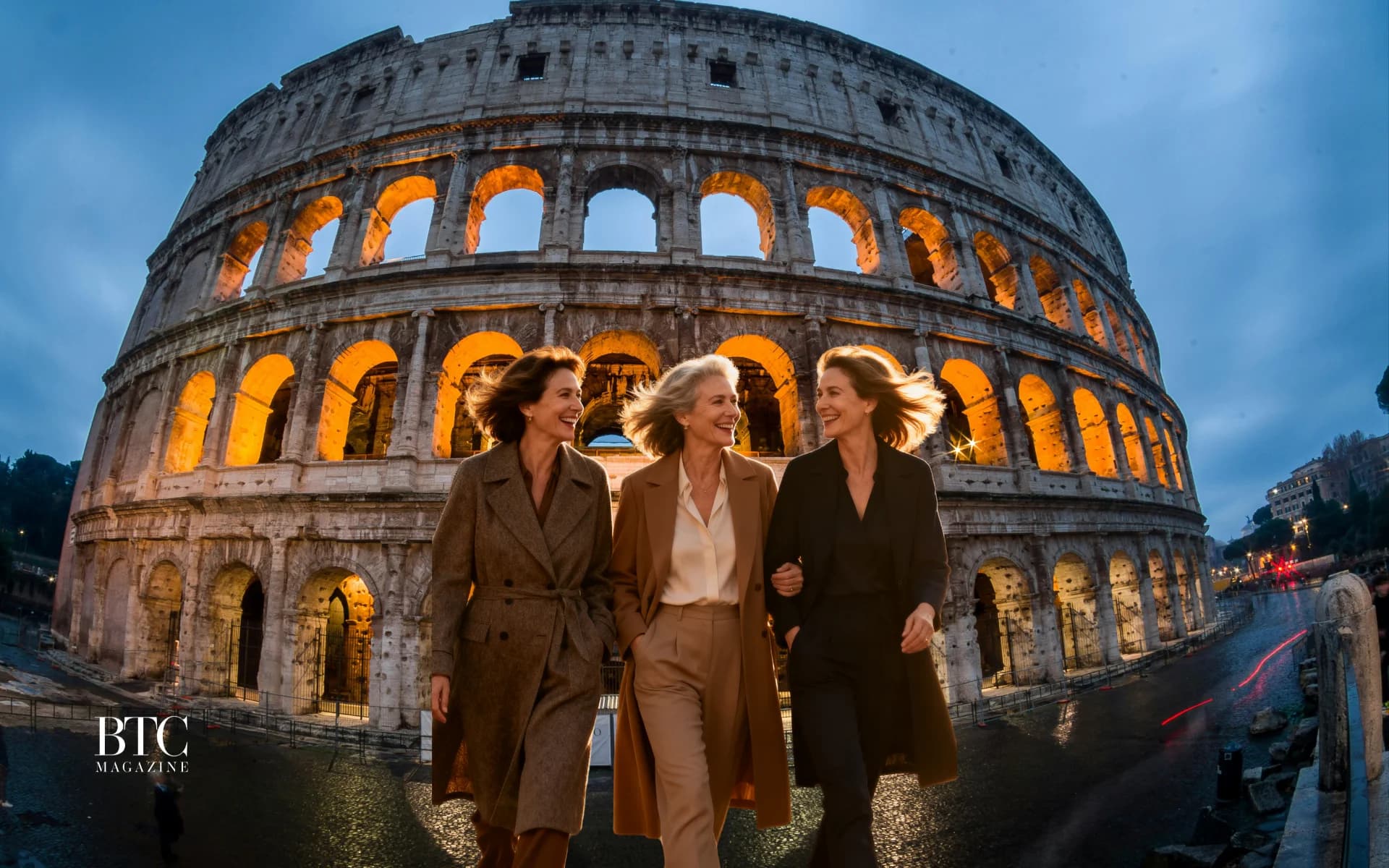
Not long ago, a client reached out to help plan a reunion with her lifelong friends. They lived in different parts of the world and hadn't seen each other in years. They chose Rome — but the place was secondary. The real destination was each other.
I thought I knew this woman. In every interaction, she had been competent, steady, admired. She had raised children with care, sustained a marriage, built a successful business. She was the kind of woman who makes life look seamless.
When she arrived with her friends, they carried themselves the same way. Well-tailored personalities and curated composure. Women who had mastered the art of holding everything together.
Then, over long meals and late-night conversations, something began to shift. Their voices changed first. There was a lift in them. An ease. Laughter that didn't check the room to see who was watching. They began speaking not as mothers, not as partners, not as executives — but as women remembering themselves in the presence of people who had known them from before.
By the end of the trip, I understood I hadn't simply witnessed a reunion. I had witnessed women reaching into themselves and pulling out, from some buried place, the parts of themselves they had set aside so many years before. When women step outside the choreography of their daily lives, something resurfaces. They order what they actually want. They speak more directly. They remember the version of themselves that existed before they were filtered through obligation.
"It wasn't resonance. It was recognition."
There is a photograph I return to often — not from that trip, but from my own life. A friend on vacation with her family. Everyone smiling. But my friend: a quasi-slouched posture, a forced smile. I saw someone I had known my whole life — a woman who had been beautiful, athletic, headstrong, intelligent — and she was contracted inside the frame of her own family photo.
I wondered how many times we have all forced a smile that contradicted everything happening underneath it.
FIFTY
Like many women, turning fifty felt like a threshold. I didn't understand this in my forties when I watched older friends change at that marker. When I crossed it myself, I got it. Something settles and something breaks open at the same time. You stand on the edge of what you've built and see both the cost of it and the possibilities still ahead.
I had settled too many times in moments when I should have spoken. I had bowed my head in unwilling agreement more times than I could count.
So I began again. Not recklessly. Deliberately. I started a business on my own terms. I revisited conversations I had once avoided. I stopped cushioning every truth. I allowed myself to prefer. To disagree. To choose. I took ownership of what I had willingly handed away.
The aftermath of becoming good was not devastation. It was the quiet reckoning of realizing what the performance had cost — and understanding why I had paid it. We thought compliance would bring safety, belonging, love, stability. And sometimes it did. That's what makes it so hard to name.
Understanding this leads to the only question that actually matters:
"If I participated in my disappearance, can I participate in my return?"
Every trip I help plan. Every woman who sits across from me and says she just needs to get away. Every Rome. Every reunion. Every departure that is really an arrival back to someone she thought she had lost — they all tell me the same thing.
The answer is yes.
The autopsy doesn't end in tragedy. It ends in ownership.
Angela Marotta is a travel consultant and writer based in Canada. She has spent years helping women plan journeys — and listening to what they're really looking for when they go.
Frequently asked questions
It is a metaphor for examining how a woman slowly loses herself by always being agreeable, competent, and accommodating. The autopsy is an honest inventory of what that quiet self-editing cost over the years.
Stepping outside daily routines and obligations lets women drop the roles of mother, partner, or executive. Away from that choreography, many start speaking more directly, choosing what they actually want, and remembering who they were before.
Many women are conditioned to treat their own needs as selfish, so asking for time away can feel like a confession. The essay argues that needing something for yourself is not indulgence, it is a return to yourself.
Angela Marotta is a Canadian travel consultant and writer who plans journeys for women and listens for what they are really seeking when they decide to go.
Related Articles
.webp)

.webp)