Permission to Disappoint: Anna Lepekha on War, Reinvention, and Unlearning the Good Woman Trap
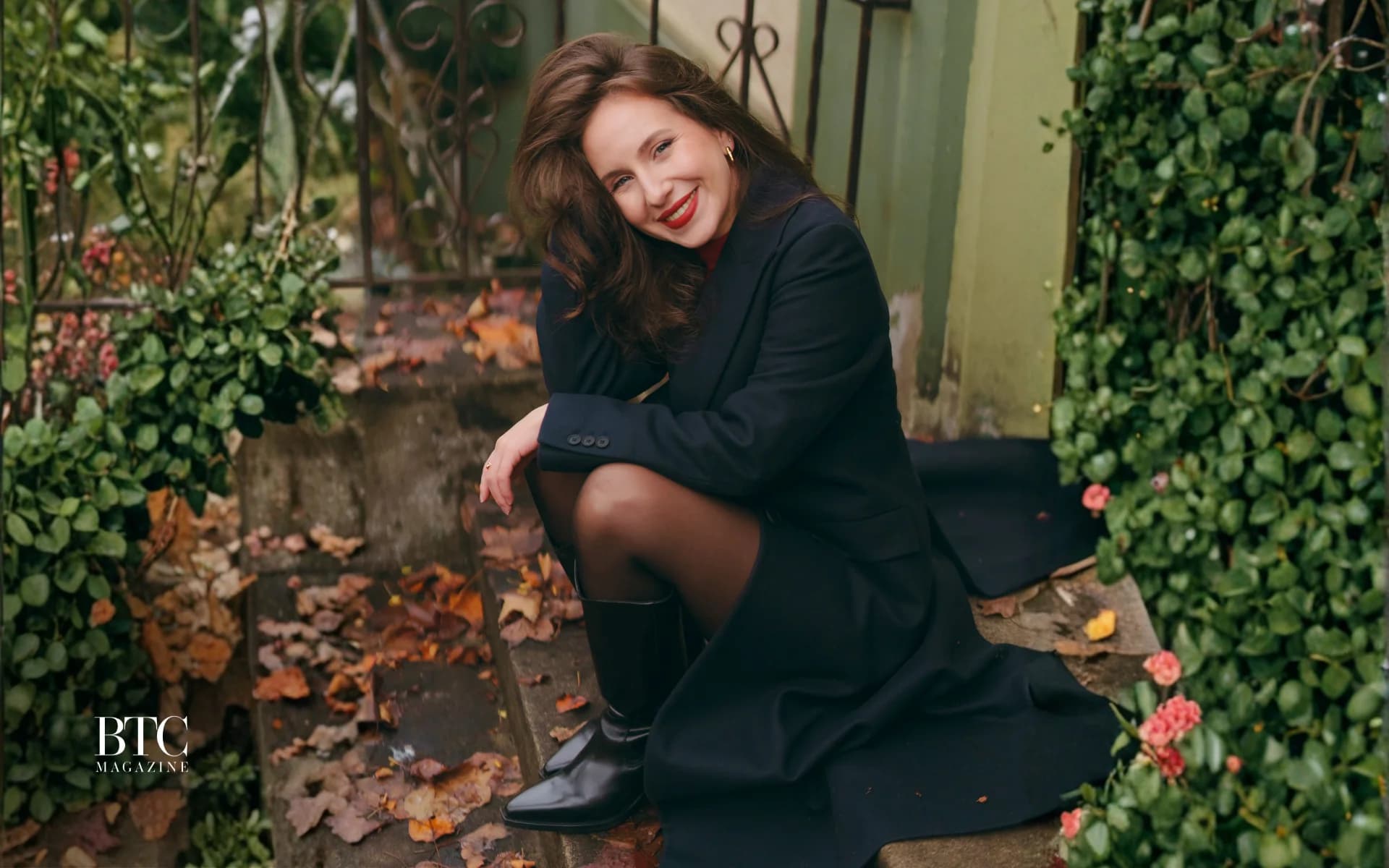
Anna Lepekha fled a war, built a platform, and learned the hardest lesson: being a "good woman" was the first thing she had to unlearn.
Anna Lepekha didn't wake up one day and decide to reinvent herself. She woke up to sirens.
Somewhere between surviving a war, leaving her home in Ukraine, landing in Canada with a language that didn't sit comfortably in her mouth, and becoming the internet's favorite Slavic best friend, she realized something uncomfortable: the rules she grew up with were never designed to let her win. They were designed to keep her useful.
Online, her 223,000 followers know her as sharp, decisive, unbothered. The woman who tells you to fix your crown, dump the man draining your energy, stop apologizing for existing. But off-camera, Anna is quieter. Softer. Still learning how to take her own advice.
"In my country, you're surviving," she says, her accent curling around the words like they cost her something. "In Canada, people are living. It's totally different. For me, it's finally relief, because now I can relax."
She's 28.
She's been relaxing for about five minutes.
THE GOOD WOMAN TRAP
Anna grew up with the script handed to many Eastern European women: be strong, be smart, be beautiful, be agreeable, be a traditional wife, be exceptional at everything—and never let anyone see you break.
"You're expected to be everything at once," she says. "A good wife. Have the best education. Be the smartest person. And if you can do anything, you should do this."
It sounds like empowerment if you say it quickly. But Anna knows the difference between power and pressure.
"Being strong—it was a choice. Otherwise, you didn't have a choice. You have to be strong to become someone."
This is the paradox: strength isn't aspirational. It's mandatory. You don't get applause for resilience when resilience is the entry requirement for survival. And you definitely don't get softness.
So Anna didn't break. She worked in IT. She ran her own shop. She built things. She kept moving. Then the war came. And survival shifted from metaphor to reality.
When she left Ukraine, she didn't just leave a country. She left a version of herself that had never questioned the rules.
THE REBELLION NO ONE SEES
When I ask Anna about rebellion, she doesn't mention fleeing a war zone. She doesn't mention starting over in a country where people smile too easily and apologize for everything. She doesn't mention writing scripts in Ukrainian and painstakingly translating them into English before hitting "post."
She talks about something smaller. And harder.
"My rebellion is constantly trying to understand myself. Listen to myself. And choose myself," she says. "For me, this is the constant rebellion I have."
It doesn't sound revolutionary. That's because it isn't performative.
"When you're brought up to be a good person—a good woman—it's really hard to choose yourself. Because you always choose to please people. Choose to be someone they expected you to be."
She pauses.
"And the best thing about it? You betray yourself."
That's the quiet violence of being good. The slow erasure that happens when you make yourself palatable enough to fit into every room. The version of you that survives by shrinking.
Anna's online persona is loud, confident, a little bit bitchy in the best way. But it isn't a mask. It's a resurrection.
"The version you see on the internet is also part of me," she explains. "I can be rude. I can be tough. I can be strict. And I accept this. I give this part a voice. A life."
The Slavic Bestie isn't a character. She's the self Anna was never allowed to be.
THE PERFECTIONIST'S FUNERAL
If there's one inheritance Anna is actively burying, it's perfection.
"I want to get rid of the person who is not doing mistakes," she says. "The perfect version of myself. The version who needs to know everything. Who needs to be always right. Make only right choices."
She laughs, catching her own grammar mid-sentence, correcting herself in English and then deciding not to.
"When you live this life—the life is passing through you."
Perfection doesn't protect you. It isolates you. It turns you into a project to be managed instead of a person allowed to evolve.
"I want to let go of control," Anna says. "I don't want to control life. I want to leave it."
She means live it. But the slip feels honest. Letting go of control does feel like leaving something behind. Like burying the version of you that survived by micromanaging every outcome.
THE BRAVERY OF JUST BEING
I ask her what real confidence looks like—not the curated version, but the kind that exists when no one is watching.
"Real confidence is the bravery to choose yourself," she says. "Not being perfect. Not being the most successful. Try to recall what you dreamed about in childhood. That's the most honest version of you."
Children don't perform. They don't calculate their likability. They don't optimize themselves for approval.
"Kids are not trying to be someone for someone," she says. "And this confidence—it's letting yourself just be. Not thinking about what other people will think. Not trying to impress everyone."
She's unlearning the reflex to be "super polite," to shrink her opinions, to file down the edges of her personality so they don't cut anyone.
"We sacrifice ourselves to be super polite. And for me, confidence—even if you don't want to be a successful person, you don't want to do anything—confidence is choosing that path. Making mistakes. Changing your mind. It's okay."
PERMISSION GRANTED
Near the end of our conversation, I ask Anna what permission she'd give to a woman torn between loyalty to her past and loyalty to herself.
She doesn't hesitate.
"Permission to disappoint."
She lets it sit in the air.
"'Be yourself'—it's simple to say. But under this is disappointing other people. And it's really hard. Because we don't want to disappoint our parents. Our friends. The people we love."
Her voice softens.
"I just want to say to this woman: just disappoint them. And then see what will be. It's okay to disappoint other people. Choosing yourself is not doing something bad to them. It's just… choosing yourself."
SURVIVING VS. LIVING
Anna's mom is still in Ukraine. She doesn't speak English. She can't fully understand her daughter's videos. But she watches them anyway. Tries to translate the comments. Leaves small notes under every post.
"She just appreciates to look at me," Anna says, and something in her voice opens before she steadies it.
This is the weight she carries: a family in a war zone. A new country. A new language. A platform built on empowering other women while she's still navigating her own becoming.
"I don't feel like I have the 100% opportunity to help someone," she admits. "I'm not a god. I can't totally influence people. But if I can do something good, I will do this. Because the meaning of life is—if you learn something, you should share it."
She isn't trying to save anyone. She's trying to make one woman's day lighter. To make someone laugh for 30 seconds. To remind a woman—on her lunch break, crying in her car, deep in a weeknight spiral—that she is allowed to choose herself.
Even if it disappoints everyone.
THE SELF SHE'S STILL BECOMING
Anna Lepekha is not the Slavic Bestie. And she is. Both are true.
She's the polished, confident woman who tells you to dump him and fix your crown. And she's the 28-year-old doing her first interview in a language that still feels foreign, worrying about saying the wrong word.
She's the survivor who had no choice but to be strong. And she's the woman learning—imperfectly—how to be soft.
"All people have different parts of their personality," she says. "Trying to be only one version is shaping yourself into something. And I accept everything. The confident part. The… inconfident part?"
She laughs.
"If this exists."
It does.
It's the part she once buried to be good.
And disappointing the world might be the first honest thing she's ever done.
Anna Lepekha is a Ukrainian-Canadian content creator based in Vancouver. You can find her on Instagram and TikTok @slavic.bestie, where she dispenses sharp advice, sharper eyeliner, and the permission you didn't know you needed.
Frequently asked questions
Anna Lepekha is a Ukrainian-Canadian content creator based in Vancouver, known online as Slavic Bestie. With more than 223,000 followers, she shares sharp advice on confidence, self-worth, and women choosing themselves.
It is the pressure, common for many Eastern European women, to be strong, smart, beautiful, agreeable, and exceptional all at once. Anna describes how this script is built less on empowerment than on keeping women useful.
It is Anna's advice for women torn between loyalty to others and loyalty to themselves. Choosing yourself often means disappointing parents, friends, or partners, and she argues that doing so is not unkind, it is honest.
Anna contrasts life in wartime Ukraine, where she was always surviving, with life in Canada, where she could finally relax and live. The shift reframed strength as a choice rather than a constant requirement.
Related Articles
.webp)
.webp)
By Sonia Koren
.webp)