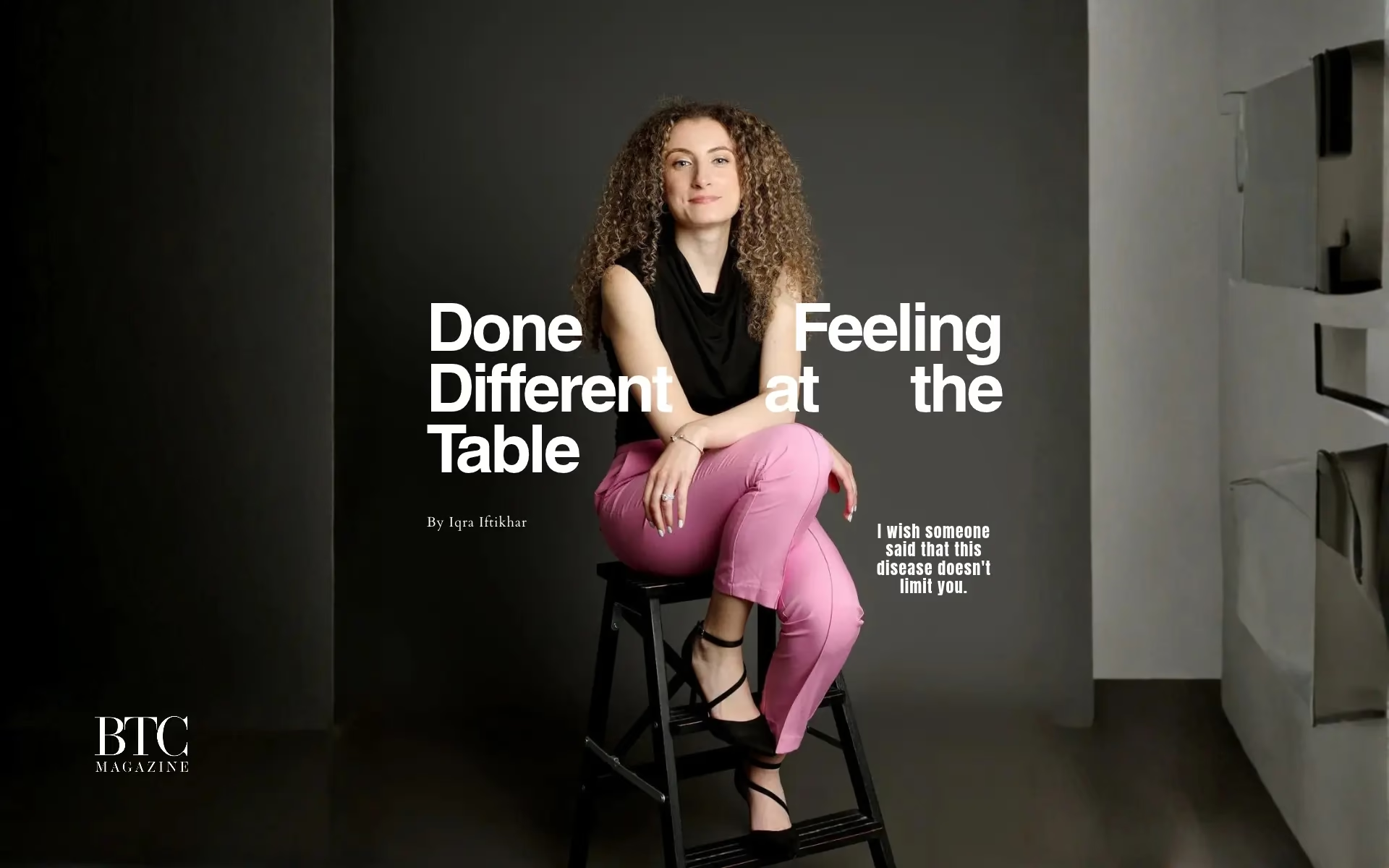
Before Christina Marcangelo knew what was wrong, food had become something to fear.
Her stomach hurt after almost every meal. Rashes spread across her body. She lost a significant amount of weight. She struggled to keep food down. There were stomach cramps, brain fog, overwhelming exhaustion.
Sometimes, she fainted.
And still, she didn't know why.
There is something particularly frightening about knowing your body is reacting to something while having no idea what that something is. Eating is one of the most ordinary things we do.
Until it isn't.
Christina was 24 when she was finally diagnosed with celiac disease.
The answer explained the years of symptoms. It also meant learning an entirely new way of moving through the world.
Suddenly, food wasn't simply food. Ingredients mattered. Preparation mattered. A crumb mattered. A restaurant calling something "gluten-free" didn't necessarily mean Christina could safely eat it.
Years later, those experiences would become the inspiration for A Cupcake of Her Own: A Story About Celiac Disease, Christina's first children's book. An educator and a triplet herself, Christina created a fictional story inspired by her family's real experience of adjusting to gluten-free living. The book follows triplets Nicholas, Carmen and Christina after young Christina is diagnosed with celiac disease and begins wondering what that means for something very important to a child: their shared birthday cake. The book is written for children ages six to ten and includes a family guide, discussion questions and a gluten-free cupcake recipe. But this isn't really a story about cake.
It is about belonging.
Done With "Gluten-Free" Being Good Enough
This is The Done Issue, so we asked Christina the question we're asking everyone:
What are you done with?
Her answer came quickly.
"Restaurants labelling food as gluten-free but not taking proper cross-contamination precautions."
For someone living with celiac disease, those details aren't culinary preferences. They are part of managing an autoimmune disease.
Christina is also done with the assumption that celiac disease looks the same for everyone.
"It is an autoimmune disease with over 200 symptoms and every person may experience different symptoms," she says. "Especially if they ingest gluten by accident."
And then there is the myth that refuses to die.
"I am also tired of people thinking that gluten burns off when cooking."
It doesn't help that gluten-free eating has become so culturally associated with wellness trends and diet choices that the medical reality can become blurred. For Christina, gluten-free isn't the thing she orders because she feels better avoiding bread. It is how she manages her health.
That difference matters.
The Kid With Her Own Food
Adults tend to approach dietary restrictions as a logistical problem.
What can you eat? Which restaurant is safe? What should we buy?
Children experience the same situation very differently.
Why does my food look different? Why can't I eat what everyone else is eating?
Why do I have to bring something from home?
Why is everybody asking me about it?
"When you have celiac disease, often you have to bring your own food to gatherings to ensure it is safe," Christina says. "This may make children feel shy, embarrassed. They may worry about feeling teased, judged or worry about having to explain why they cannot eat certain foods."
Anyone who remembers being eight years old understands how enormous a small difference can feel.
The birthday party where everyone grabs pizza except you.
The school celebration where someone points out your "special" food.
The family dinner where an adult loudly announces which dish was made specifically for you.
None of it may be intentionally cruel. But intention isn't the only thing a child experiences.
"Creating an environment where dietary restrictions are normalized rather than spotted out helps with this," Christina says, "and makes kids feel more confident."
It sounds almost ridiculously simple.
Stop making the child feel like the problem.
Included, Not Accommodated
Christina makes an important distinction between being accommodated and actually feeling included.
At family gatherings, she frequently brings her own food because she knows it is safe. Her family doesn't hide that reality, but they have learned how to make it ordinary.
"One way my family allows me to feel included is setting up a table to put my own food on away from the other food," she says. "Being present at the dinner table with everyone and enjoying my food safely allows me to feel included instead of accommodated."
That sentence says almost everything.
Included instead of accommodated.
Her parents and in-laws keep separate gluten-free utensils and cooking supplies in their kitchens so they can safely prepare meals for her. If a family can make the entire meal gluten-free, Christina says, even better. If not, gluten-free food can be prepared first with fresh ingredients and clean supplies, then kept separate. Someone with celiac disease can also serve themselves before shared dishes and utensils create additional opportunities for cross-contamination.
And if cooking safely isn't possible?
Buy something from their favourite gluten-free bakery or restaurant.
The point isn't culinary perfection. It is consideration.
It is someone else carrying a little bit of the thinking for once.
A Family Diagnosis
That thinking appears throughout A Cupcake of Her Own.
When young Christina is diagnosed, her brothers aren't pushed to the edges of the story while the adults manage the problem. Nicholas and Carmen learn too. The family talks about separating foods and preventing cross-contamination. Christina's diagnosis becomes something they navigate together.
That was deliberate.
"When you have a team behind you, you feel more safe and included around food," Christina says. "When everyone is understanding it allows those with celiac to enjoy their meals and gatherings without worry and gain more confidence."
Why Start With Children?
Christina could have written an adult guide to celiac disease.
She chose a children's book instead. "As an educator I wanted to educate the next generation about this," she says.
Children already encounter conversations around allergies in schools, particularly nut allergies.
Christina wants them to understand that classmates may eat differently for other health reasons too.
"The more knowledge we have about this from when we are younger, the more awareness we can spread."
She believes children may actually be particularly receptive to that message.
"Children have more curious minds than adults and are more willing to accept differences."
Perhaps that's because children haven't yet learned to turn every difference into a debate. Sometimes they simply ask why, hear the answer and carry on eating their cupcake.
It also moves some responsibility away from the person who is already living with the condition.
Because constantly advocating for yourself gets exhausting.
Check the ingredients.
Explain the diagnosis.
Ask about the fryer.
Ask about the cutting board.
Remind somebody that gluten-free and "mostly gluten-free" are not interchangeable.
Bring your own dinner.
Explain why you brought your own dinner.
Repeat next weekend.
Support sometimes looks like removing one of those conversations before it needs to happen.
The Cupcake Was Never The Point
In Christina's book, the triplets eventually arrive at their birthday.
For years, there has been one shared cake.
This time there are three cupcakes.
One for Nicholas.
One for Carmen.
And one safe, gluten-free cupcake for Christina.
Nobody misses the celebration.
Nobody has to sit on the sidelines.
The tradition changes, but what the tradition represents doesn't.
Christina wishes somebody had helped her understand that distinction when she was first diagnosed at 24.
"I wish someone said that this disease doesn't limit you," she says. "Instead it allows you to see food in a different way and explore other ways to enjoy it."
That may be the real heart of A Cupcake of Her Own.
Celiac disease still requires vigilance. It still requires questions, preparation and compromises.
Christina isn't pretending otherwise.
What she is challenging is the idea that different automatically means less.
So maybe this is what we're done with.
We're done calling the child difficult because she needs something different.
Done making someone apologize for asking whether food is safe.
Done treating inclusion like a favour.
Done pointing at the separate plate as though it needs an announcement.
Sometimes inclusion is quieter than that.
It's a clean utensil waiting in the drawer.
It's preparing one dish before the others.
It's knowing the bakery she trusts.
It's setting aside a safe place for her food without making a production of it.
And sometimes it's simply making sure that when the lights go down, the candles are lit and everyone starts singing, there is a cupcake waiting for her too.
Christina Marcangelo — www.christinawrites.ca
After years of unexplained illness, Christina Marcangelo finally learned she had celiac disease. Now the educator and author of A Cupcake of Her Own wants children to grow up understanding that eating differently should never mean being left out.









Comments
No comments yet
No comments to show yet. Subscribe to join the conversation.
Log in or subscribe to comment on this article.