My followers thought I was going to a war zone.
When I announced I was traveling to Pakistan for Lahore Fashion Week—twice in two weeks, actually, because I came back specifically for the finale shows—the DMs flooded in. Concern. Confusion. One person asked if I'd updated my will. Another wanted to know if I was "really sure about this."
The unspoken question underneath all of it: Isn't that basically Afghanistan?
This is what happens when an entire country gets flattened into a single story. When decades of Western media coverage reduce 260 million people—a nuclear power, a fashion industry, a culture spanning thousands of years—into one image: dangerous, violent, backward. A place you escape from, not a place you'd choose to visit. Twice.
So let me tell you what I actually found at Lahore Fashion Week. Not the sanitized version. Not the "everything was perfect" tourism board copy. The real thing: breathtaking and chaotic, world-class and disorganized, defiant and messy and utterly itself.
Because that's the most interesting part.
The Setup
LAAM Fashion Week took over a venue in Lahore with the kind of production ambition that would make sense in Paris or Milan. Hassan Sheheryar Yasin—HSY, if you know Pakistani fashion—directed the finale show, and the man understood the assignment. Dramatic lighting. Video projections. Stage design that looked like it cost more than my car. The graphics, the direction, the energy—all there.
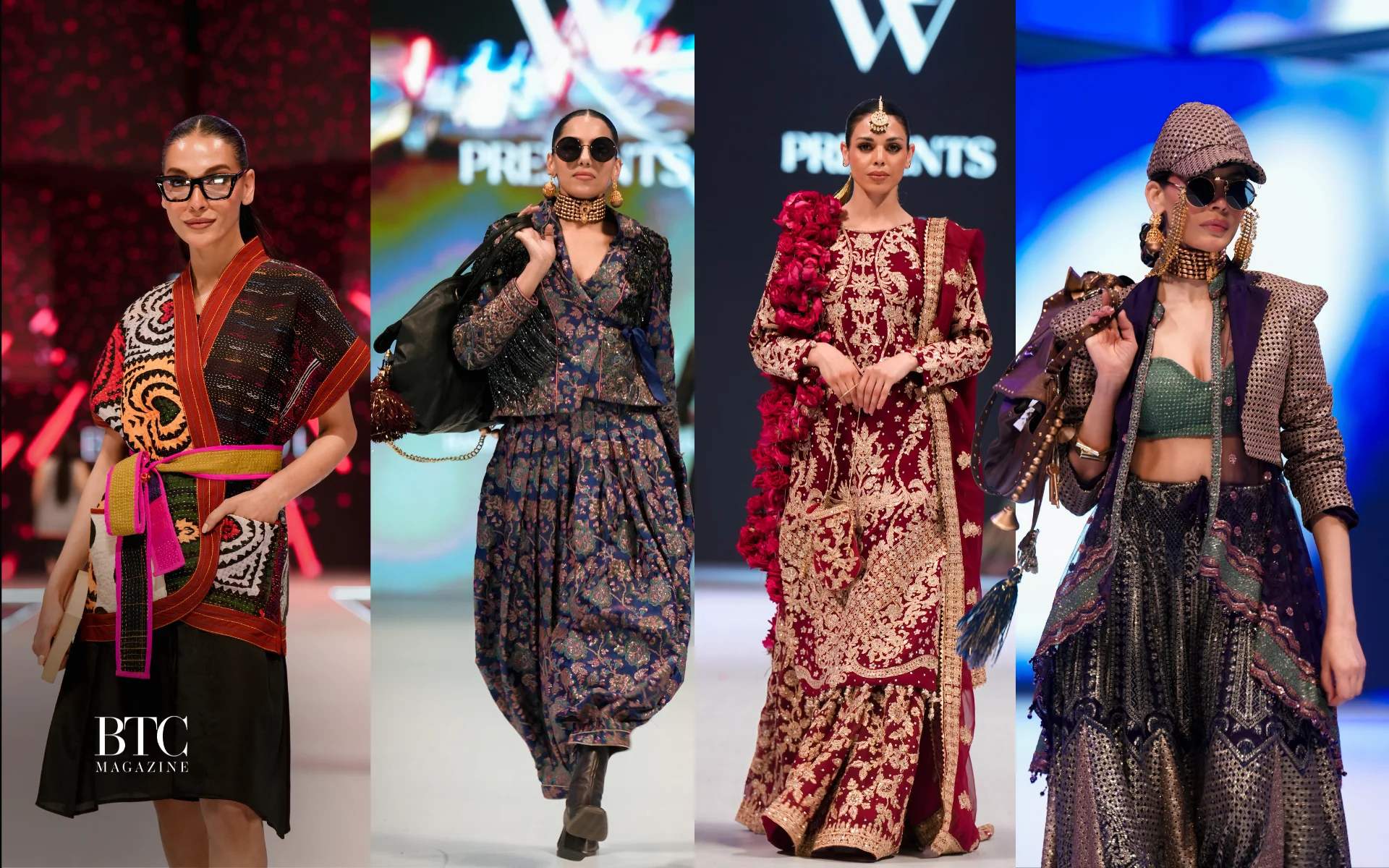
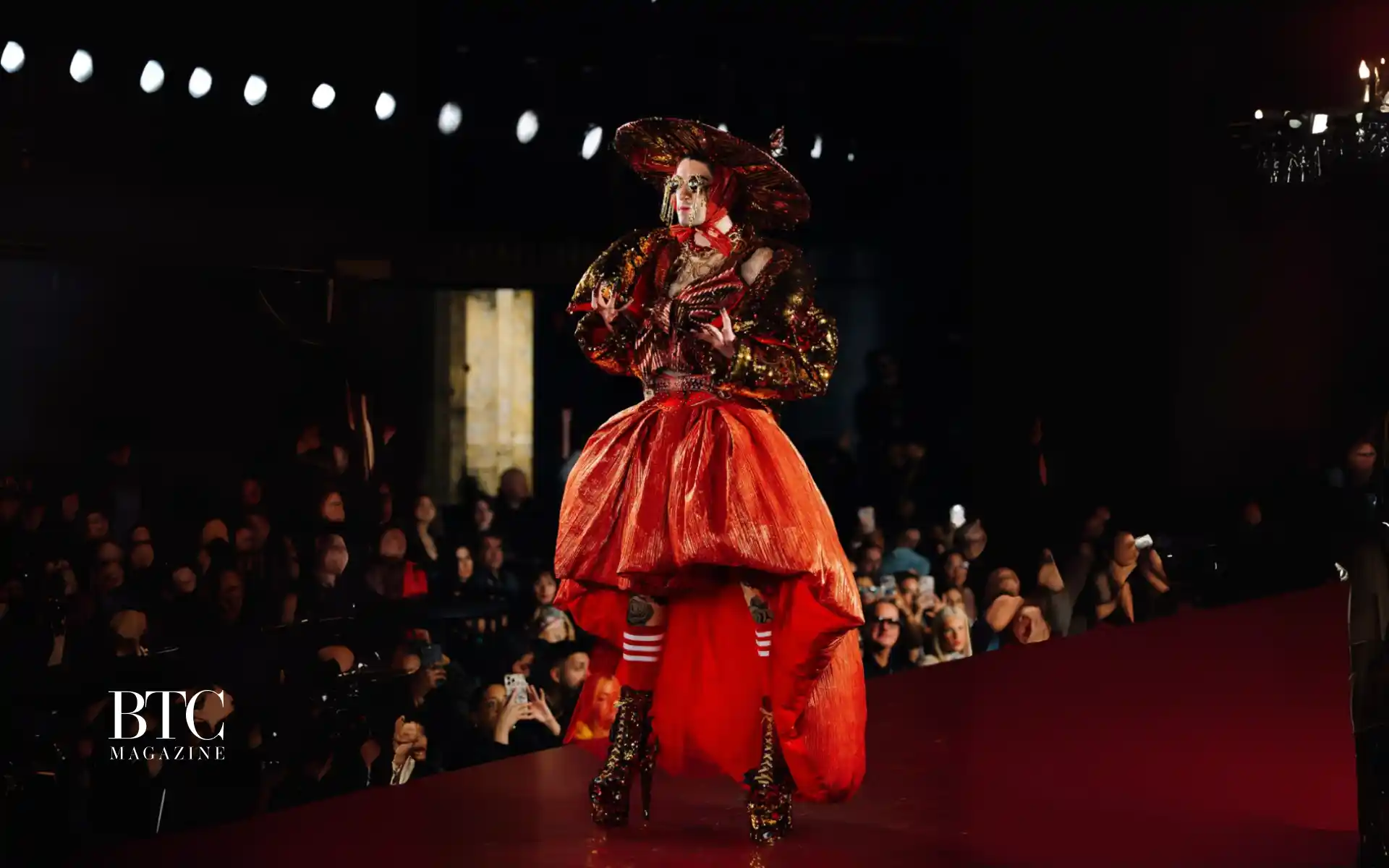
The talent? Breathtaking. Pieces that made me stop mid-note-taking and just stare. Collections that would absolutely hold their own at New York Fashion Week, Dubai Fashion Week, anywhere. These weren't "good for Pakistan" designs. These were just good. Period.
And then you'd look down and see empty Coke cans scattered in the corner. Garbage piling up because there were no bins. The media section—if you could call it that—was a crush of people with no clear organization, no seating system, photographers and journalists and influencers all fighting for space. I watched people who'd been invited, who had credentials, unable to get to their seats because the crowd control was... let's say aspirational.
The contradiction wasn't subtle.
You had world-class design talent operating within infrastructure that couldn't quite keep up. Ambition racing ahead of logistics. Vision outpacing execution on the operational side.
And somehow, that gap—that gorgeous, chaotic gap—told me more about Pakistan than any polished presentation could have.
"Come Learn Us"
I sat down with HSY after his show, still trying to process what I'd just seen. I asked him the question I'd been asking every designer: What does Pakistani fashion still get misunderstood globally?
His answer stopped me cold.
"People are expecting us to become them, and not understanding that we are us. What we do is us. Where we come from is the tradition and culture and history of thousands of years. We cannot all of a sudden become them. If they want to buy us, they will need to dress like us. And for that, they'll have to come to us to understand us. We can't suddenly become Paris, London, Milan, because that's what their people are wearing."
Then he said something I've been thinking about ever since:
"We're a country of 260 million in a crossroads position where we have tremendous power. Come learn about us. Understand what we wear. Understand our clothes."
This wasn't an apology. It wasn't "please accept us" or "we're working to meet your standards." It was a demand: Come to us. On our terms.
Every designer I spoke with echoed some version of this. They're not chasing Western validation by abandoning what makes them Pakistani. They're insisting the world come to Pakistan to understand Pakistani fashion on Pakistani terms. Bespoke culture over fast fashion. Craftsmanship over trends. Tradition that doesn't apologize for itself.
Designer Shiza Hassan told me her collection wasn't for people who see wedding clothes as disposable or trend-oriented. "It's for the discerning," she said. "It's centered around people who have an appreciation for the incredible craftsmanship, especially embroidery, that we have in our part of the world."
Not for everyone. For people who get it.
That's a radical position to take when the West has spent decades telling your country to modernize into something more familiar.
The Generational Shift
Here's something most Western coverage of Pakistan misses entirely:
Sixty percent of Pakistan's population is under 30.
The young designer I met in the media pit—Omar Fareed—told me he studied design, worked for established brands, then switched to styling because "design doesn't work for me financially yet." But he's still designing his own clothes. Still creating. Still pushing.
And he's making $1,500 a month. His father made $300.
That's not a typo. That's not adjusted for inflation. That's the actual economic transformation happening in Pakistan right now. A generation making five times what their parents made, choosing creative industries over "safe" careers, believing they don't have to be engineers or doctors to have security.
Shiza Hassan noticed it too: "We're no longer in that era where people are thinking they have to have some sort of job security that looks like engineering, that looks like being a medical professional. People are choosing risk."
This matters because it changes everything about what's possible. When young people have money and choose fashion, when they're not apologizing for creative careers, when they're building infrastructure from scratch because they have to—you get exactly what I saw at LAAM.
Ambition that races ahead of logistics. Talent that demands recognition before the systems are perfect. Beauty that coexists with mess because they're not waiting for permission to be ready.
What the World Gets Wrong
My followers' reactions weren't their fault, exactly. They've been fed one story about Pakistan for decades. Terrorism. Extremism. Danger. Violence. The word "Pakistan" in Western media is almost always followed by "Taliban," "bombing," "crisis," or "threat."
What they don't see: Women in power suits at fashion week. Men in impeccably tailored outfits discussing global expansion strategies. Designers turning down Western markets because they refuse to compromise their aesthetic. Young people building careers in fashion, media, styling, production.
The diversity within Pakistan isn't apparent to Western audiences. We—and I'm including myself in this "we"—live in information bubbles that confirm what we already believe. If we believe Pakistan is dangerous, we'll only see the stories that confirm danger.
I've built a career on telling people that love makes a family, that there's no single way to live a life. Now I'm standing in a country the West insists is backward—watching women command runways, watching men speak about creative freedom and authenticity without apology, watching an entire generation refuse the script they were handed.
The irony isn't lost on me.
But here's what I kept thinking as I watched show after show: If Pakistani fashion is this good while operating within economic constraints, political instability, and global misunderstanding, what happens when those constraints lift?
What happens when the world finally shows up to learn instead of judge?
The Honest Thing
I could write the glossy version of this. "I attended Lahore Fashion Week and it was spectacular, five stars, would recommend." That's what the tourism board wants. That's what makes everyone comfortable.
But that's not the truth.
The truth is messier and more interesting: LAAM Fashion Week was simultaneously world-class and chaotic. Breathtaking design undermined by basic logistics. Visionary talent operating without the infrastructure that would make Western audiences take it as seriously as it deserves.
And maybe—maybe—that honesty is more powerful than polish.
Because what I watched in Lahore was a country refusing to perform "readiness" for Western approval. Refusing to apologize for the mess while building something extraordinary anyway.
The coke cans in the corner? They're the evidence of growth happening faster than systems can contain it. The disorganization at the media pit? What happens when ambition outpaces infrastructure. The gap between world-class design and operational chaos? The reality of every emerging power that refuses to wait politely for permission to matter.
What I'm Taking Back
When I post videos from LAAM on my Instagram, my followers are blown away. "Wait, that's Pakistan?" They don't expect the sophistication, the elegance, the sheer level of talent on display.
Good. They weren't supposed to expect it.
But now they're seeing it. And that's the point of what I do—showing people the gap between the story they've been told and the reality that exists.
Would I go back? Absolutely. 100%. Will I suggest they figure out the garbage situation and maybe implement an actual media seating system? Also yes.
Because here's what I learned in Lahore: You can be gorgeous and chaotic at the same time. You can demand the world come to you while still figuring out basic logistics. You can refuse to perform Western standards of "readiness" while producing work that would hold its own anywhere in the world.
And maybe that refusal—that defiant insistence on being seen as you are, mess and beauty both—is exactly what makes Pakistani fashion worth paying attention to.
My followers thought I was going to a war zone.
What I found instead was a fashion industry that won't apologize for being itself. Won't chase Western validation by abandoning what makes it Pakistani. Won't wait for perfect conditions before demanding recognition.
I found designers saying "come learn us" instead of "please accept us."
In a world obsessed with polish, Pakistan showed up unfiltered. And that might be its greatest strength.
Joseph Tito is the Editor-in-Chief of Between the Covers. He operates businesses in both Canada and Pakistan and travels between Toronto, Marbella, and South Asia documenting culture that challenges Western narratives.

Comments
No comments yet
No comments to show yet. Subscribe to join the conversation.
Log in or subscribe to comment on this article.