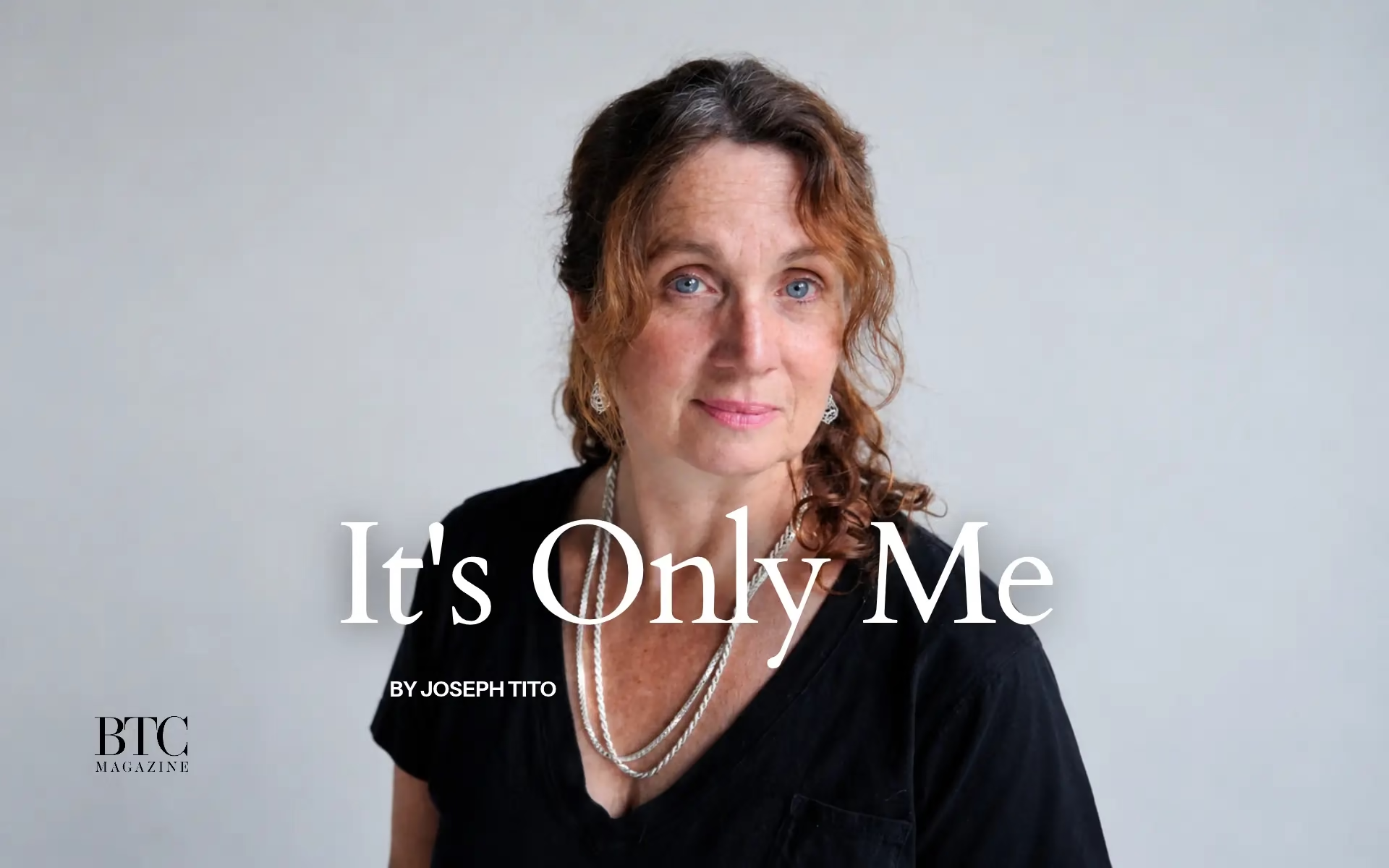
Judith Thompson spent forty-five years writing other people's pain. At seventy-one she finally wrote her own, and Canada published it into silence.
A Seventy-One-Year-Old Debut With One Review
Judith Thompson has won the Governor General's Award twice. She is an Officer of the Order of Canada, the first Canadian to win the Susan Smith Blackburn Prize, and the Royal Society of Canada describes her as one of the best and most produced playwrights in the English-speaking world.
In April, at seventy-one, she published her first novel.
It got one review.
One — Quill & Quire, April, mixed-positive. As far as anyone can find, that's it. No Globe. No Star. No CBC. The blurb on the jacket comes from a bookstore on Princess Street in Kingston, because there were no trade quotes to use. Her own play opened at Tarragon three weeks before the novel landed, and every interview she gave that spring was about the play.
Two things, before anything else. The silence is a scandal, and the book is not a masterpiece. Both are true. Read it anyway. The last forty pages are the best prose Thompson has ever written, and the scene where Ana's parents work out that nobody will believe her is the finest writing I have read in a Canadian novel this year.
A disclosure, and a debt
Cormorant Books publishes my memoir. I reviewed In Crow's Field anyway, and I read it before I ever spoke to her. Nobody at Cormorant saw a word of this in advance and nobody will until it prints.
The other thing you should know is that I got into theatre school on her writing. I did Joe's monologue from The Crackwalker — the boots, the General Wolfe, Bart. I was eighteen and I was terrible, and I got in anyway, which I have always assumed says more about her ear than my talent. So I am not neutral about Judith Thompson, and I'd rather say that out loud than perform an objectivity I don't have.
A note before we go on: this piece discusses the plot of In Crow's Field in detail, and Thompson discusses her own ending. If you'd rather come to it clean, buy the book, read it, and meet me back here.
The book
Ana Burns is nine years old in Middletown, Connecticut, at her little brother's birthday party. There is gin, there is an above-ground pool, and there is a mother who is beautiful and funny and cruel in the specific way that teaches a daughter to be cruel back. The mother squeezes Ana's shoulder and says: Why don't you two beauties run up to Crow's Field and pick some wildflowers? Two teenage boys are in the field.
The Event Is Not the Subject
It is over by page ninety. That is the thing people will get wrong about this book. Thompson does not withhold the assault or stretch it across four hundred pages. She puts it near the front, writes it without flinching, has the adults bury it, moves the family to Kingston, and gives the entire rest of the novel to the nine years afterward. The event is not the subject. What the silence does to the girl is the subject. What's extraordinary is where the word goes. Nobody says rape or assault anywhere near Ana. The words do not appear in this novel until page 173, and when they finally arrive they are always about somebody else, first Gerry and much later two twelve-year-old girls. What was done to Ana is never named, by anyone, in the whole book. Everybody else's harm gets a word. Hers does not. And she writes children like nobody else alive. Frances Kester, Ana's best friend since they were two — a liar and a thief who blackmails her with friendship and punches her in the solar plexus — is one of the great child villains in Canadian fiction, and she isn't ten years old.
The Staircase Scene and the Ghost
The best writing in the book is the scene where Ana finally tells, and her parents work out what it will cost. Nobody will believe her. This is Miles Carver we are talking about. His father is one of the most famous artists in America. They talk it through for two hours, downstairs, while their daughter listens on the staircase. Then Ana comes down in her nightgown and begs them not to tell. The ghost is the one place I expected her to lose her nerve, and she doesn't. Patty comes back as a vision and the novel never once confirms her. At the climax the man chasing Ana trips, and Patty appears a beat afterward, and Thompson leaves the join between those two facts entirely to you. On the last page Patty is not a rescuer. She is, in Ana's words, my witness.
What Doesn't Work
What doesn't work is smaller, and it is that the book keeps explaining itself. Three pages in, a voiceover announces the premise and the stakes. Fifty pages later a physics teacher turns up to explain the structure in italics. She trusts you with a child's rape and won't trust you with a time frame. Then I asked Thompson how much of it was hers.
“About forty-five percent”
She didn't hedge, and she didn't stop where I expected her to. “Even what's mine — for instance, the attack did happen to me and a friend, and one of the attackers was the son of an extremely famous artist. I won't say which medium, but extremely famous at the time.” He phoned her, she says, thirty-five or forty years later. “To apologise, but also to say, you know — phone me from Massachusetts, I hear you're a writer and I really hope you will never write this. And at the time I said, I don't think so, but I can't make any promises.” Then she laughed, without much in it. “Because he actually said, but, you know, your friend was flirting with me. I said, she was eight, and you were fourteen.” She never told her mother until she was about fifty. She had been instructed not to, she says, “by my boss — the little girl.” The reckoning, the silence, and the sentence the whole book is built on.
“My own experience is clay”
The parts that are not hers, she is precise about. Patty — the poor girl, the only child in the school from a family on welfare, the one who dies — was drawn from a real girl she briefly knew. But the rest is invention.
“She was my friend, briefly, but she was not there during the attack. None of that happened. She didn't die in the Connecticut River.” The river, she says, “was always held up as a sinister place, because it is — it's very rough, with rapids. A few dogs have died and a few kids have died, actually, who were visiting. But it needed to go there. The story needed to go there.”
Then: “My own experience is clay, and I shaped it into a completely different thing.”
The staircase scene — the coldest in the novel, the one where the adults are right about the consequences — never happened either. “That was invented,” she says. “But that often does happen. I look at the case of the junior hockey team. On and on. So even now, but then — no one would believe a little girl. She'd be held up to mockery, the family would be excoriated and ostracized socially. And the social scene was everything to a young academic. They knew that I would just be pilloried.”
And then, as if it were obvious: “That's what I mean by drawing on one's personal experience to then create a fiction which says even more.”
The reckoning
In 2016, talking about her own revival of The Crackwalker, Thompson said the Indigenous characters she'd written in 1980 came from “a very innocent place, politically,” and called the title character's entrance gimmickry she would never repeat. She has spent forty-five years writing other people's suffering — the poor of Kingston, Ashley Smith, Lynndie England, Iraqis under torture. I asked whether this novel is the first time she has written her own.
“Yes. There's certainly been little spatters of my blood here and there — little spatters that you'd have to be a really good detective, or know me really well, to know where I am. In disguise. But yeah, this is the first time I've really, truly drawn on it.”
How did it feel?
“Amazing. It felt like — whoa, this mine is so rich, and I know it, and I know it to be authentic. So there's no appropriation. Because a lot of those plays, like Palace of the End, I couldn't write now. I wouldn't feel right about it, even though I don't regret it, either.”
She won an Amnesty award for Palace of the End. She was the first Canadian to win the Blackburn for it. She is not disowning it — she is very clear that “an alchemy happens, a sort of magic, which I know some people would say, oh, that's ridiculous. No. We know, as writers, there is a magic. And it worked.”
Why a novel, at seventy-one
Forty-five years of plays, and then this. As far as I can find, nobody had asked her.
“This is a story that needed to be told through this medium. I'm a great reader, always have been. I then write the subtext in. I write what things look like. There's a level of detail and complexity that I needed to express through a voice — the voice of Ana, both young and seventeen. There's world-making, which you need to do in a play to some extent, but you are limited.”
She never tried to make it a play. “No, never. If you think it looks like a playwright wrote it now, you should have seen the first draft. That was almost all dialogue.”
Her editor at Cormorant, Marc Côté, gave her the note that broke it open: you're describing the party, but what were the men wearing? What did they look like?
“And I realized — well, at eight, I, and probably most girls, noticed what the women were wearing. But not really what the men were. Okay, a moustache and a pipe, I don't know. And that really sort of freed me. It's through her eyes.”
Could it be a play now? “It's too big. It would have to be just the attack, just that. And not the death.”
The silence
I told her I found it baffling. She is Judith Thompson. If I were her publisher I'd have used her name like a crowbar.
She was more generous about it than I was.
“I really don't know, no. What I'm counting on is word of mouth. Ann Patchett said in an interview, you can have all the interviews you want, you can win all the prizes — the only thing that really counts is word of mouth. And what I'm feeling is a slow and steady burn, fire growing, because of the kind of response I've got.”
Not from friends, she says. From strangers who write to her. Hundreds of them, almost all women. Up all night with it. Riveted. It resonated deeply. It took them a while to recover. She has heard from a handful of men.
That last detail is the whole problem in miniature. A novel about a nine-year-old girl nobody believed has found hundreds of women who believed it immediately, and the people who decide what gets reviewed never turned up.
Bystanderism and the Hero From an Invisible Silence
Then she offered a theory more interesting than the book industry deserves.
“Maybe they don't want the themes of the book. It's about bystanderism, in a sense, and the willingness to risk something.” She reached for Havel's parable of the Prague greengrocer taking the sign out of his window, the shopkeeper who stops being compliant and pays for it. “That's what the novel's about, because she is a true hero. She risks her life, and it costs her her life. And a lot of people say, oh, why did she have to die? Maybe she didn't. But the most important thing is — like so many male heroes who are celebrated, in the very occasional female hero, like Joan of Arc. She was willing to risk her life, and in fact she paid the ultimate price. And she's a hero from an invisible silence.”
Then, more quietly: “My time has passed, and that's as it should be, as a playwright. I will continue to write plays, but the young must come up. There must be room made.”
I told her that was the first mistake she'd made all afternoon. Girl, please. You're seventy-one. We're no longer in the nineteen hundreds. Seventy-one is the new fifty.
There was a pause, and then she said something I have not stopped thinking about.
“No, I feel like I'm right at the crest.”
And a beat later: “Yeah, I'm not done. But we are.”
Done
I told her this is our Done issue — that every year-end issue we ask what our readers are finished with. She took about four seconds.
“All of it. Being not believed. Gaslighting. The courts with sexual assaults — being silent about it. More and more people are speaking up, but they're being shut up, too.” She had just read Maggie Helwig's book about the encampments. “We're done with allowing people to freeze to death. All winter, every winter. And bureaucracy's so tangled that nothing seems to be done about it, and yet millions can be spent on soccer stadiums. I'm not saying that's not important, but what's most important is saving these lives.”
I asked what she'd say to the thirty-year-old woman still trying to work it out.
“Speak. Speak and act and be fearless.” Her students, she says, still arrive with it in them — my boyfriend tries to make me — “and no. Do what you want to do, only what you want. Not what you think you should do, because unfortunately it's still endemic amongst girls. It's still trying to please, trying to please the guy usually, and their friends.”
“But this breaks my heart when they cower. Don't cower anymore.”
“I would never write a character with a life I haven't experienced, or been very adjacent to. That's what I tell my students.”
The last line
The novel ends with Ana saying that the thing she did — and I won't say what it is — was the only thing she ever did worth mentioning. I asked whether Thompson believes that about her, or whether that's just a seventeen-year-old being seventeen about herself, right to the end.
“That's being seventeen. She says that at seventeen.” Then she turned it over.
“No — because I believe the ordinary life should be celebrated. Every ordinary life is extraordinary. And everything is worth mentioning. That's something I very much believe in. But she believes that at that time — for someone who's sort of shy and says, well, I don't really matter. I've never thought that. Strangely, even through everything, I was given a lot of confidence from my parents.”
And then the sentence the whole book is built on, and which nobody has printed yet:
“Many women have been heroic, and sacrificed, and were willing to sacrifice their lives — for their children especially. And that's never mentioned.”







Comments
No comments yet
No comments to show yet. Subscribe to join the conversation.
Log in or subscribe to comment on this article.